
La Terrasse
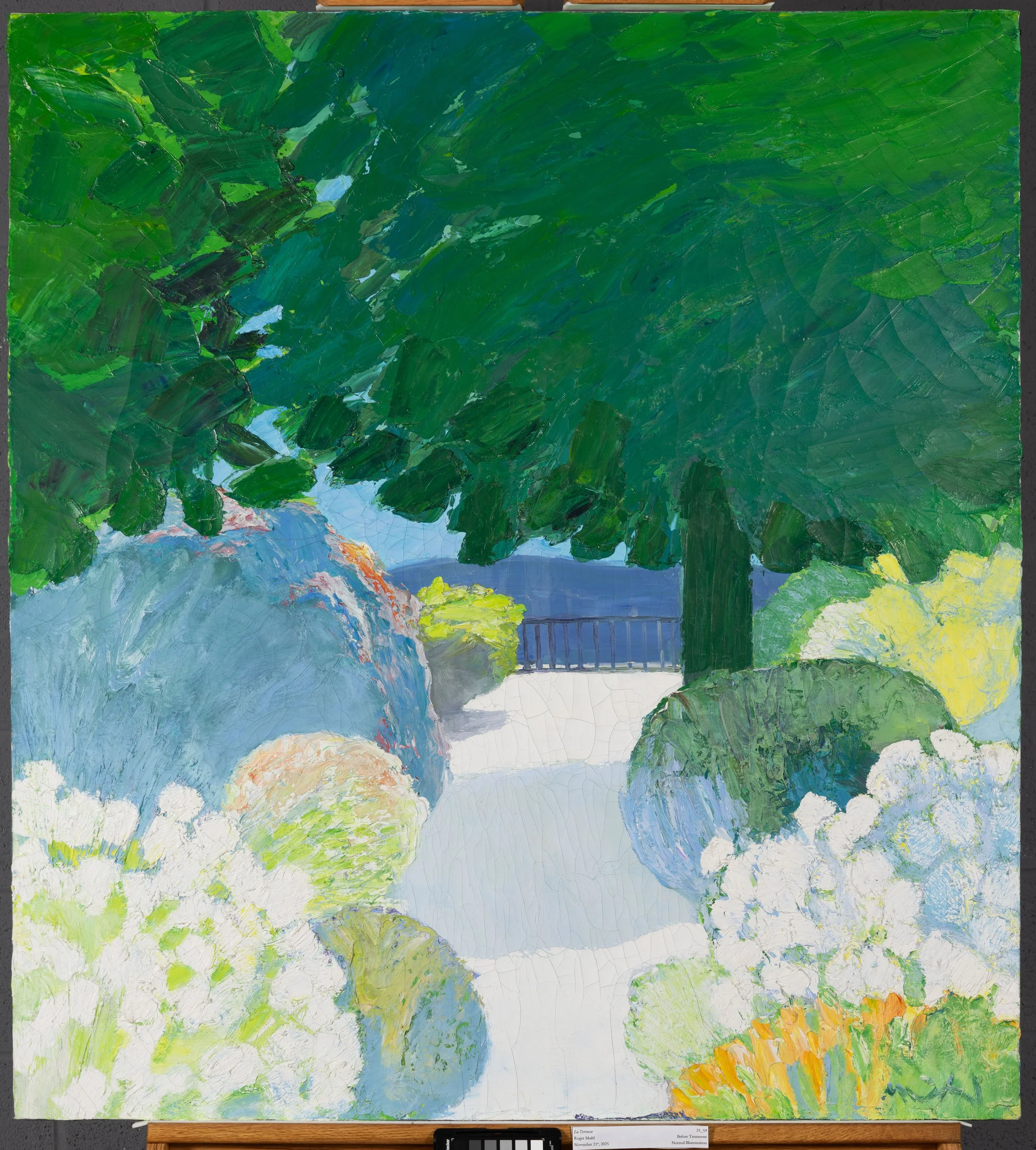
Overall Before Treatment, Normal Illumination
Artist: Roger Muhl
Media: Oil on canvas
Date: Unknown
Dimensions: 43¼” x 39 3/8” unframed
Project Summary:
This landscape, painted with thick layers of oil paint on stretched canvas was in overall stable condition when it was brought into the studio. Treatment was requested to address visibly tented cracks throughout. The oil paint was built up with heavy impasto, characteristic of Roger Muhl’s work. There was a network of mechanical cracks and tenting paint throughout that correspond to quilting of the canvas seen on the verso. This is a common aging phenomenon on thick paintings that results from oil paint losing elasticity on a flexible support. Although visually disruptive, the cracks were stable and the paint appeared to be well adhered to the ground and canvas. There were also some white, powdery accretions on the green that could only be reduced through dry cleaning. Preliminary testing indicated that the greens were sensitive to water and polar solvents.
To set down tented cracks, paint is typically relaxed through successive cycles of elevated humidity/vapor treatments and held flat to dry under pressure and with an added adhesive. In this case, the thickness of the paint and the pigments used in La Terrasse would have limited the efficacy of a humidity/vapor treatment. The white pigments bound in oil cross-linked to form a rigid film that would not relax easily, especially when thickly applied. Testing in a small spot indicated that after multiple cycles of elevated humidity and heat, the paint only partially relaxed and during an attempted flattening the beginning of additional microcracks could be seen, suggesting that the paint film was not adequately softened/relaxed. This suggests that flattening may not be possible without a more intensive intervention such as fully removing the canvas and attempting the flattening using a vacuum hot table after multiday overall humidification. To reduce potential strain and damage to the painting, we opted to fill and inpaint the cracks to make the gaps less noticeable. While the tented cracks in the paint are still visible in raking light, they are now less visually distracting.
To address the accretions on the sensitive green paint, we opted for another less-invasive method of treatment. The stains and accretions that could not be fully removed through dry cleaning were saturated and toned using Gamblin Conservation Colors. While we could not remove the unwanted material without damaging the paint, the added conservation paints are readily removable and help to hide the haziness that was present before.
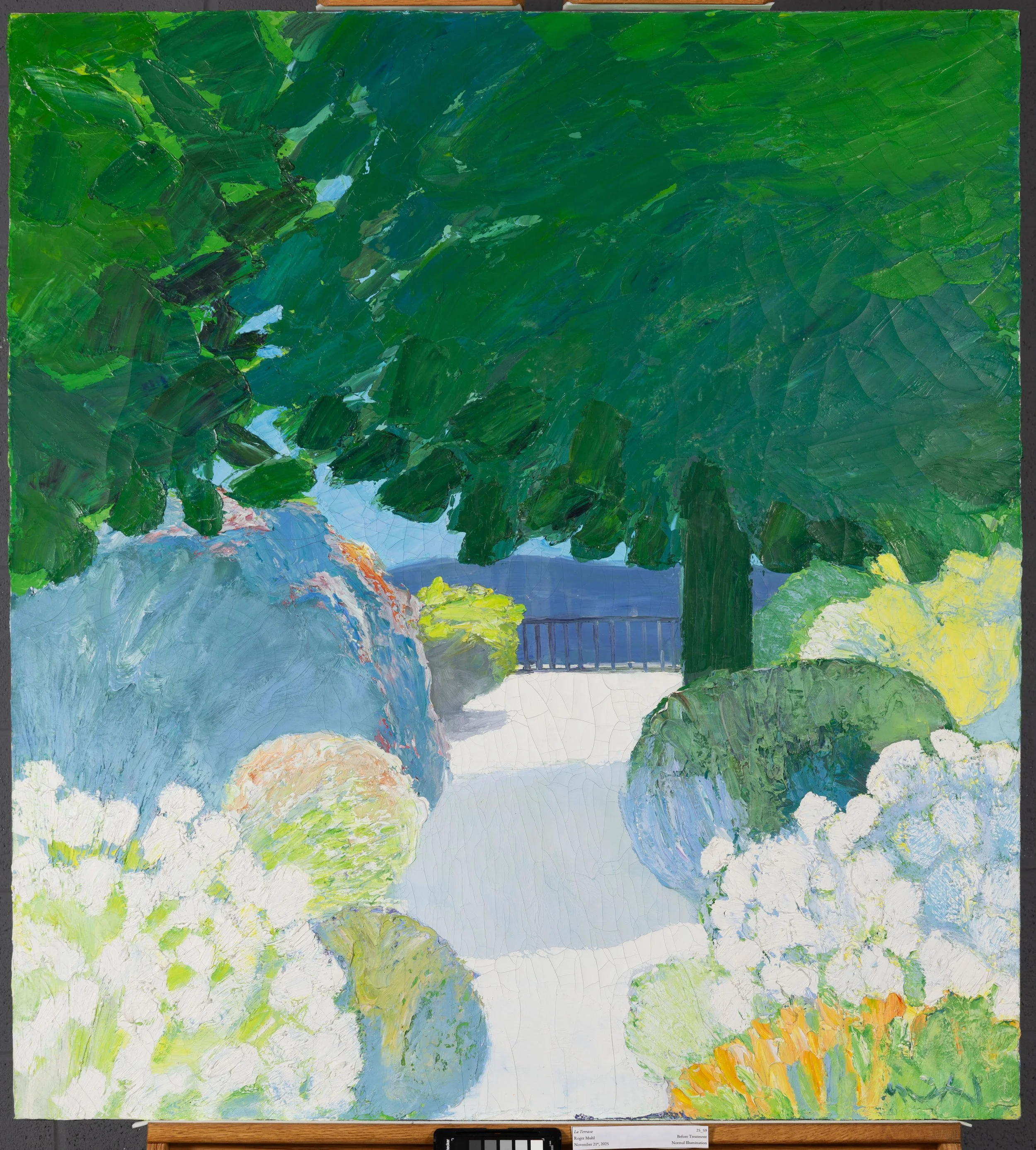
Before Treatment, Normal Illumination
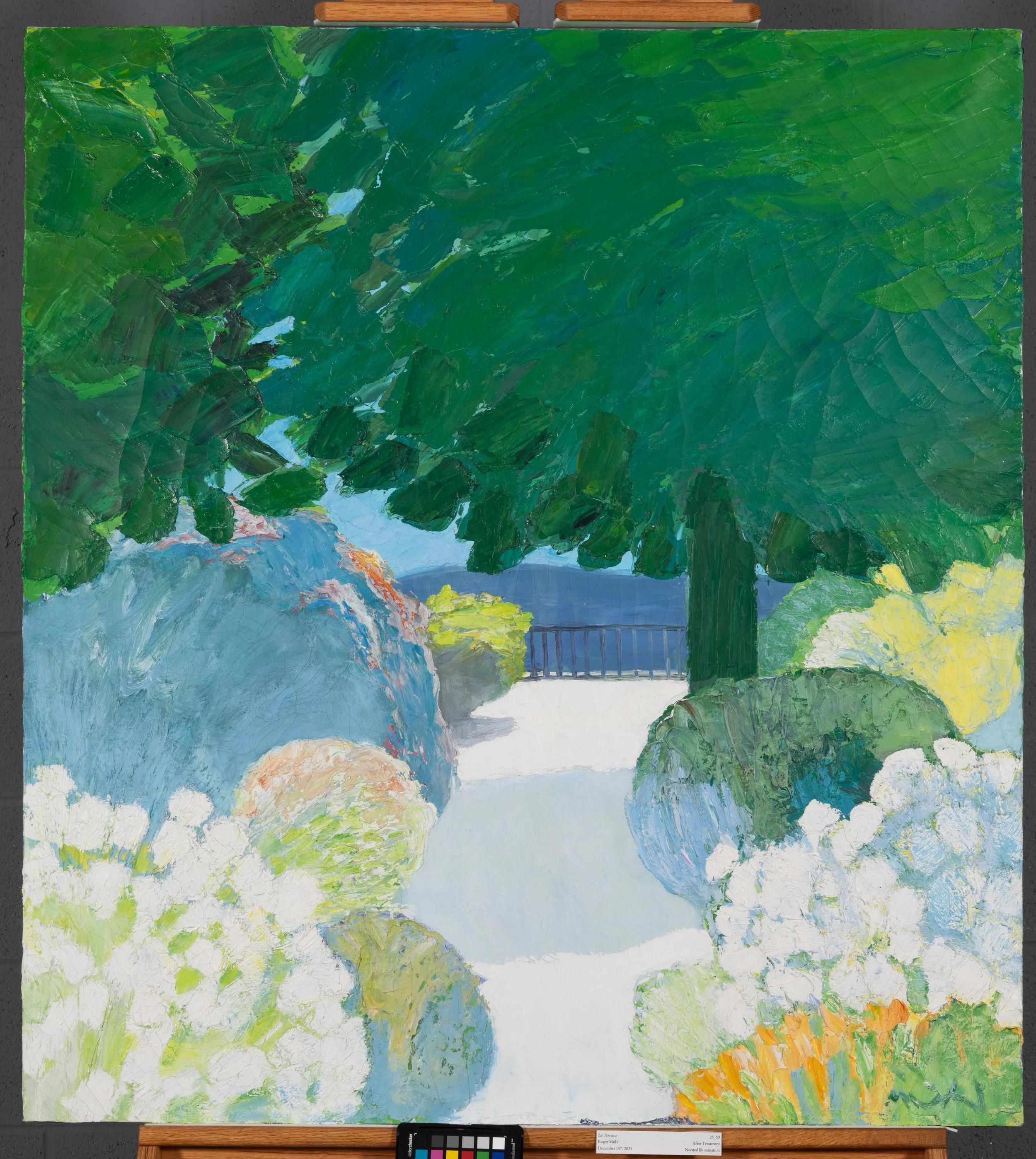
After Treatment, Normal Illumination
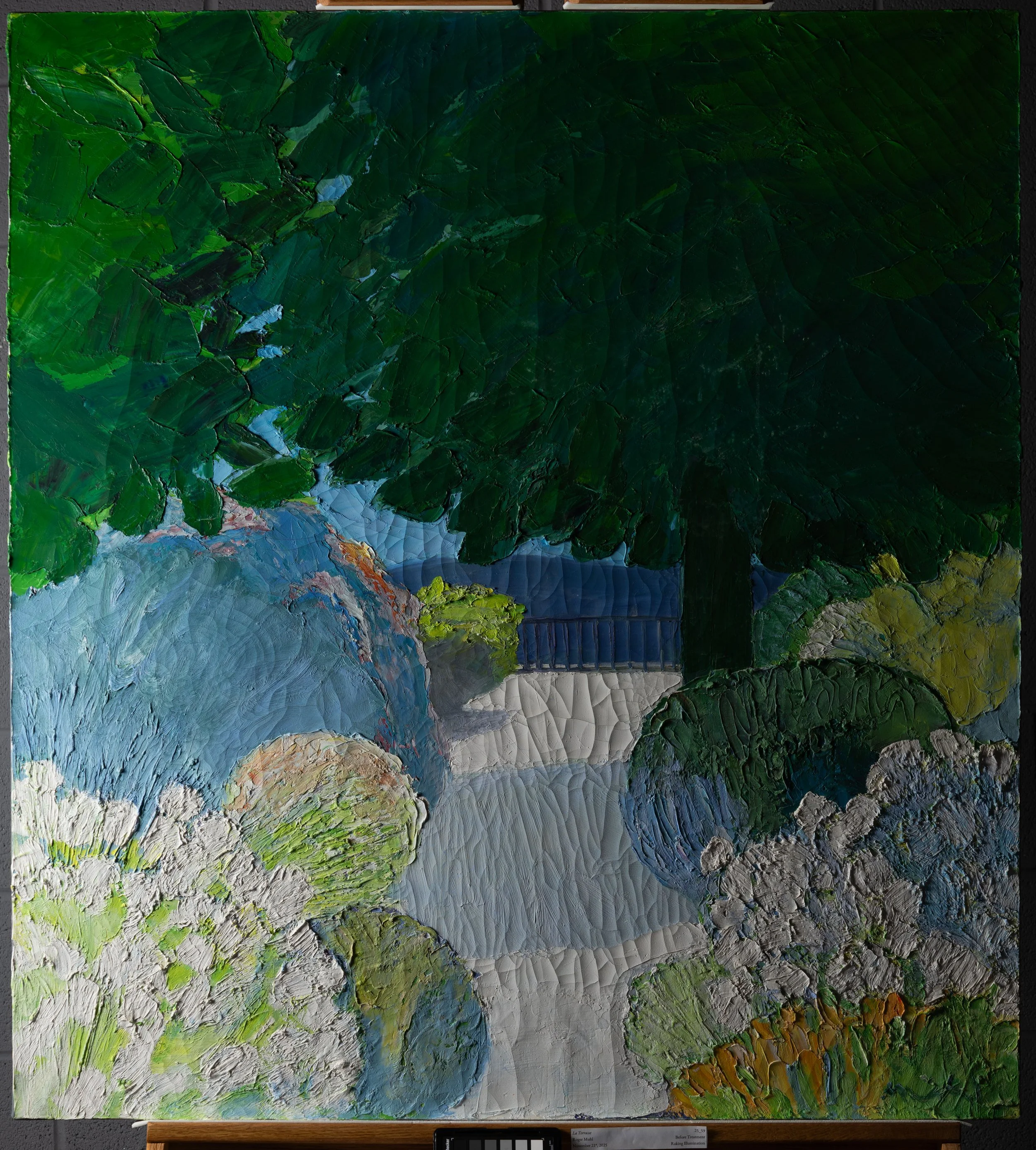
Before Treatment, Raking Illumination
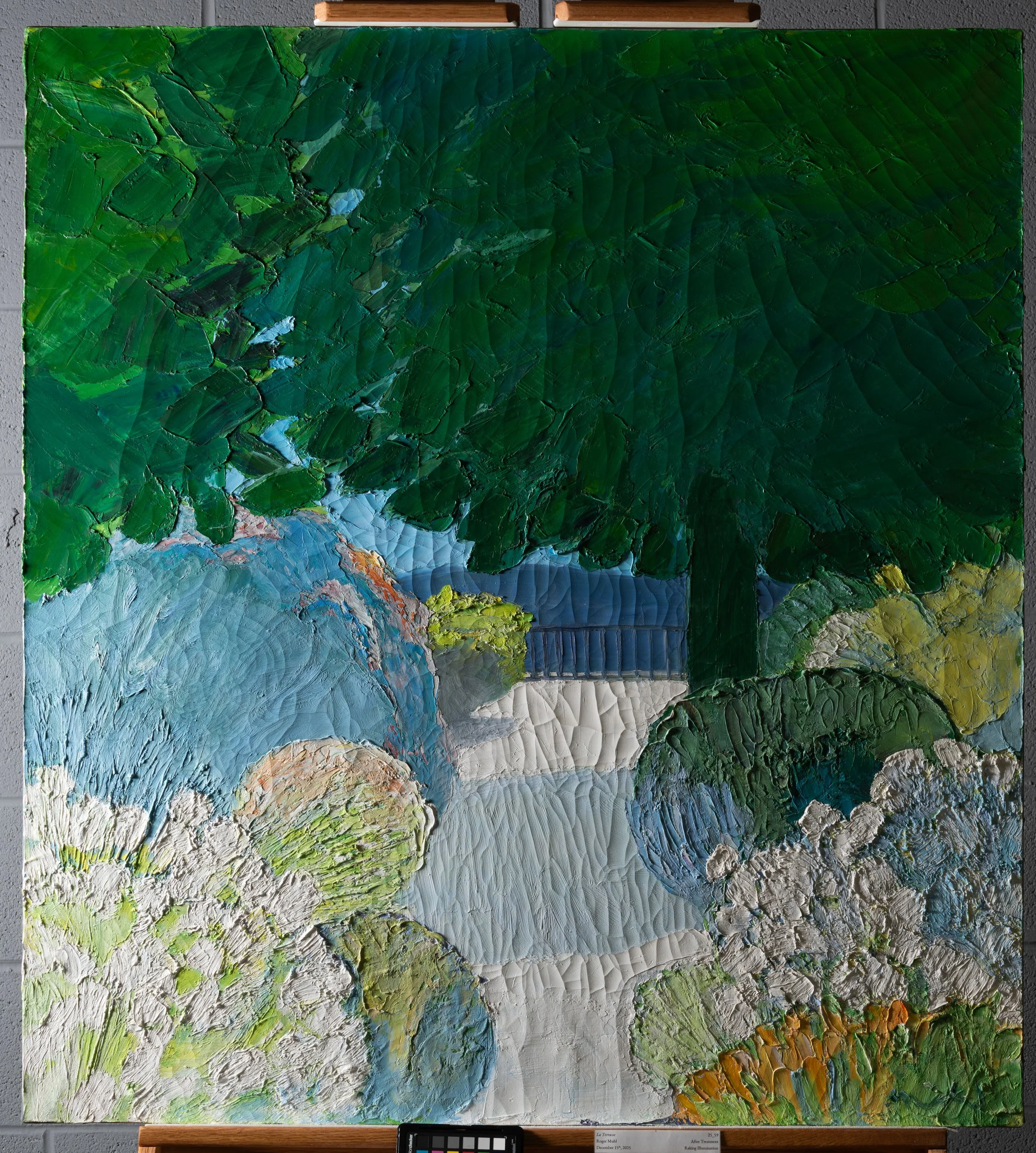
After Treatment, Raking Illumination
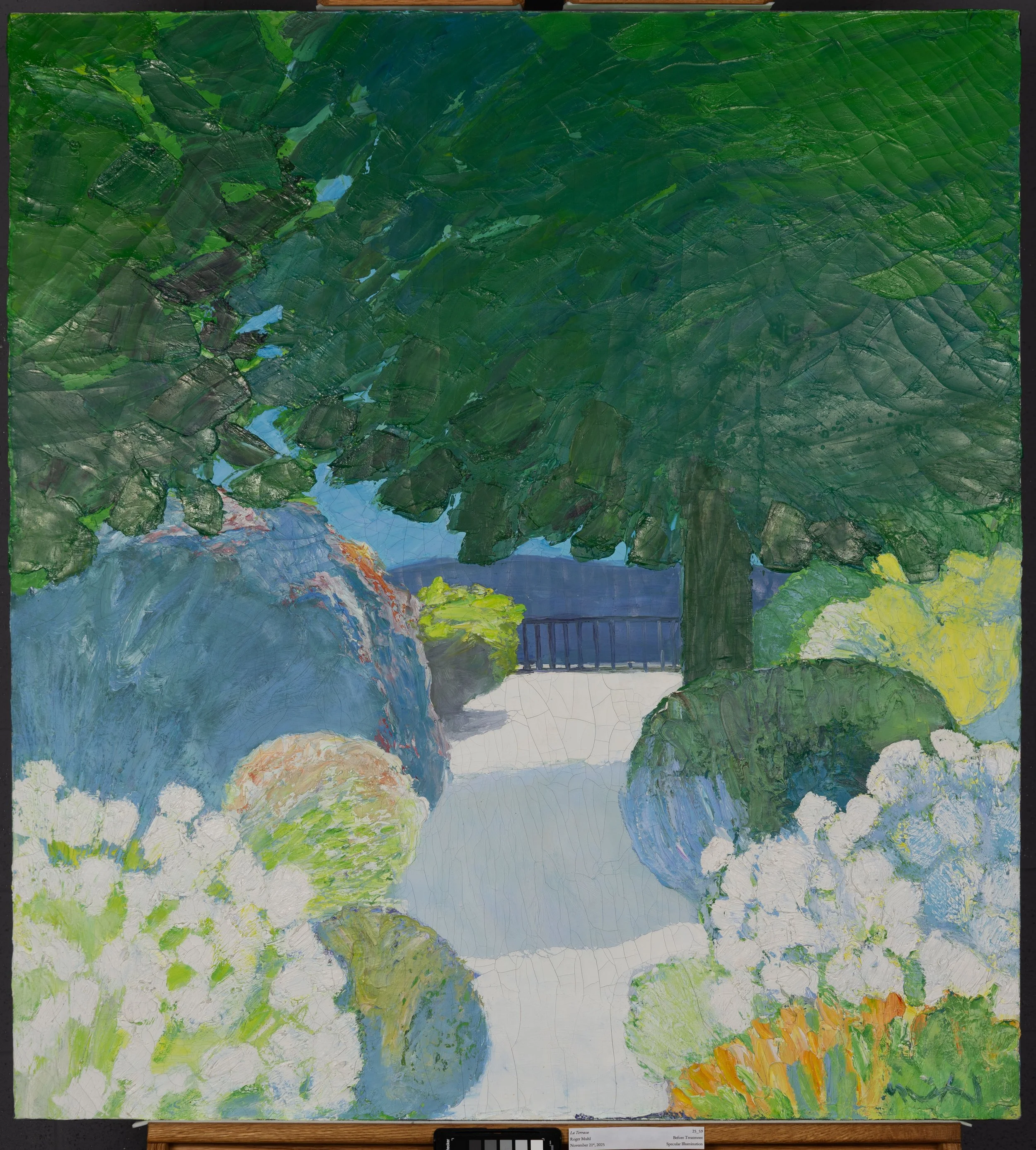
Before Treatment, Specular Illumination
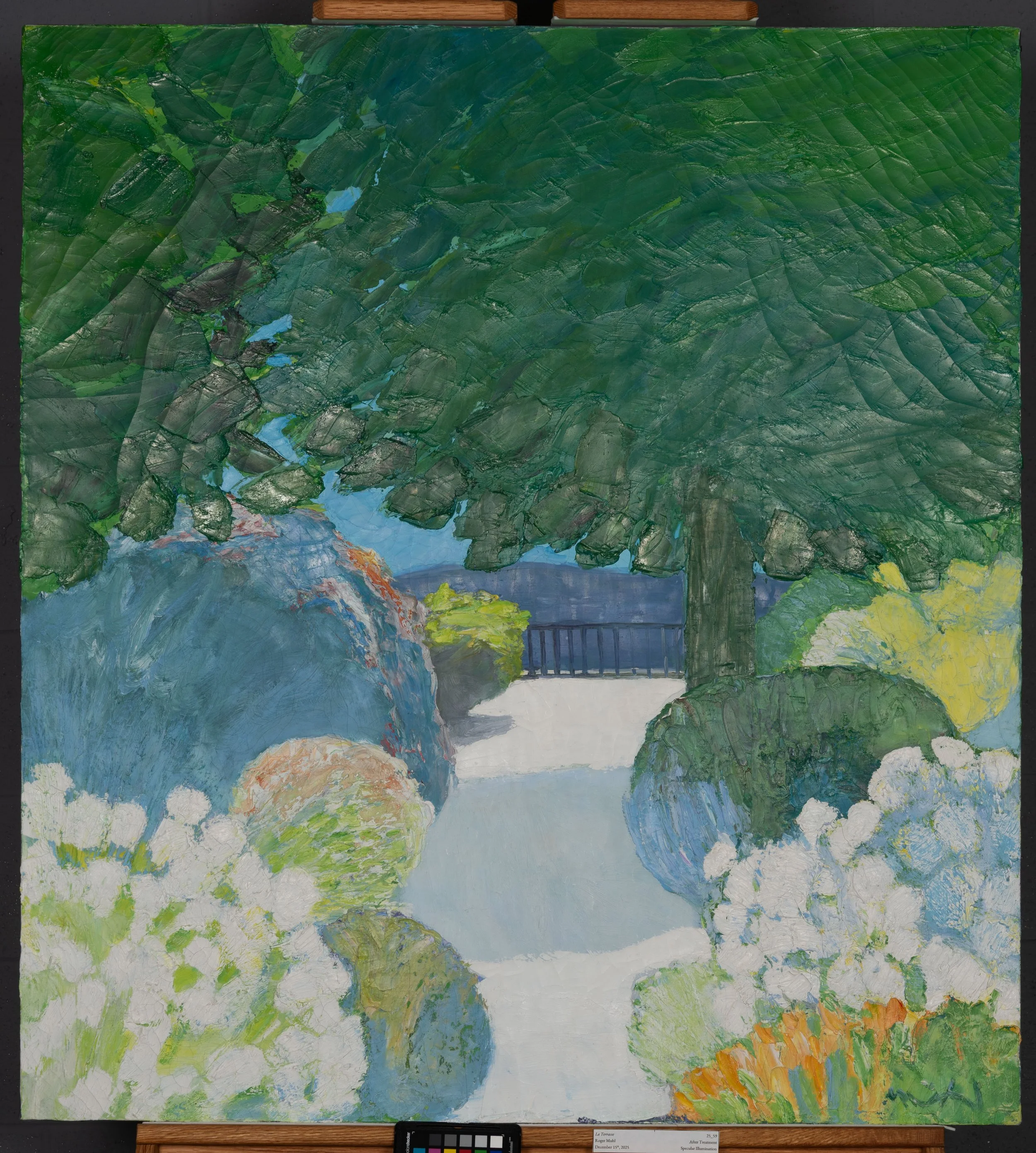
After Treatment, Specular Illumination
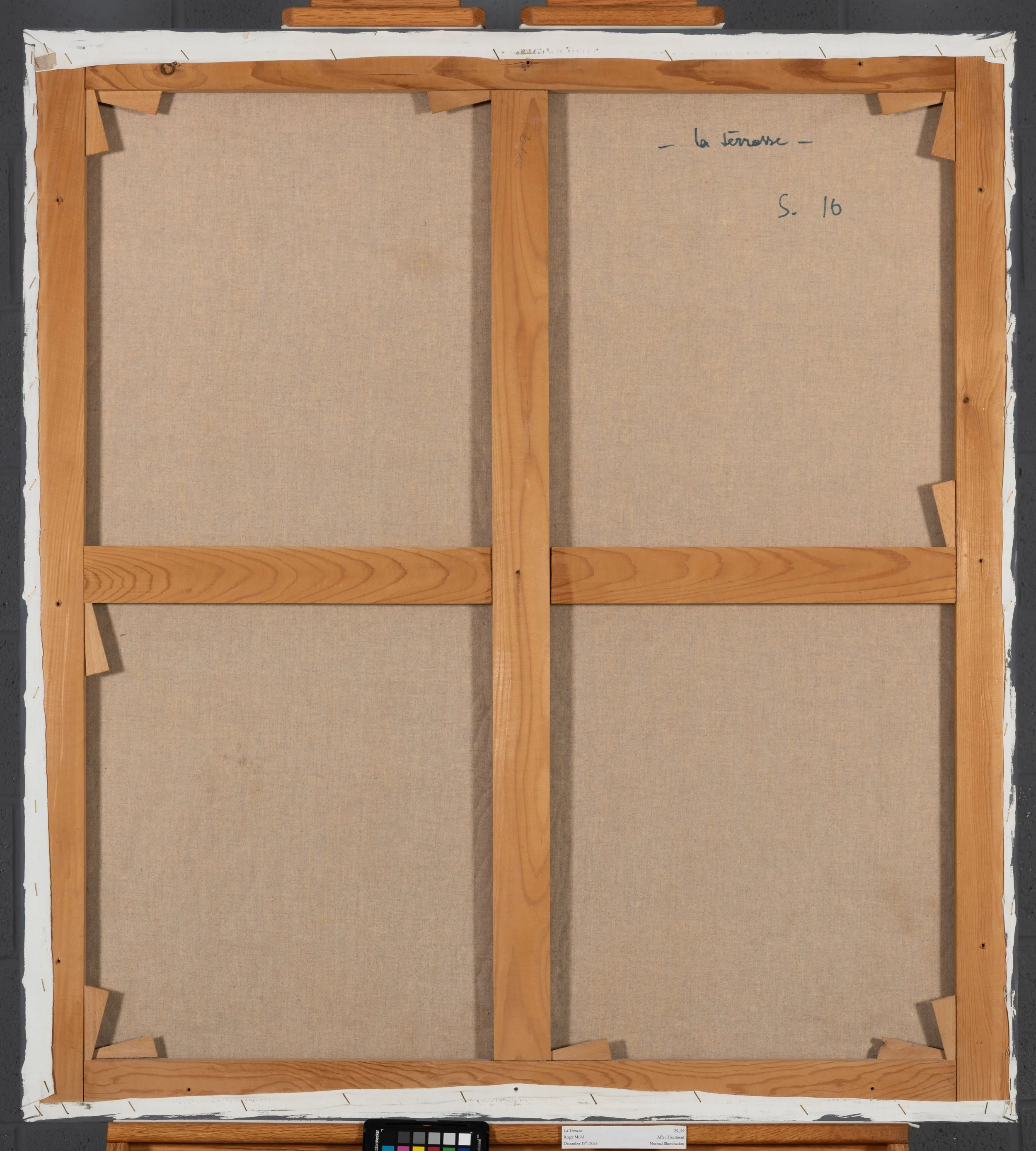
Verso, Normal Illumination
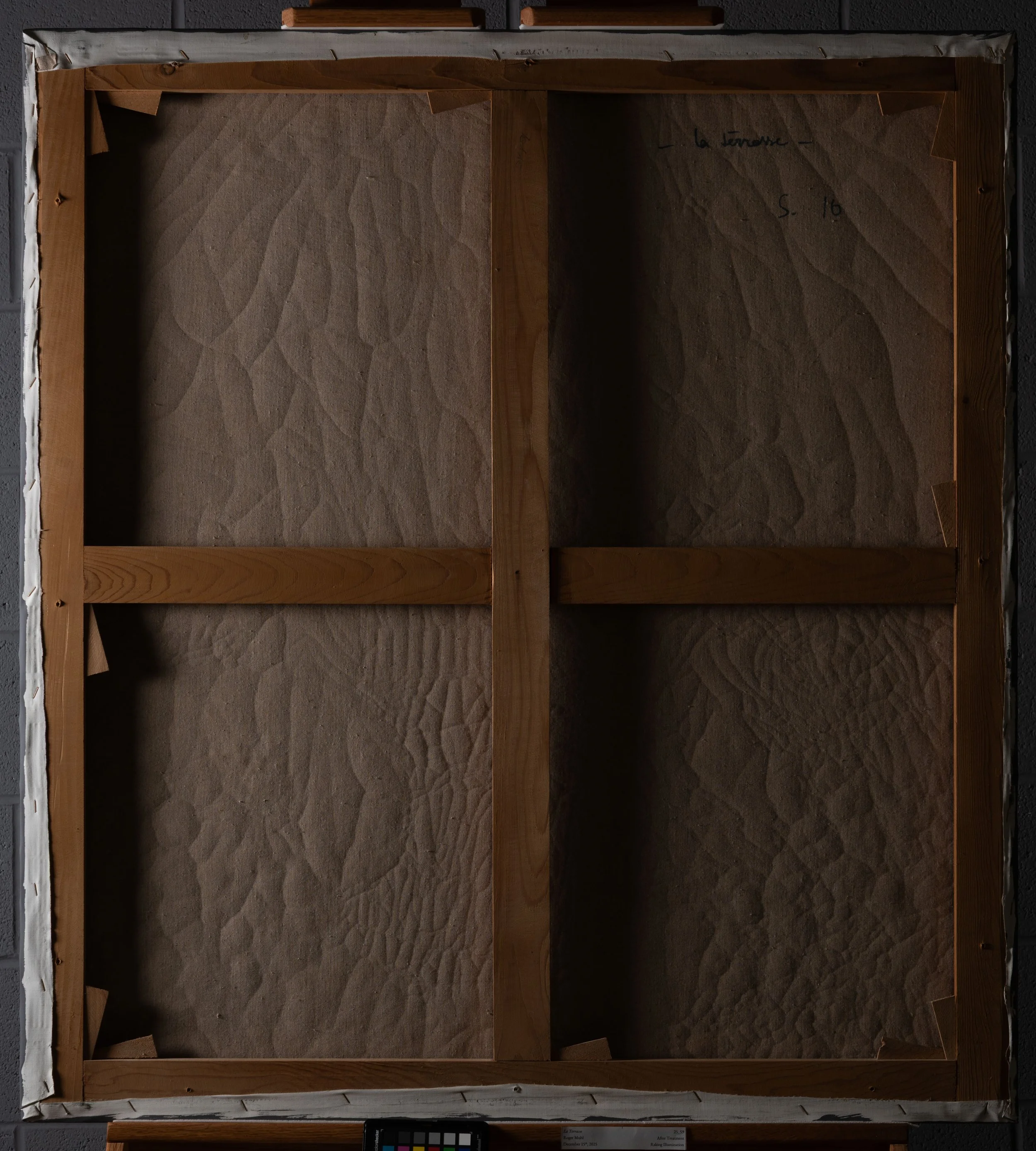
Verso, Raking Illumination
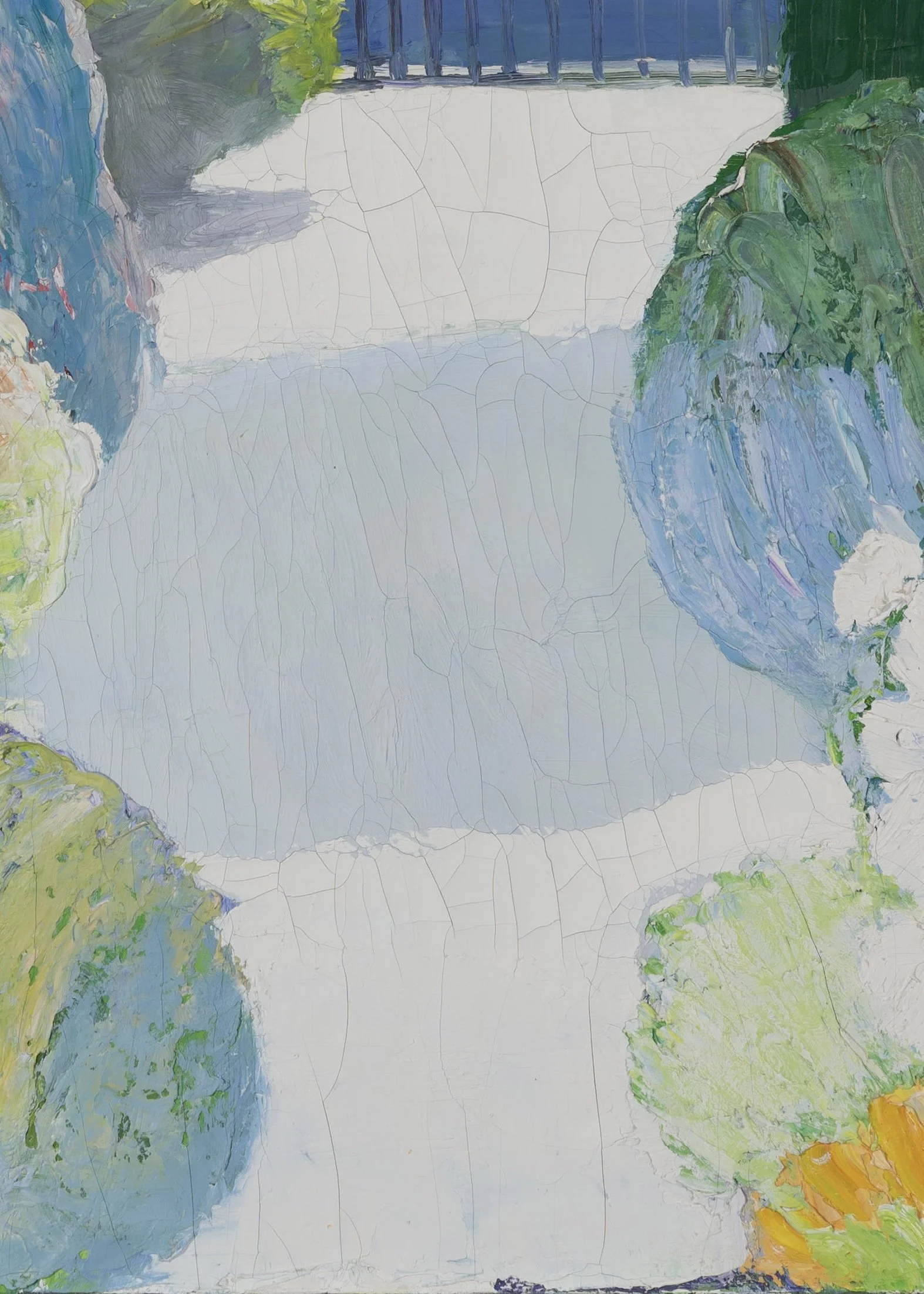
Detail, Before Treatment
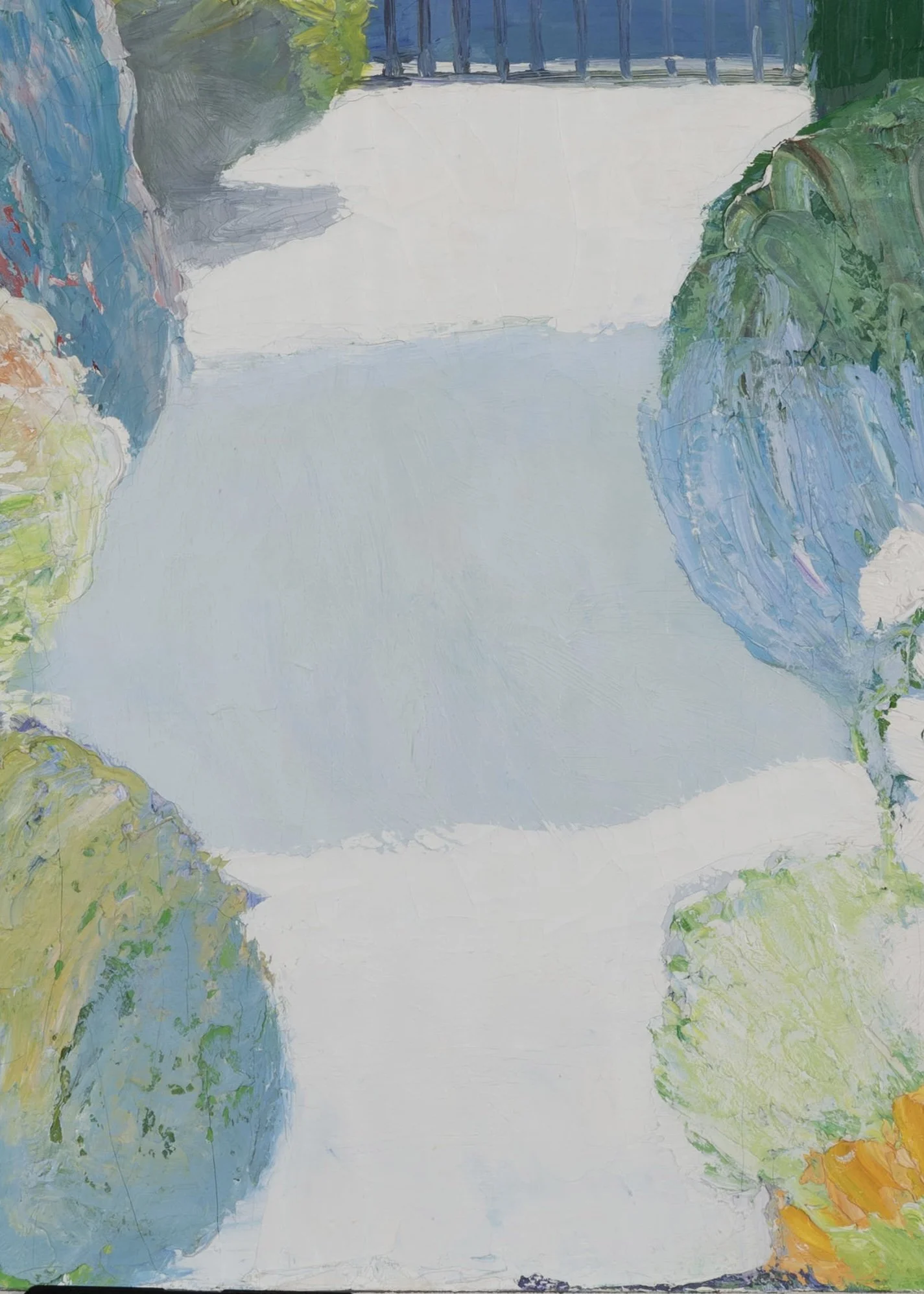
Detail, After Treatment