
Penstemon and Delphinium
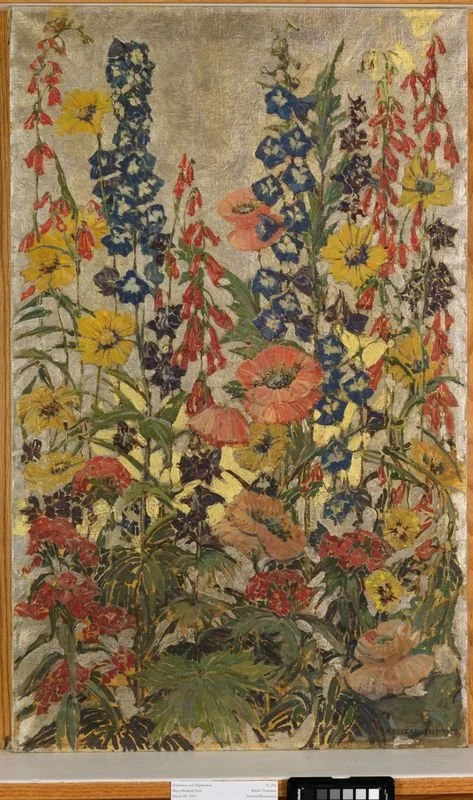
Overall, Before Treatment
Title: Penstemon and Delphinium
Artist: Mary Elizabeth Price
Media: Oil and metal leaf on canvas
Date: unknown
Dimensions: 36” x 22” (unframed)
Credit: Swarthmore College Art Collection, Gift of Ferargil Galleries
Project Summary:
Mary Elizabeth Price (1877–1965) was an American Impressionist painter known for her floral paintings against gilded backgrounds; similar to the composition in Penstemon and Delphinium. She’s a local to the Philadelphia area as much of her career was spent painting in her New Hope, PA studio and she often exhibited alongside other prominent Bucks County impressionists.
Penstemon and Delphinium was brought to our studio to address multiple areas of paint instability, surface dirt, and small canvas tears. The yellow flowers exhibited browning and a crusty texture to their uppermost layers, with scattered small losses that reveal a brighter yellow paint that reflects the original vibrant color used by Price. Cadmium sulfide, the main component in cadmium yellow, is an oil binder that can oxidize in the presence of light and moisture to form cadmium sulfate and other degradation products. This deterioration is a challenge for modern art conservators as the darkening is irreversible and often presents itself as powder on the surface that is vulnerable to abrasion and nearly impossible to clean. The red flowers that also may contain cadmium showed this deterioration to a lesser extent.
The metal leaf making up the background was also friable and prone to abrasion. For this reason, treatment proceeded slowly under the stereomicroscope. All areas of flaking and cracked paint were consolidated with a synthetic adhesive reversible in water. The powdery yellow flowers received multiple rounds of consolidation. We lightly dry-cleaned the surface with a brush. The more stable paint films were cleaned with cosmetic sponges followed by local aqueous cleaning which revealed brighter colors and subtle surface gloss variation. We mended the tears, and keyed out the stretcher to address the slack in the canvas. A dilute varnish was locally applied to the yellow flowers to saturate the surface and act as an additional protective layer. The small losses were filled and inpainted to match the original.
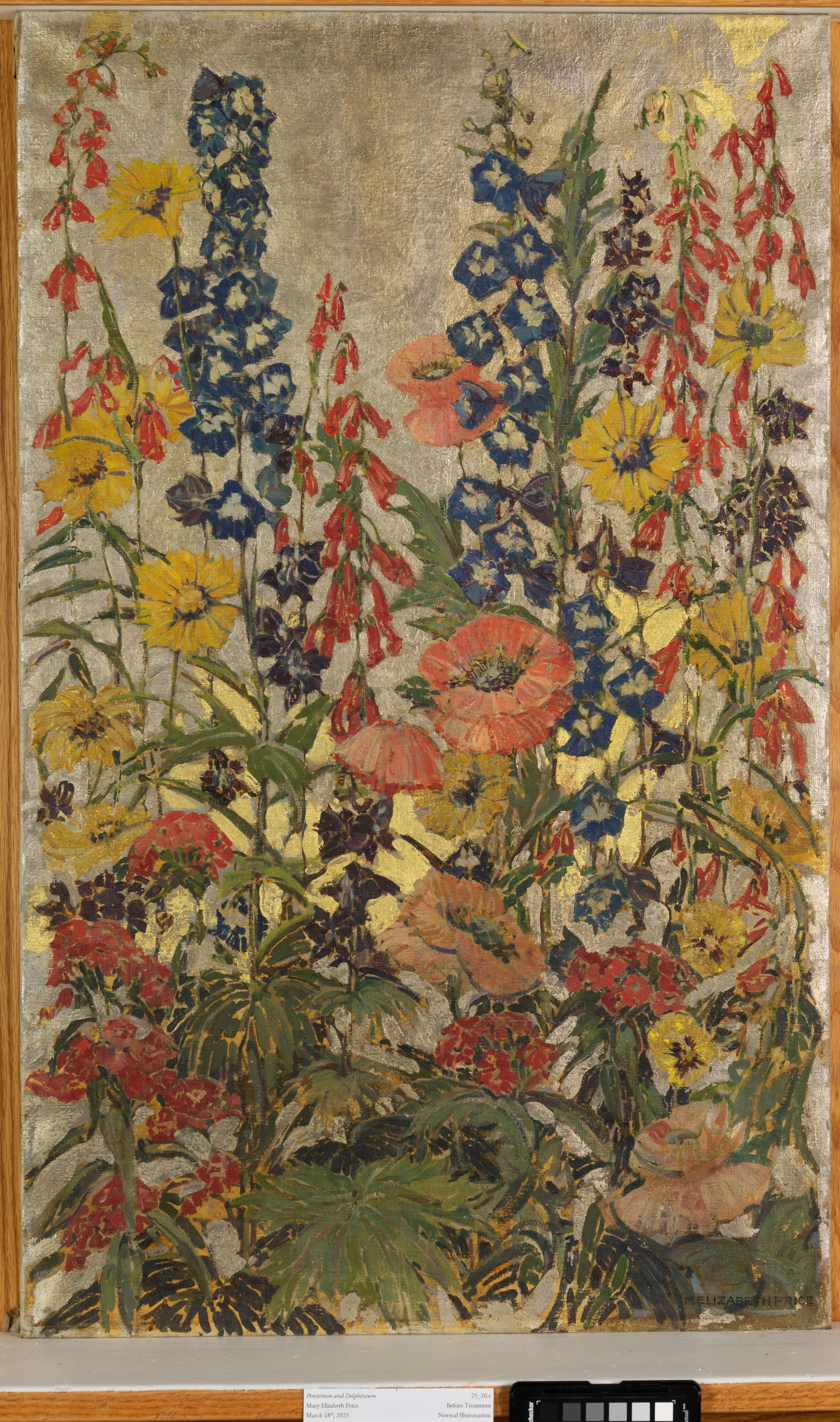
Before Treatment, Normal Illumination
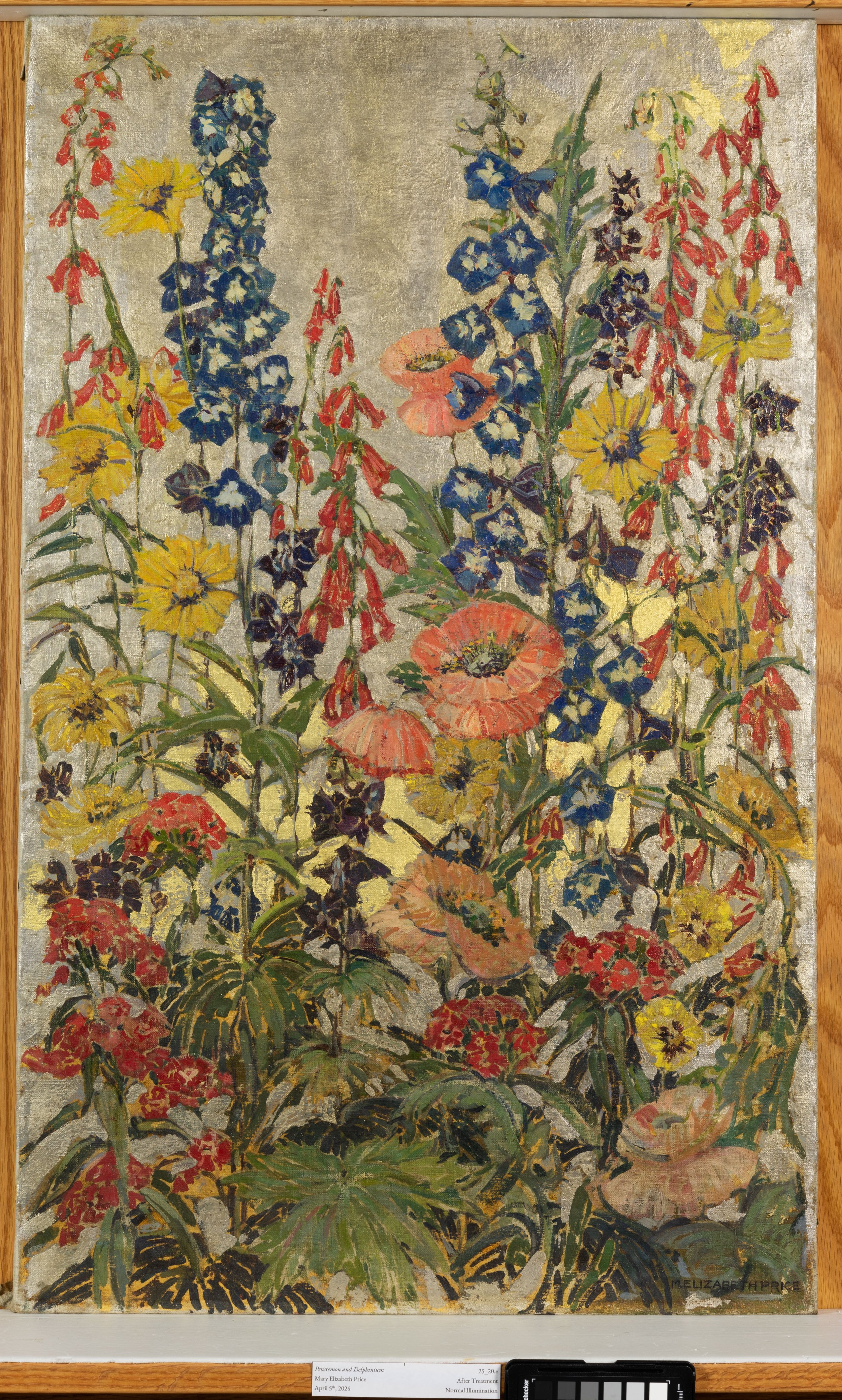
After Treatment, Normal Illumination
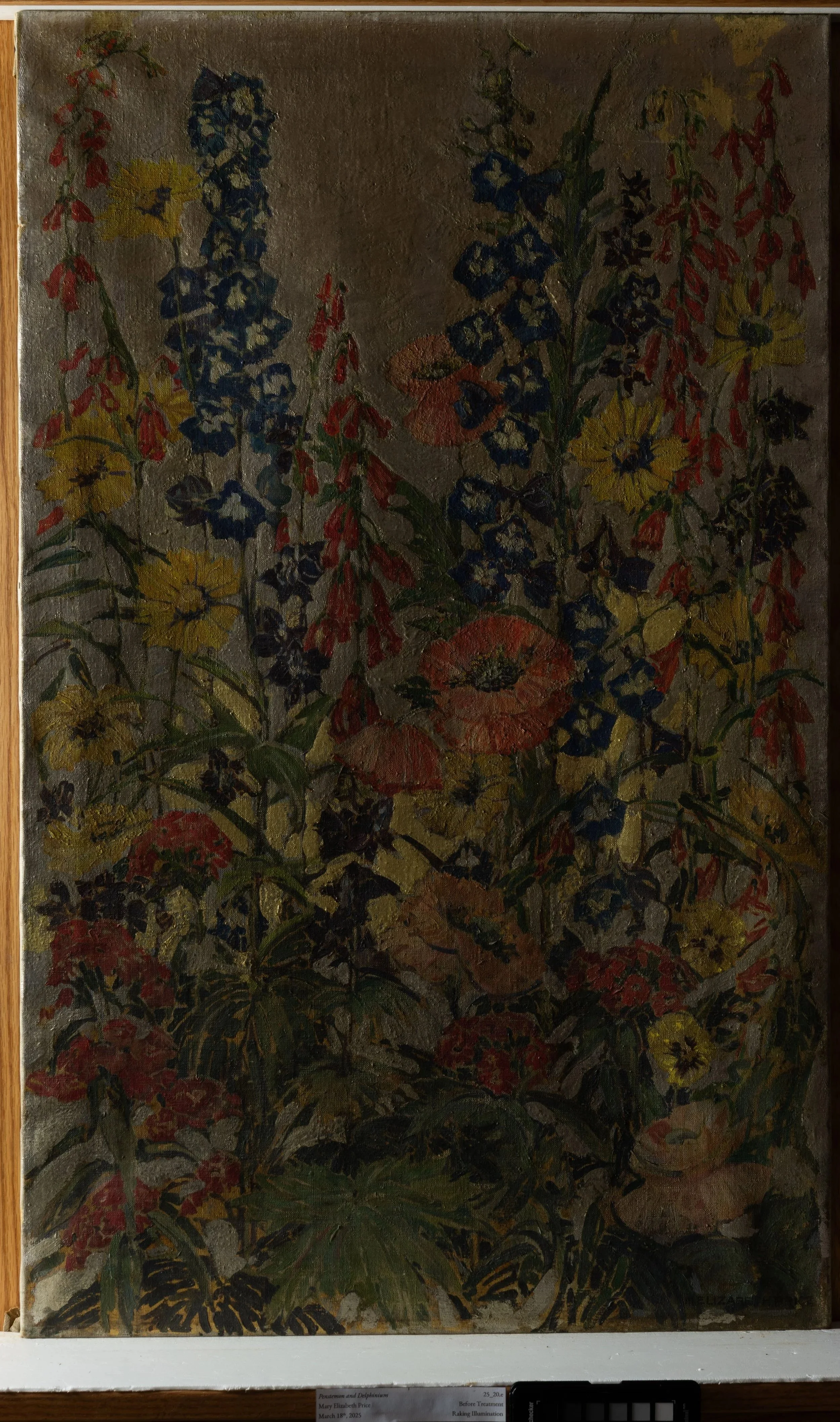
Before Treatment, Raking Illumination
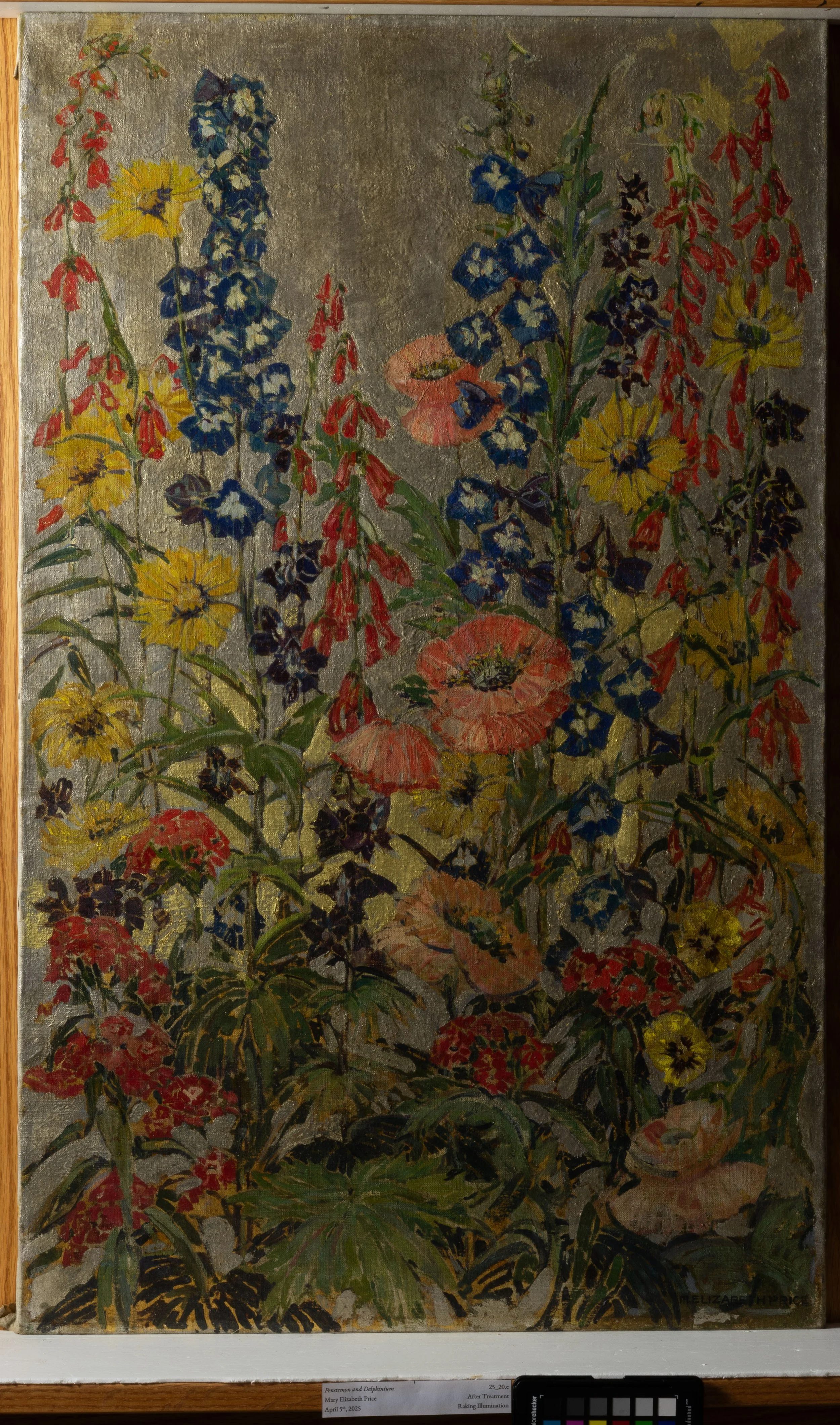
After Treatment, Raking Illumination
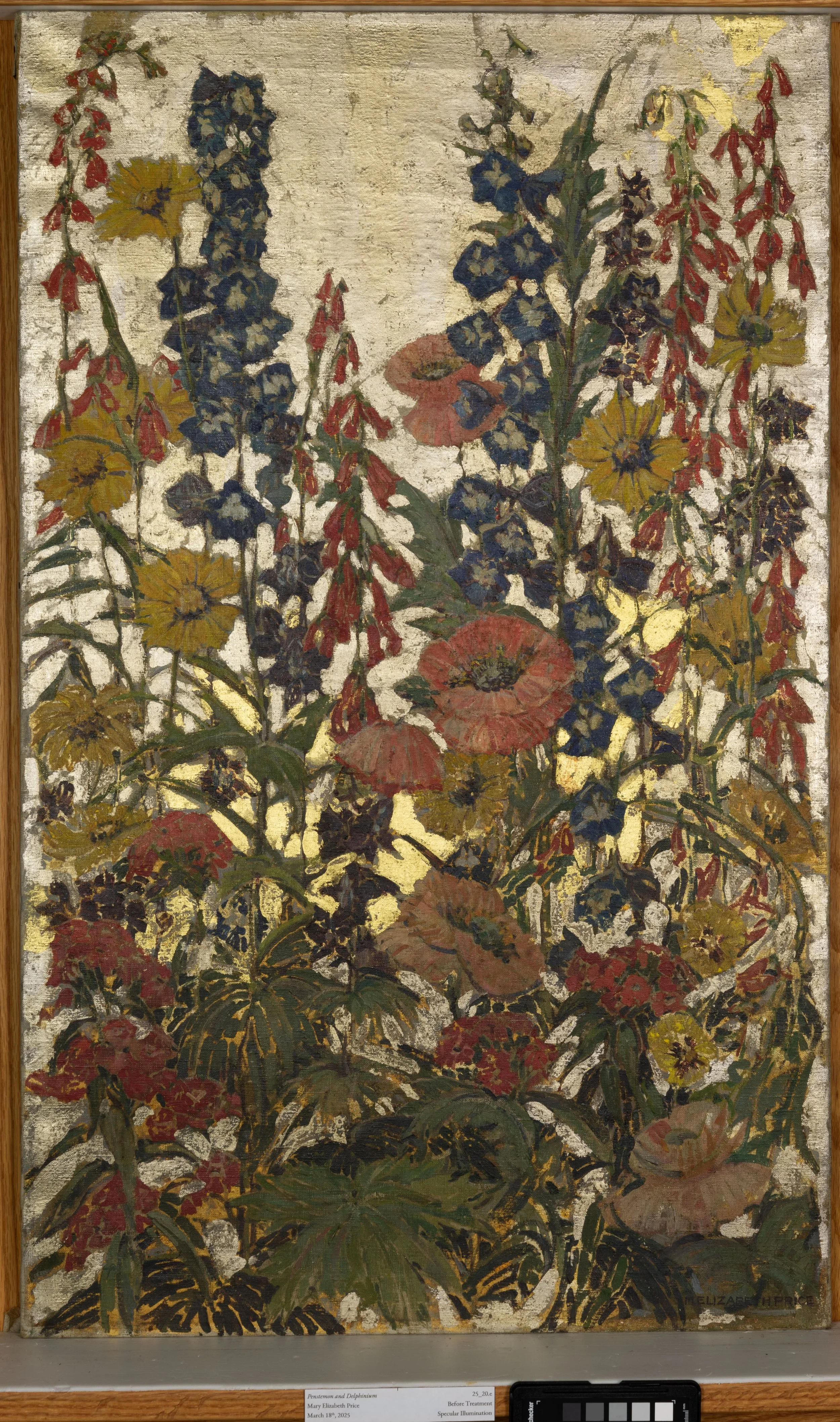
Before Treatment, Specular Illumination
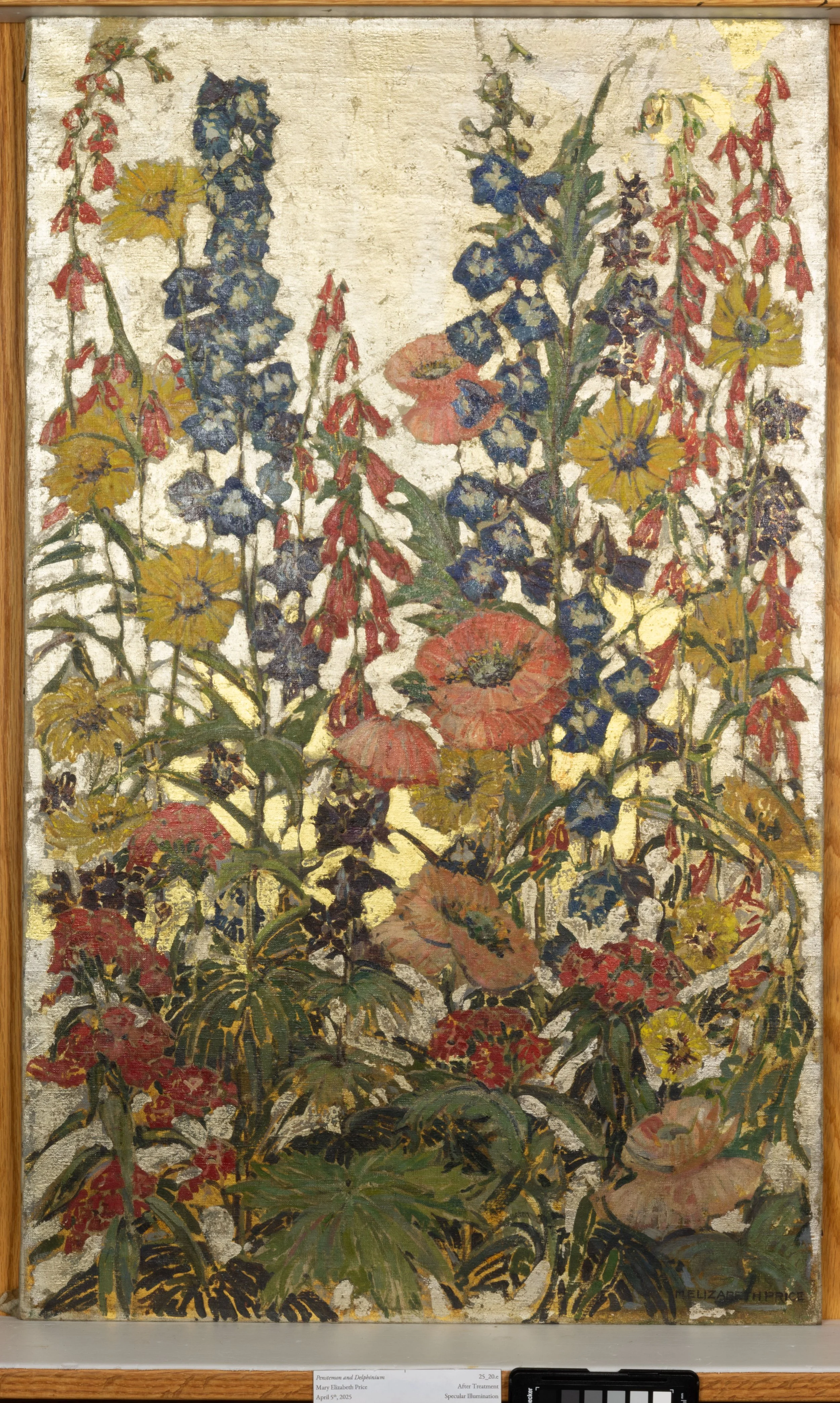
After Treatment, Specular Illumination

Before Treatment, Normal Illumination

After Treatment, Normal Illumination
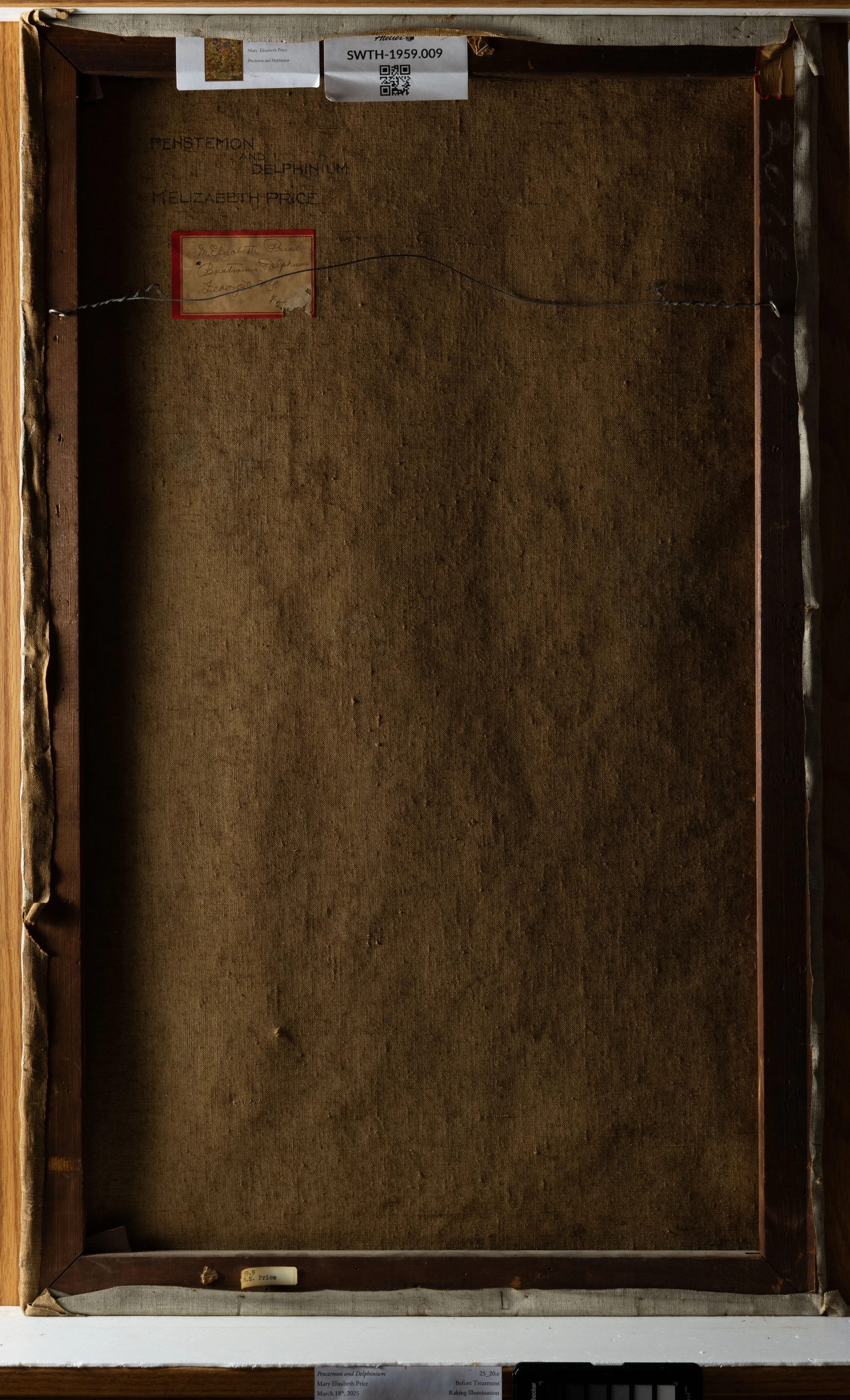
Before Treatment, Raking Illumination
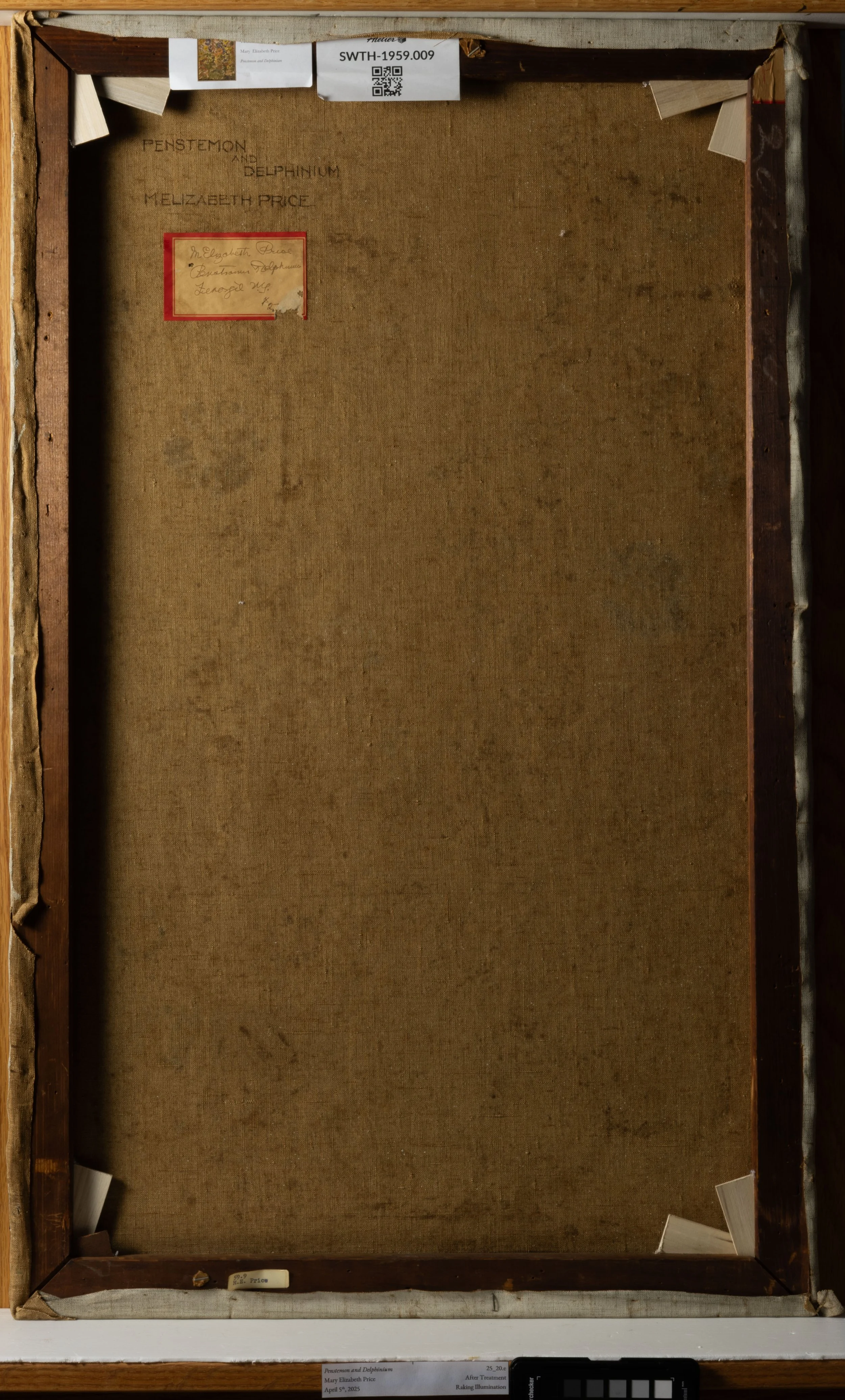
After Treatment, Raking Illumination