
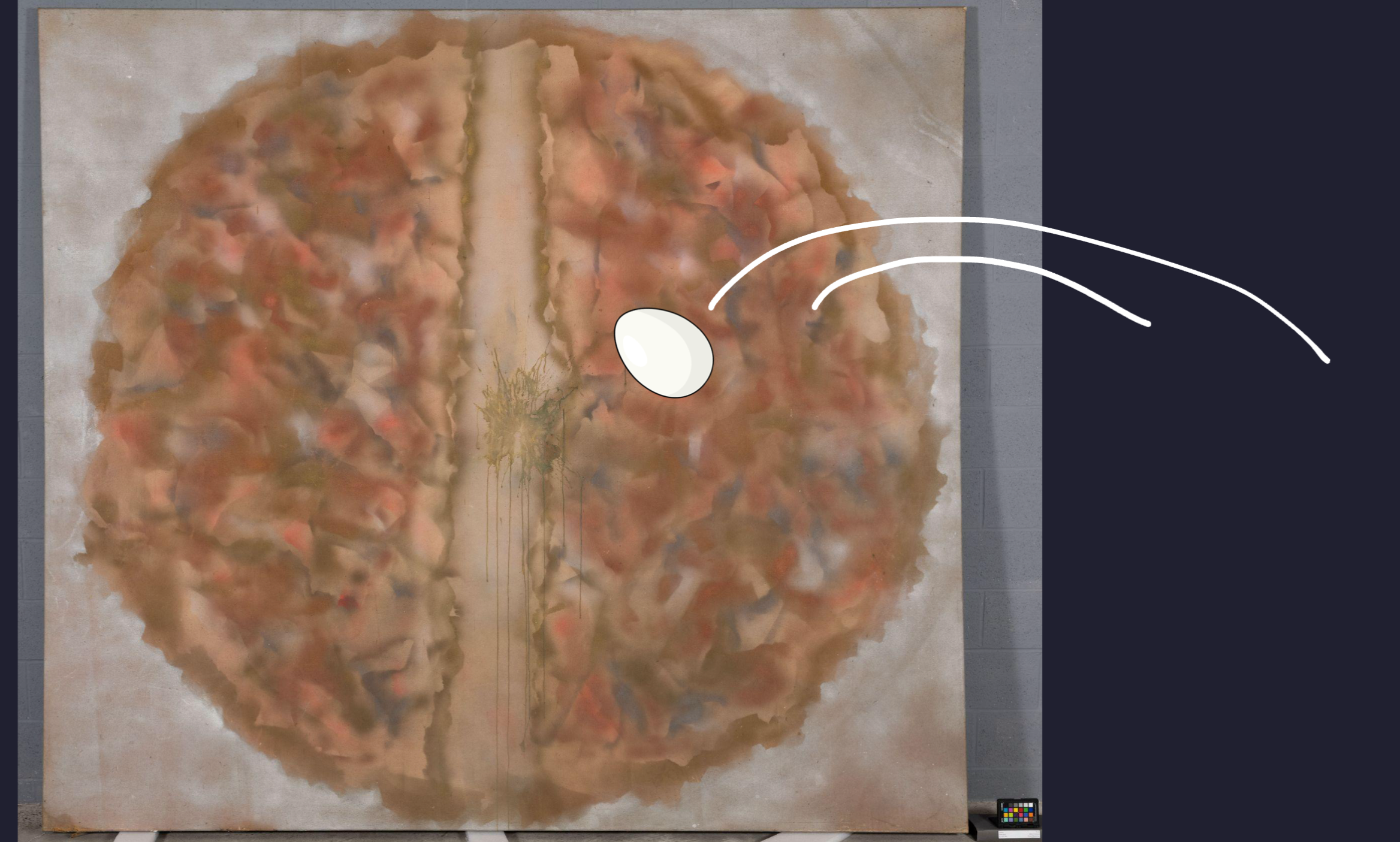
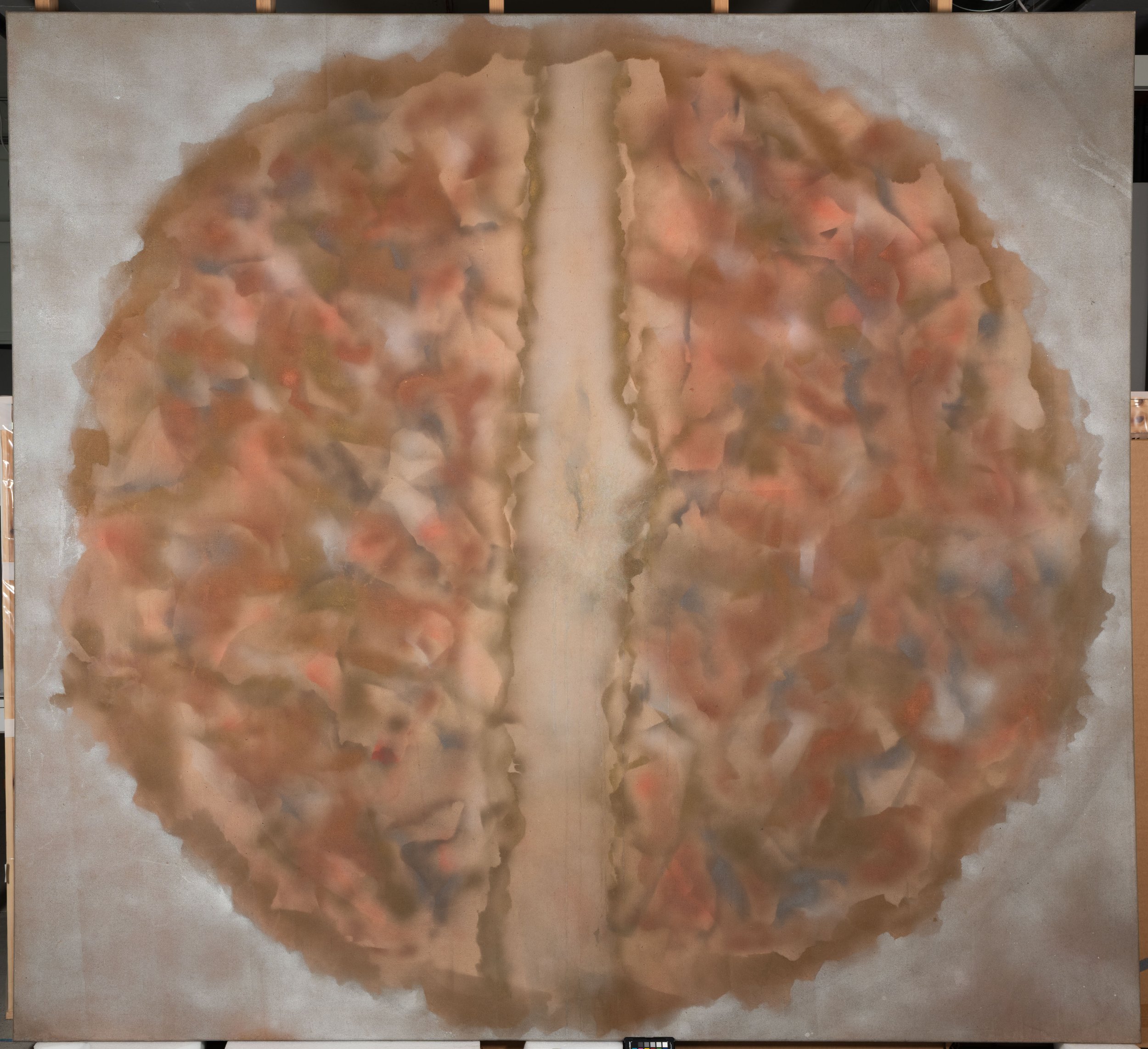
Fig. 1: The egged painting. 50+ years after the incident. Unknown Title; Sheila Isham; 1967-1969 (est); acrylic on cotton; 9’ 3” x 8’ 7”; before treatment, normal light
Background
At some point in the 1970s, a Bryn Mawr College student threw an egg square in the center of a monumental painting hanging in the Erdman Dining Hall. The egg broke and dripped down the nine-feet-wide, abstract composition that had been recently created and donated by college alum, Sheila Isham. After this act of vandalism, the painting was immediately put into storage where it stayed until November 2024 when Bryn Mawr reached out to Flux Art Conservation to inquire about cleaning the painting and bringing it to an exhibitable condition.
What happens to a raw egg on a painting after 50+ years in storage? Eggs become progressively more insoluble and harder to wash off as they dry. To complicate things further, Isham used metallic pigments which reacted with the egg and formed green corrosion products. You know we love a good challenge here at Flux, so of course we accepted the project.
Who was Shelia Isham?
We began by learning everything we could about Sheila Isham. Isham was not simply a local artist and Bryn Mawr alum whose work happened to enter the college's collection. She was an accomplished painter and printmaker whose work is held in permanent collections of major museums, including the Hirshhorn, Princeton University Art Museum, and the Buffalo AKG Art Museum. Her marriage to Hayward Isham, who served as a Foreign Service Officer for the Department of State, gave her the opportunity to live and work in various places around the world. Influences from Europe, Asia, and America can be seen throughout her body of work. She received her master’s degree from the Academy of Arts in Berlin where she was the first American student to be accepted and the only international student in her group.
The story of our egged painting starts in Hong Kong where Isham studied classical Chinese calligraphy and taught contemporary art at the Chinese University. Upon returning to the United States, she worked to synthesize visual energies of Eastern and Western cultures. Although the title of our painting is unknown, the composition and style are like other paintings in Isham’s Galaxy Series (1967–1969), a series she made in D.C. after returning from China. Throughout her Galaxy Series, Isham frequently depicts the sacred Chinese symbol “bi” – a circular motif that represents the heavens.
Why was her painting a target?
Because the donation and egging incident occurred before the official collections committee was developed at Bryn Mawr, there are very few records in the archives that mention our painting. The earliest record is a letter to Isham dated June 18, 1968, where an unknown sender responds to Isham’s request for her lithographs to be sent back to her studio following a loan. The sender mentions, “your picture had already been hung in the dining-room – where it looks very handsome.”
The next time the painting is mentioned in the archives is in an internal letter dated 1979 from Carol Campbell, the former Curator of Art and Artifacts, written to the then college assistant president, Ellie Reisner. Campbell shares her initial reactions to the piece and notes that she is “shocked at the disrespect of the diners but likewise understands it as a social or aesthetic commentary.” She states, “there is real damage to the painting which a simple washing will not correct” and “this work needs attention.” The exact date and motives for the vandalism were never documented. Although Campbel believed the egging to be social commentary, it was more likely accidental collateral damage in a food fight. During personal communication with Bryn Mawr alums, they noted a history of irregular, but present food fights. Despite Campbell’s plea, the painting remained in storage and was not treated until now.
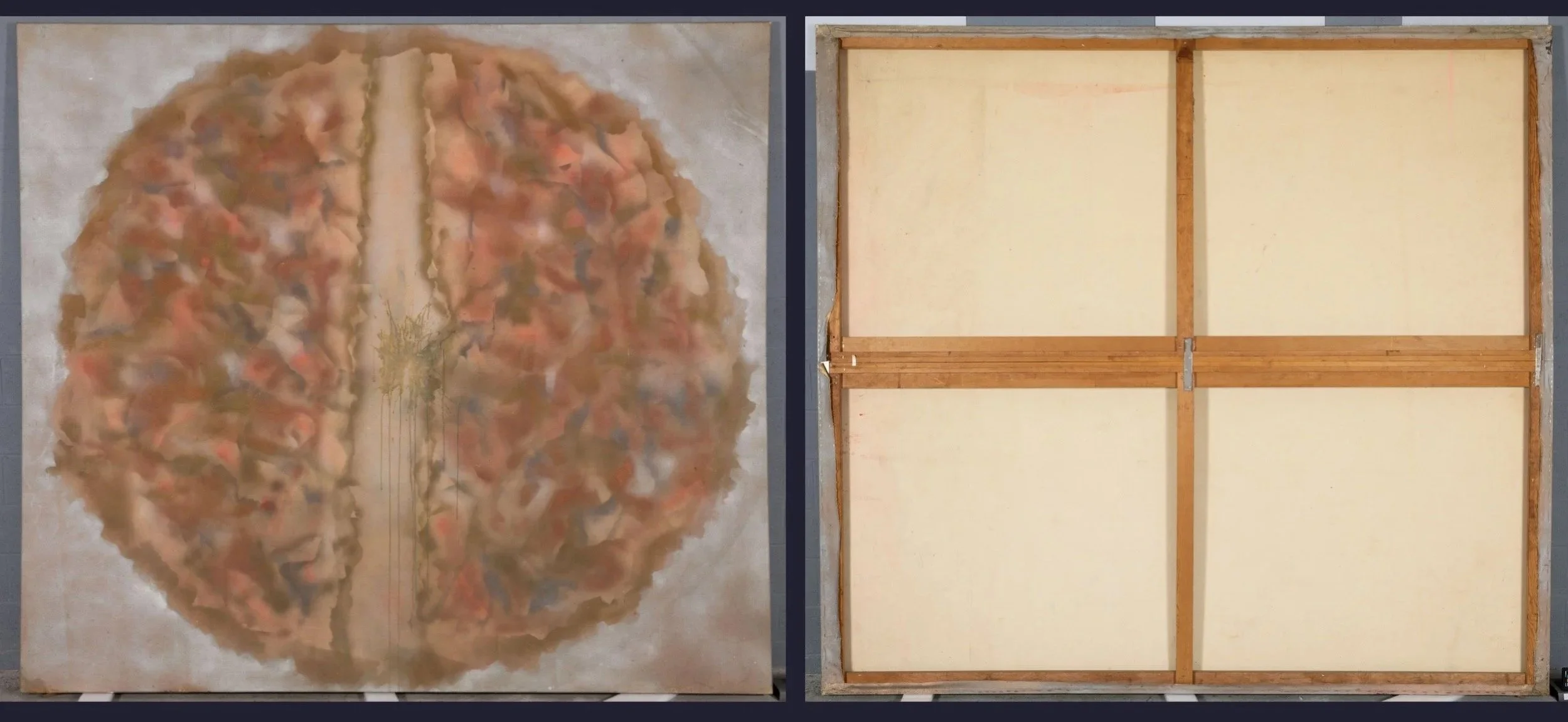
Front (left) and back (right), before treatment, normal light, Unknown Title; Sheila Isham; 1967-1969 (est); acrylic on cotton;
The painting when it arrived at Flux
The painting is large, at over nine feet tall and eight and a half feet wide, it is painted on an unprimed, heavy-weight cotton canvas. If you look at the image above you can see how Isham built the support. The canvas is stretched on two strainers that are stacked and held together with mending plates. There are cuts in canvas edge that suggest Isham intended the support to be foldable to help with transporting the finished painting.
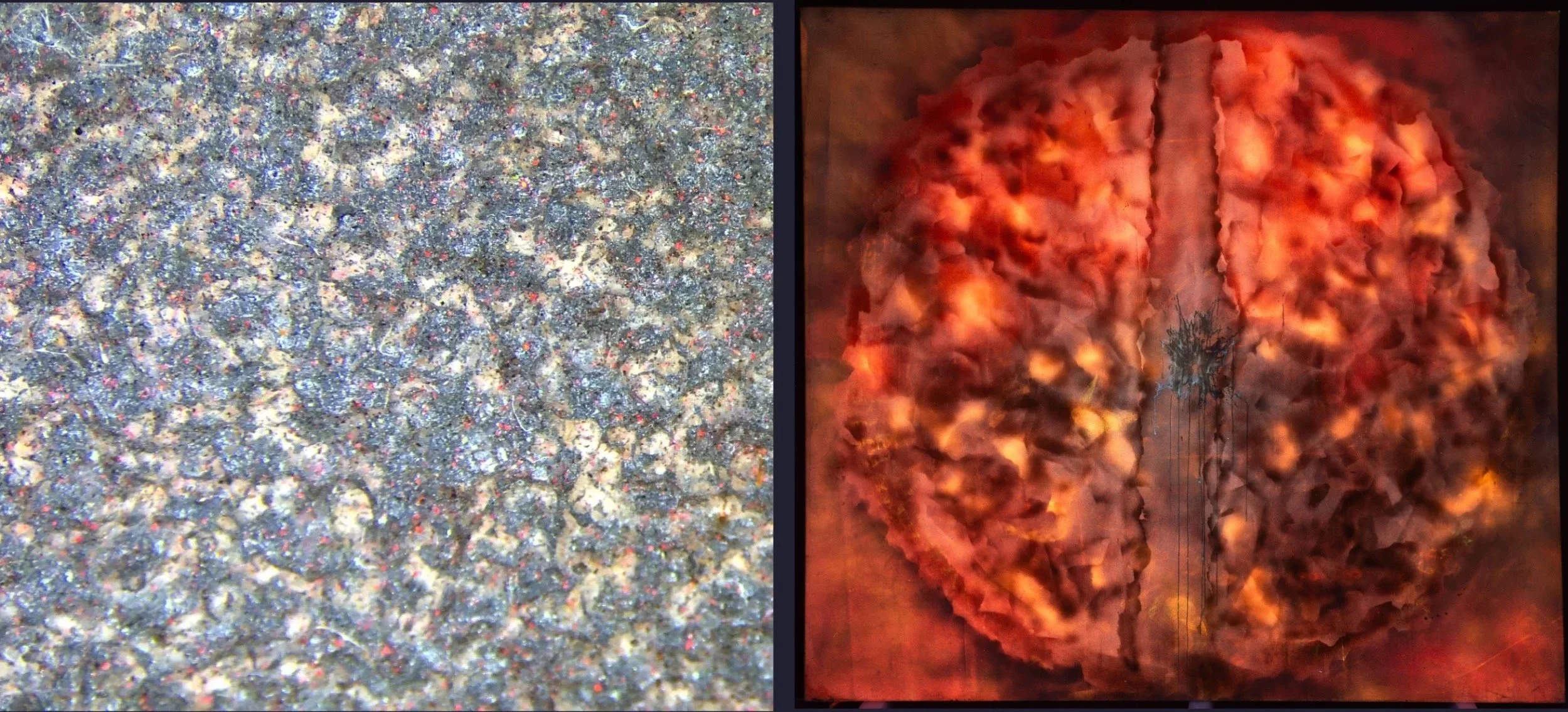
Left:Photomicrograph, 12.5x, normal light, before treatment; Right: Overall, UV light, before treatment
Isham completed this work using her signature airbrush technique applied directly to the unprimed canvas. This thin and flexible paint layer appeared unaffected by any previous folding. Under the microscope, we can see the sparsely pigmented, non-cohesive layers typical of airbrush. Isham used brightly fluorescent pigments under the final layer of hazy metallic spray paint. Examination under UV light confirmed the presence of a fluorescent underpainting, with pink, orange, and green, fluorescent pigments noted across the painting.
We enlisted the help of Winterthur Museum scientists to analyze samples and really understand what we were dealing with. The scientists confirmed the paint is acrylic which is consistent with Isham’s other Galaxy Series paintings catalogued as “acrylic on canvas.” Isham’s metallic pigments were identified as aluminum and copper/zinc alloys. Samples taken from the green-colored corrosion products were characterized as copper and zinc stearates.
Initial Cleaning Tests
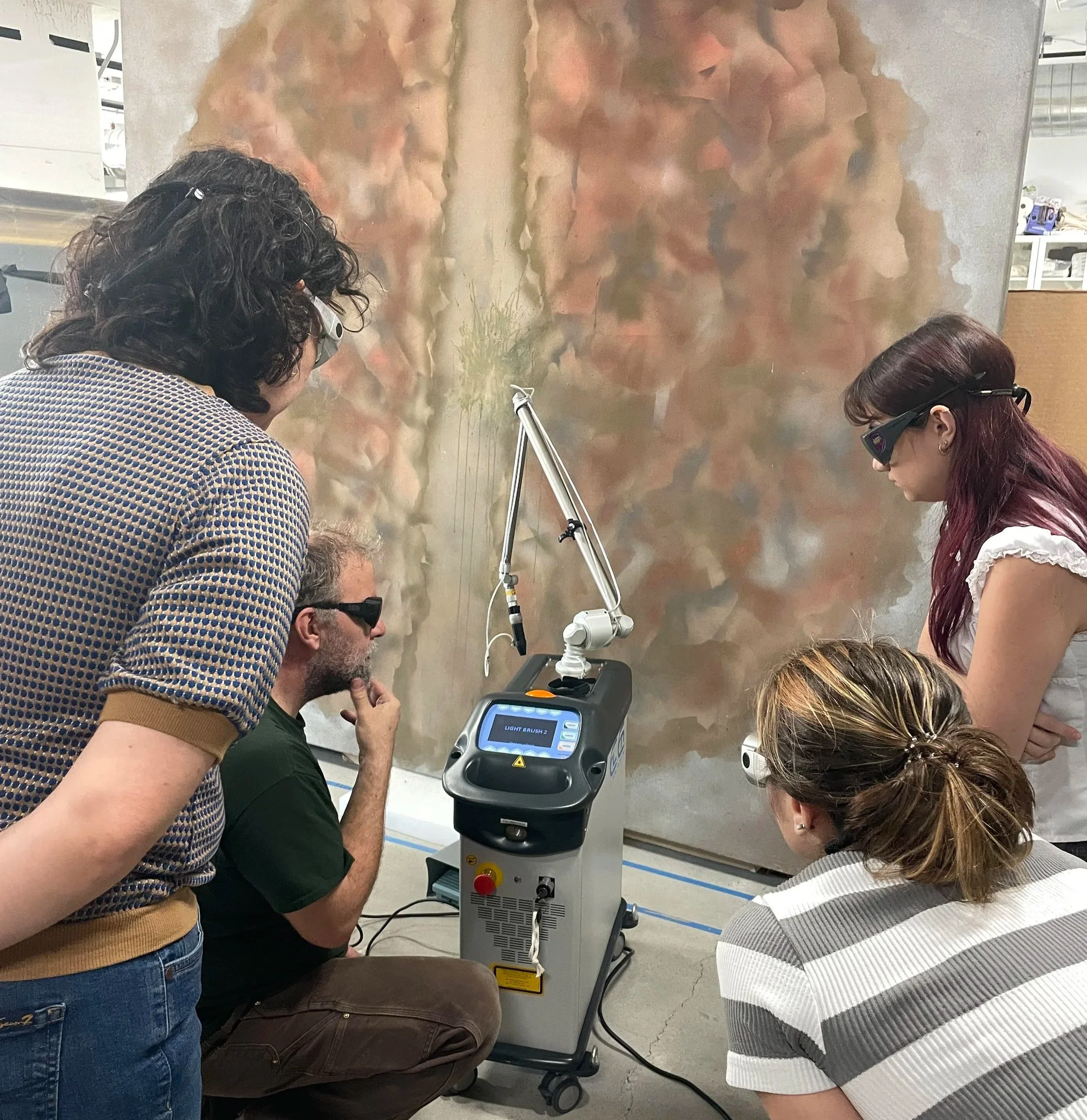
Our hopes for being able to clean the egg off were not high. An egg with that much time to dry is no longer soluble in water. Because the metallic pigments had converted to those green corrosion products, we assumed that even if we could reduce the egg residue, the underlying paint was compromised and may not be recoverable. Nevertheless, we tried everything in our cleaning test arsenal including aqueous solutions, gels, and poultices. We even tried LASERs. Adam Jenkins, our Philadelphia colleague and specialist in LASER cleaning technology brought his LASERs to our studio to test. Neither gels nor LASERs were successful in dissolving the dried green egg. We decided the next logical approach would be to test enzymes.
What are enzymes?
Enzymes are biologically active proteins made by plants and animals that speed up chemical reactions. Enzymes are what makes our cells work and help our muscles to grow. What we, as conservators, were really interested in though are the hydrolases, a category of enzymes responsible for breaking down foods. Hydrolases are named for the thing that they digest. You are probably familiar with lactase, the enzyme taken by our lactose-intolerant friends. It gets its name from digesting lactose, the sugar found in dairy products. Since eggs are composed of protein and fat, we investigated proteases which digest proteins and lipases which digests lipids.
Testing with enzymes
Enzymes are tricky to work with. Each enzyme requires a very specific pH to function and has its own temperature where it will be the most active. We used a digital coffee warmer to keep our solutions at a perfect temperature and set up a heat lamp near our test spot to warm the painting. We tested several different enzymes including bacterial protease, lipase, Proteinase K, pepsin, and trypsin.
Proteinase K emerged early on as a front runner. The K stands for keratin because it can digest keratin protein, which is the protein that makes up our hair and nails. (Yes, I wore gloves!) Compared to other protease enzymes, Proteinase K remains active at a wide range of temperatures and pHs. It has a long shelf life and remains stable in presence of most denaturing agents. Importantly, its activity levels can be increased with the addition of surfactants and chelators, making it easy to incorporate into the cleaning systems we already use in conservation.
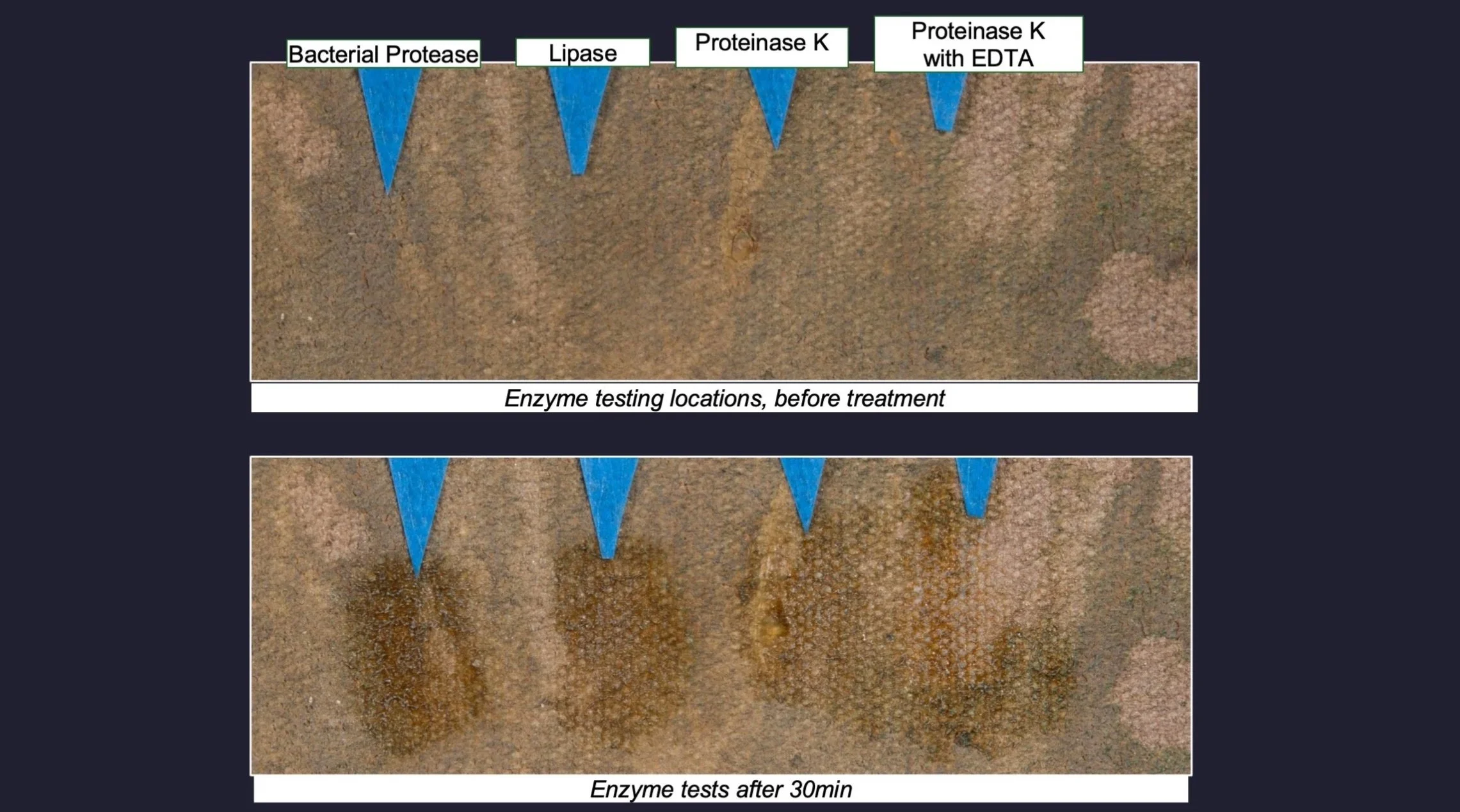
Proteinase K appeared to be the most successful in our test solutions containing EDTA (ethylenediaminetetraacetic acid). EDTA is chelator which means it’s a molecule that binds tightly to metal ions. Chelators like EDTA are found in commercial cleaning products because there happens to be a lot of metal ions in dirt. Chelators are also used in the medical field to treat patients with heavy metal poisoning. Some enzymes work more efficiently in combination with EDTA while others will be completely deactivated in its presence. In our case, we were dealing with the thick corrosion layer, so it made sense that the chelator would help break that apart. The risk however was that we were also dealing with a metallic paint layer that we most certainly did not want to break apart. We knew we’d have to limit the exposure to EDTA and take it out of solution after the first few passes.
Although the Proteinase K and EDTA combination looked the most promising, it wasn’t enough. It was leaving too much egg residue behind and so we continued testing. Some enzymes, like lipase and pepsin, did nothing. Other solutions caused the egg to swell without actually removing it. Some worked in one area but not another. One combination would look promising, only to reveal a new problem when it was tested more broadly. Then something unexpected happened.
When we tested trypsin on its own, it showed minimal results. Trypsin is another protease enzyme that is used sometimes by conservators to break down protein glue residues. We noticed one day when we were testing a Proteinase K solution that where the test overlapped yesterday’s trypsin test, the results were noticeably better. It appeared that the two enzymes were working better together and this became the foundation of the final cleaning treatment.
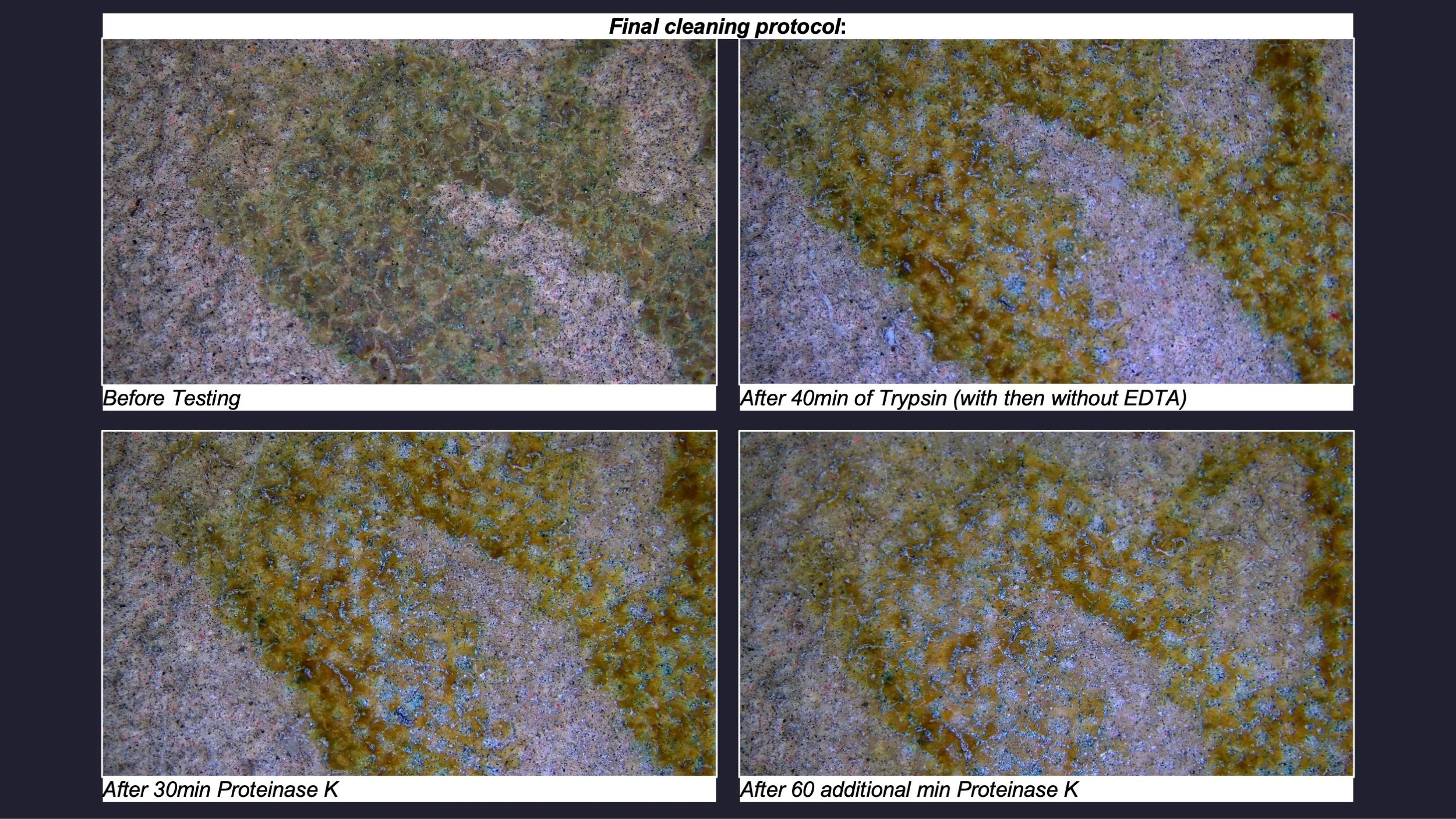
Our final cleaning protocol began with trypsin and EDTA. We took the EDTA out of solution after 10 minutes to protect the vulnerable paint film. After 40 minutes total minutes of trypsin digesting the egg, we used our Proteinase K solution to dwell on the remaining egg residue for 1-2 hours. While we were able to reduce the egg stain more than we originally thought, the cleaning wasn’t uniform across the surface. Some areas responded better to our enzyme treatment than others for reasons that remain unclear.
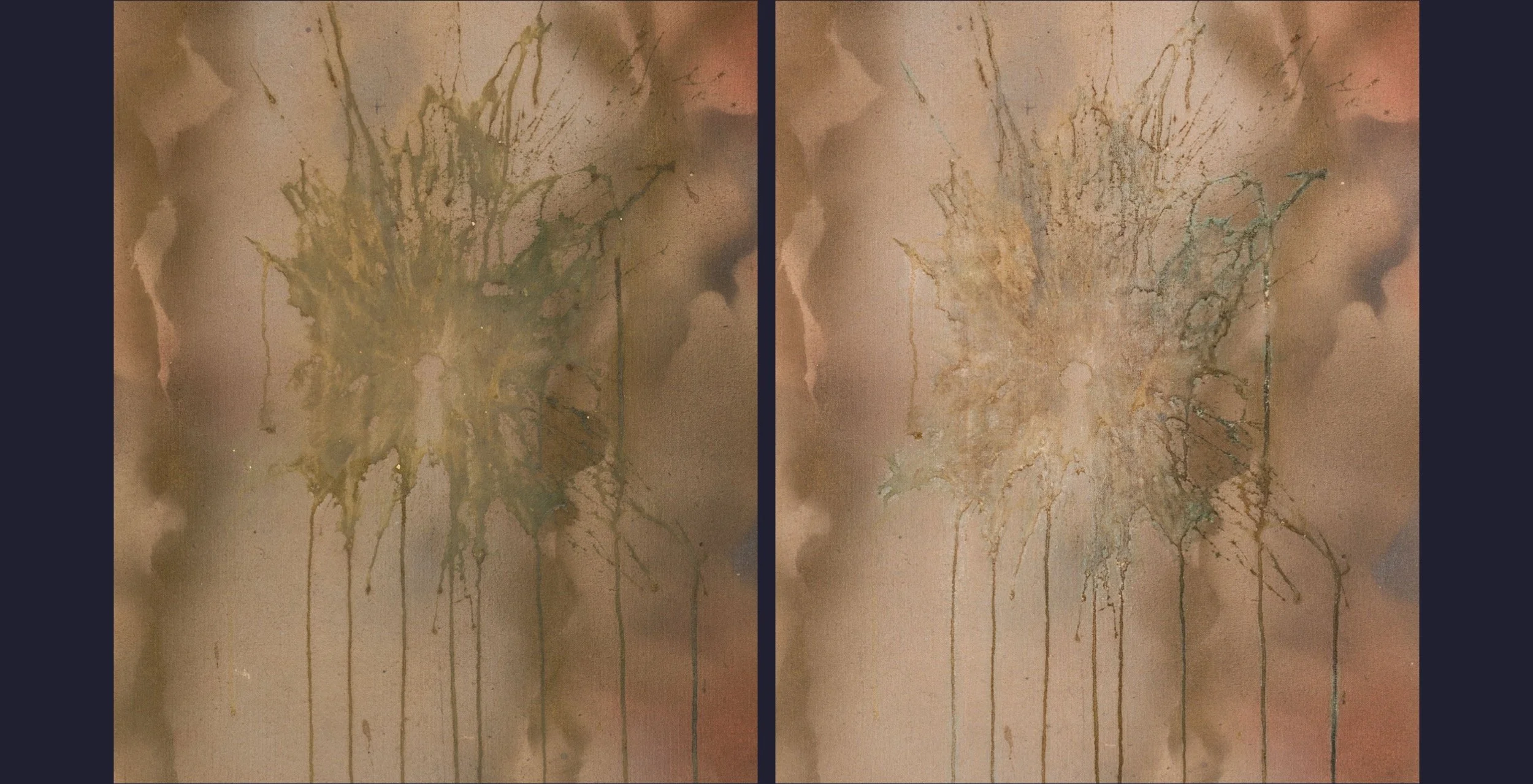
Before and after cleaning the corroded egg stain using our enzyme cleaning protocol
Compared to the enzyme cleaning, the rest of the treatment was relatively straightforward. We used soft brushes and a vacuum to reduce the surface grime that accumulated in storage. The tears from previous water damage were repaired with new cotton canvas inserts and inpainted to match the surrounding paint. We also inpainted what was left of the egg using watercolors.
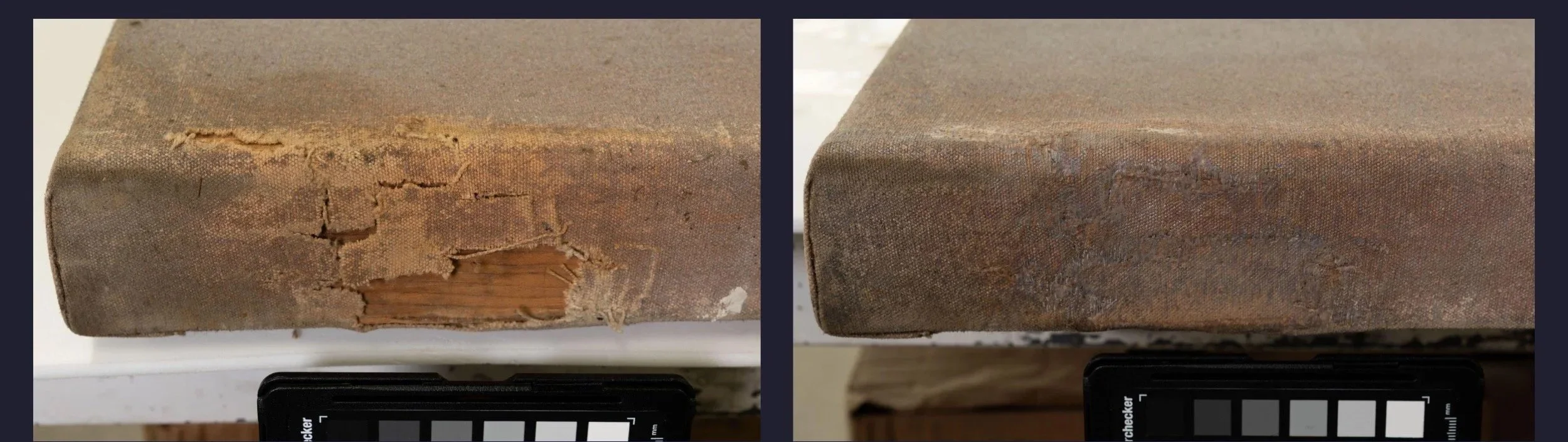
Before and after treatment detail of the water-damaged canvas
Ultimately, this treatment was a success, and we were able to share our findings at our annual conservation conference.
After treatment; overall front; Unknown Title; Sheila Isham; 1967-1969 (est); acrylic on cotton; 9’ 3” x 8’ 7”; normal light
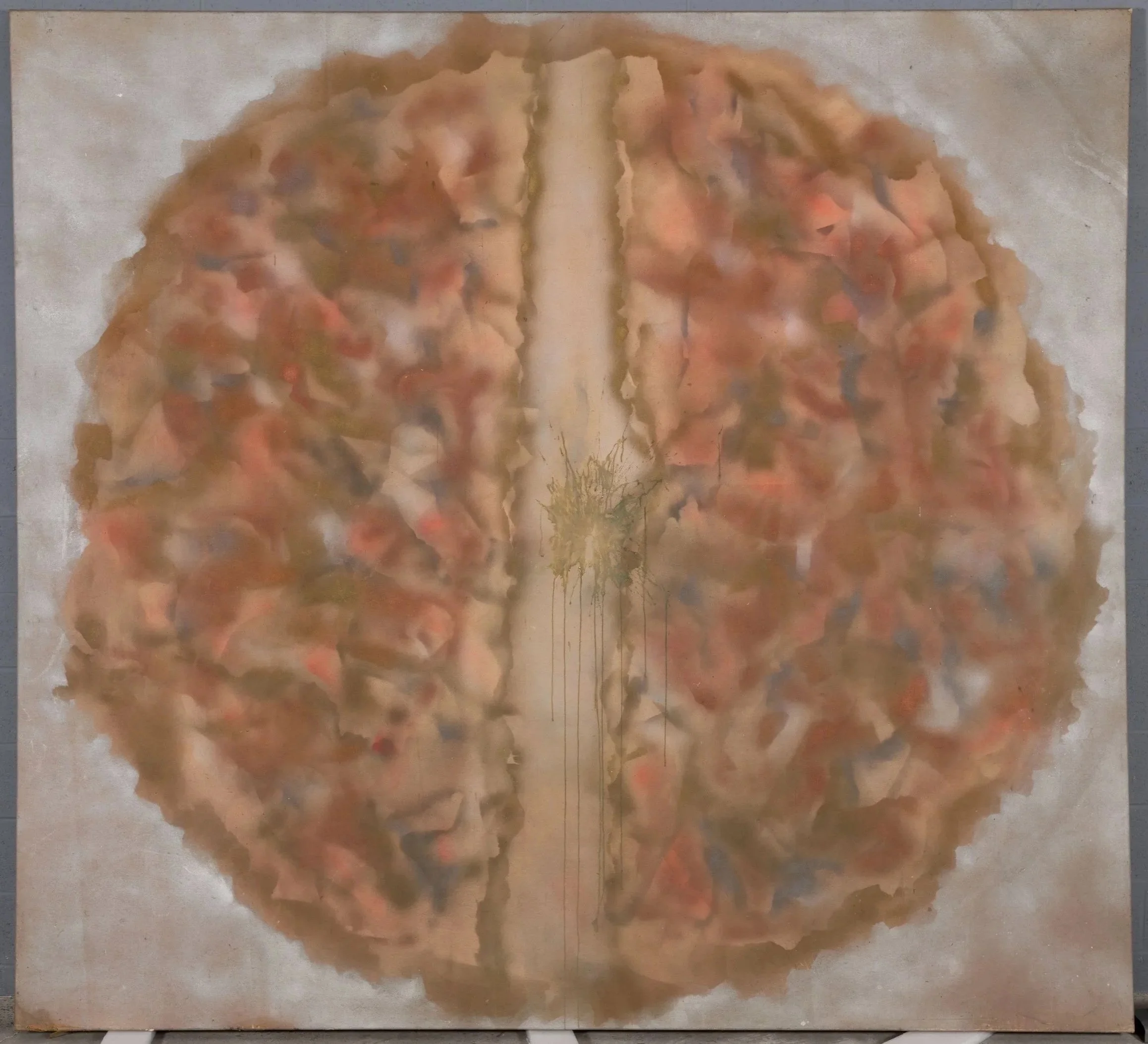
Before Treatment
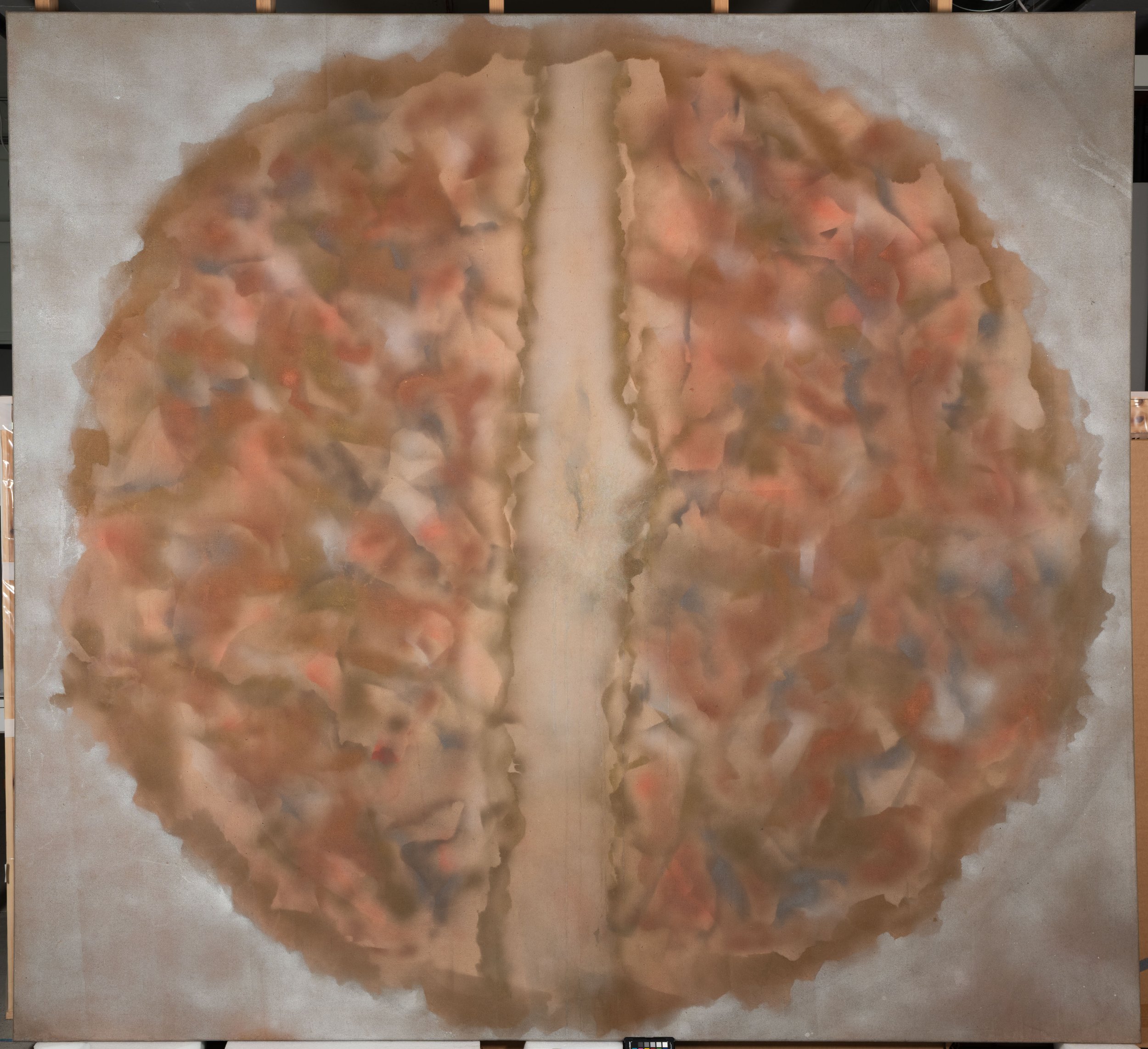
After Treatment
