The Context
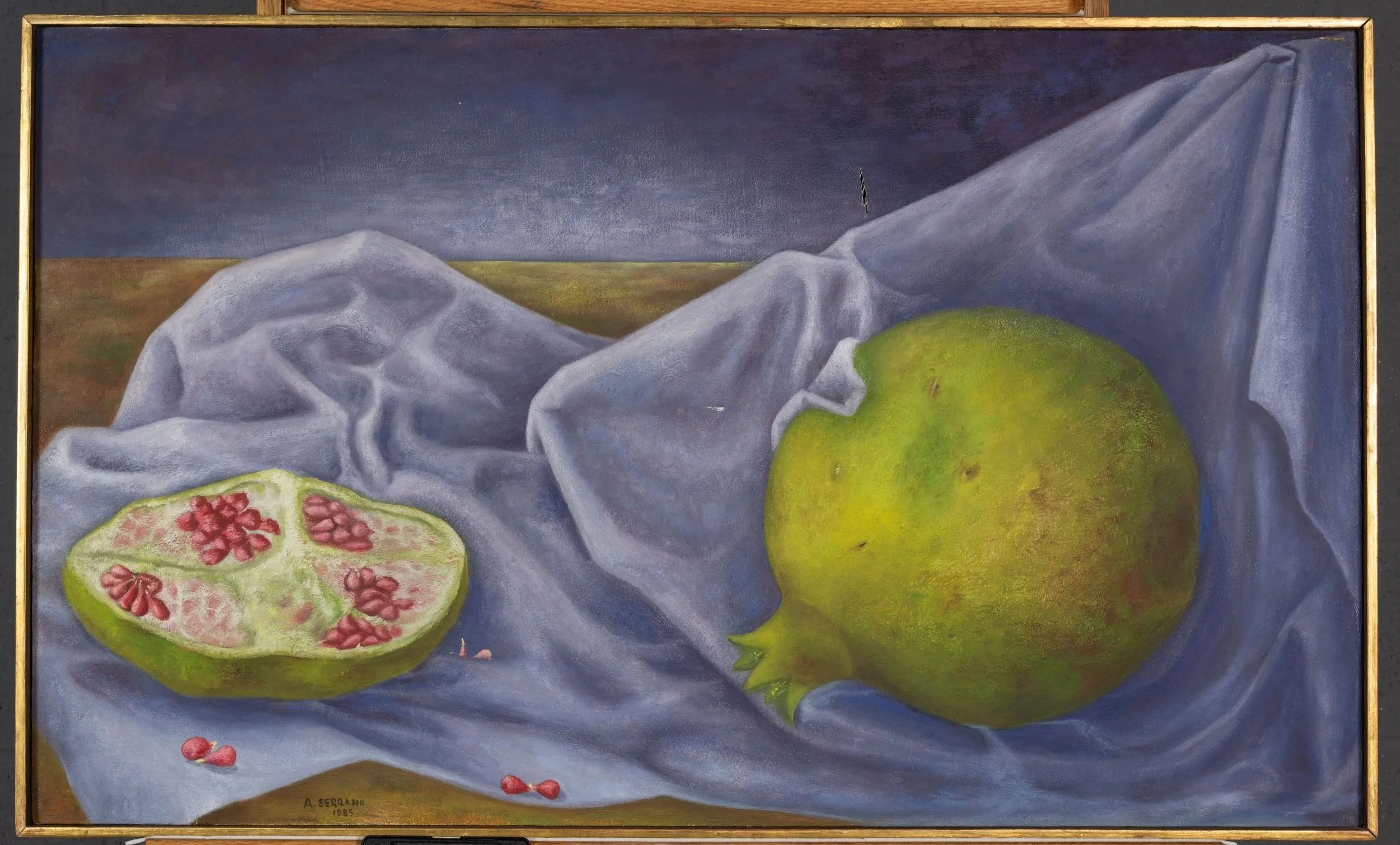
In the Summer of 2024, Lucia Torner, a book and paper conservator based out of New Jersey, visited the studio. Lucia brought with her two sentimental paintings in need of conservation. When we saw these paintings, we immediately took them on – we are not ones to shy away from a challenge and these paintings delivered.
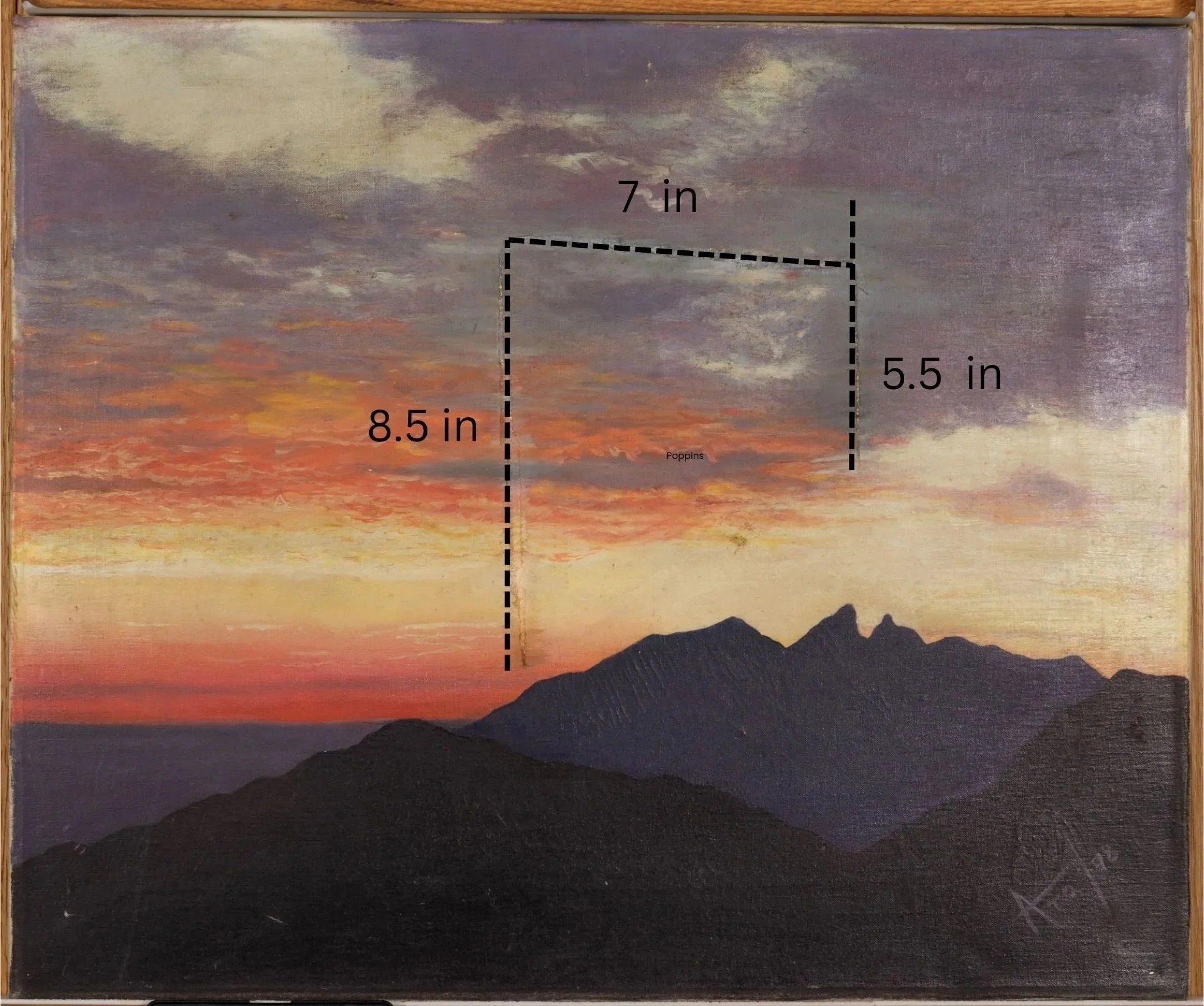
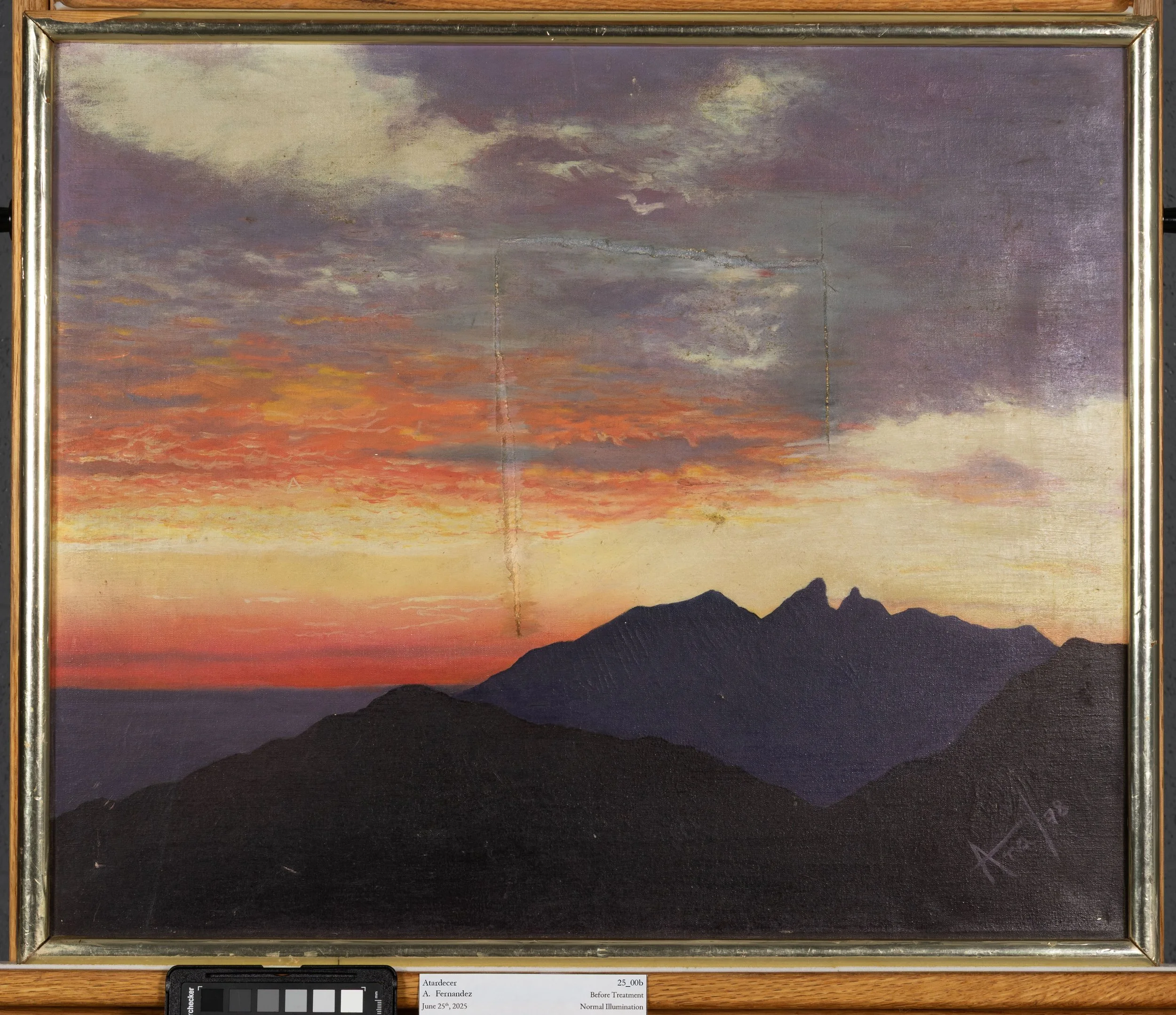
Before Treatment, Normal Photo, Lines to indicate length of tears
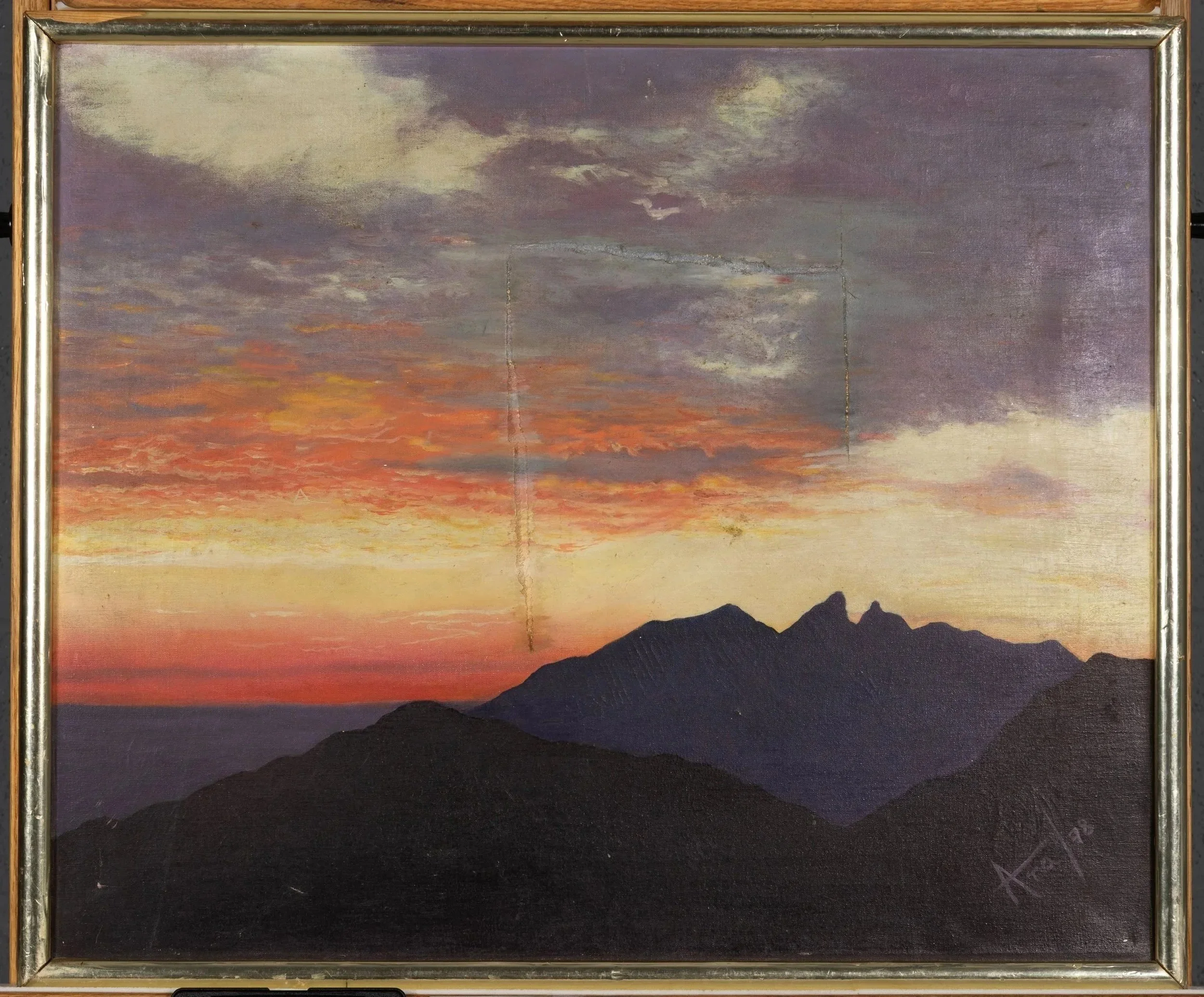
Atardecer (Sunset) by Ana María Fernández
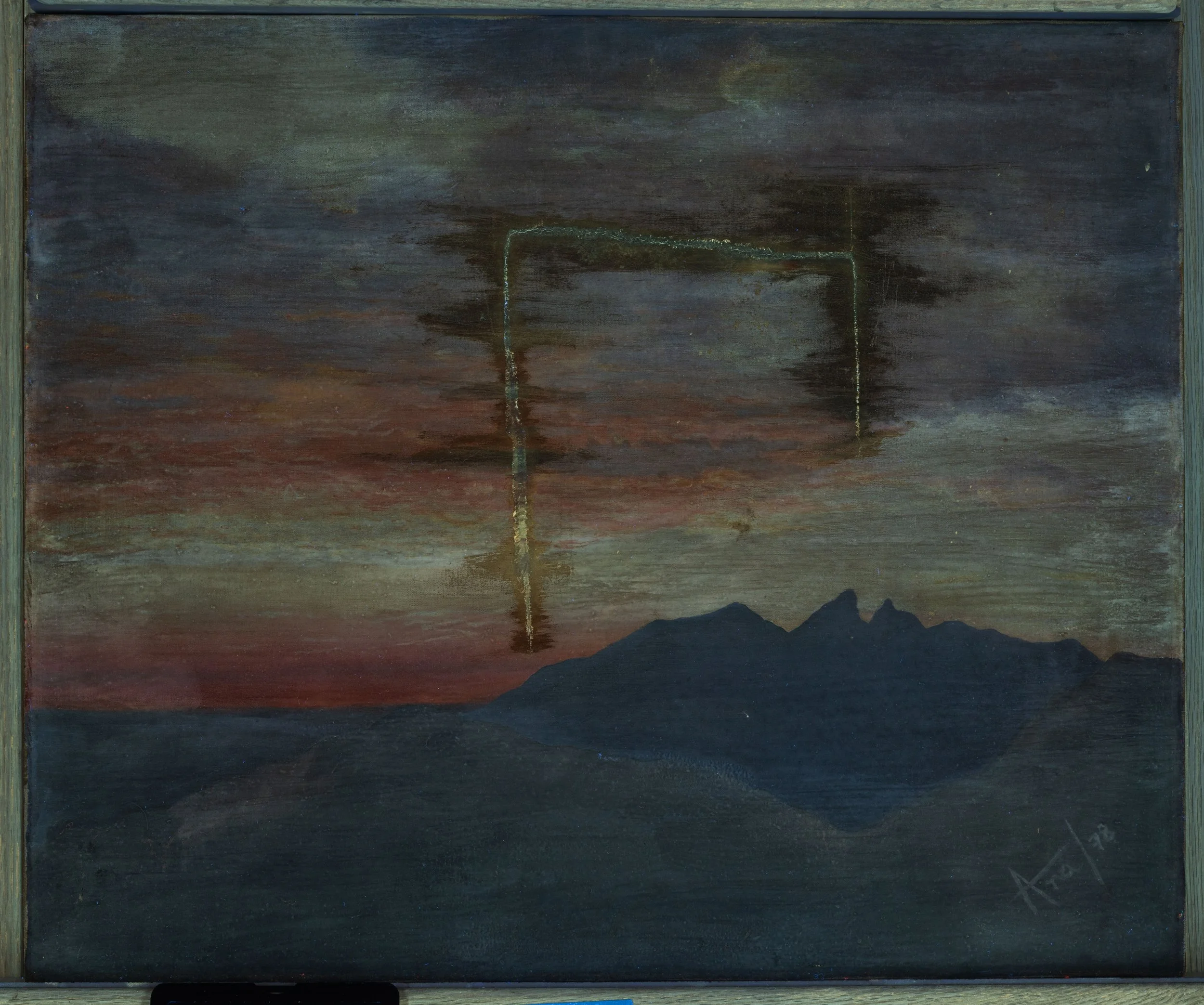
The first painting, Atardecer by Ana María Fernández, was an oil on canvas mountain landscape at sunset painted in 1978. The discolored varnish and layers of grime were taking away from the vibrant colors of the thinly painted scene. More distracting though was the giant three-sided tear with 90° corners in the center of the composition. The damage likely happened while the artist was alive, possibly soon after the painting was created as the color and brushwork of the overpaint suggests the repairs were done by the artist. The repair consisted of fabric tape stuck to the back and oil paint over the front. The repair locked the tear in an open position which contributed to the slack in the canvas and (spoilers!) the inability to completely close the tear later.
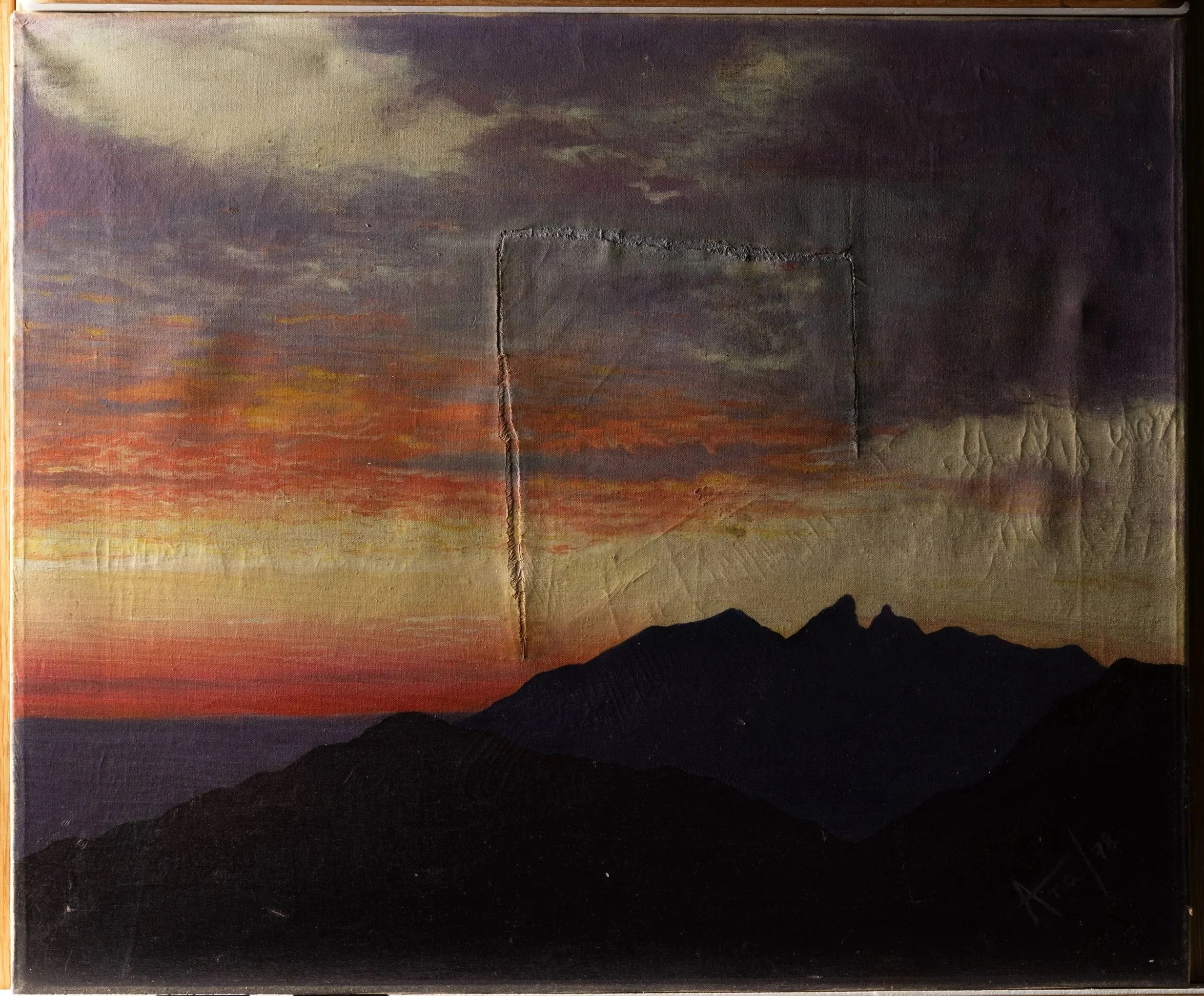
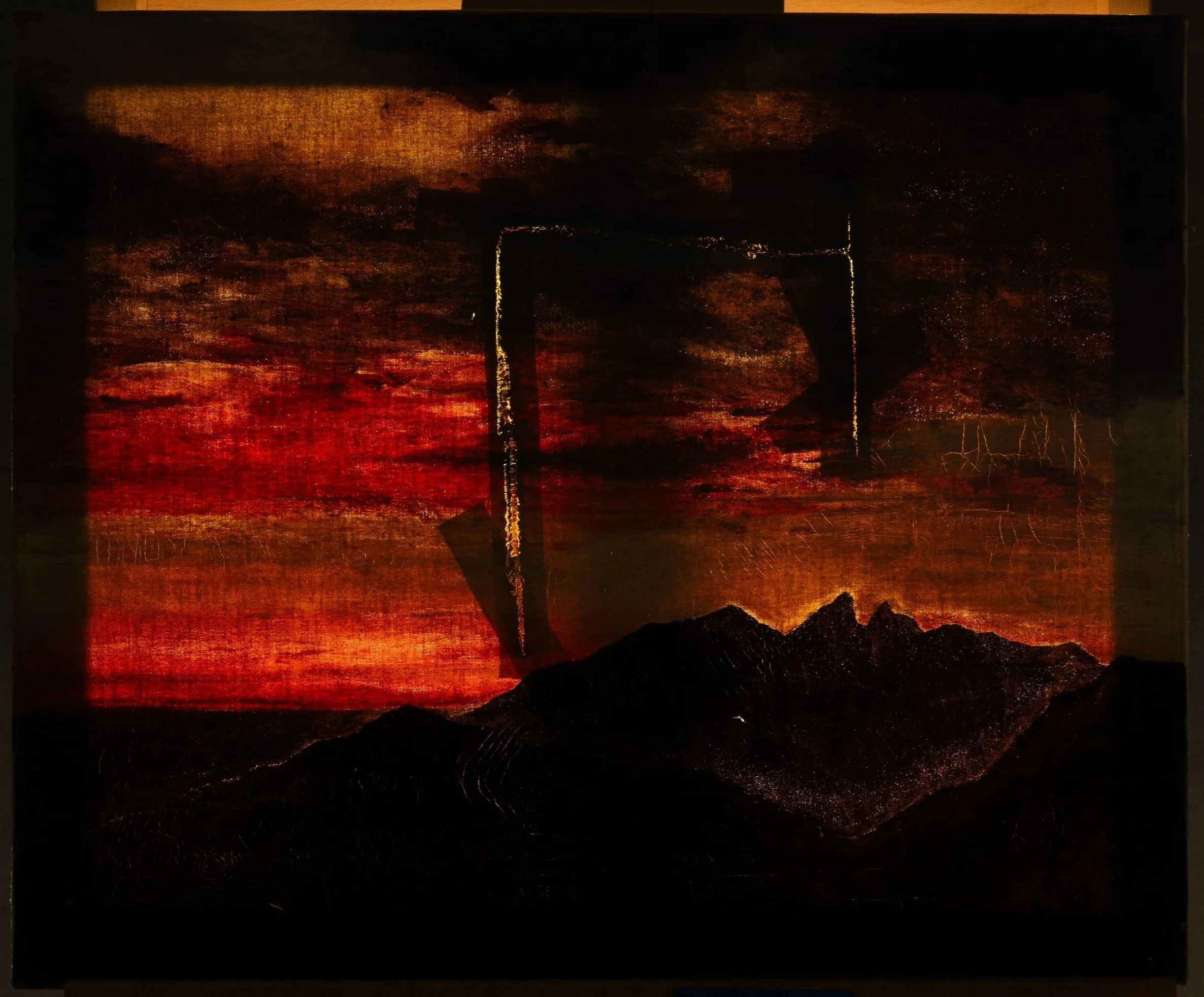
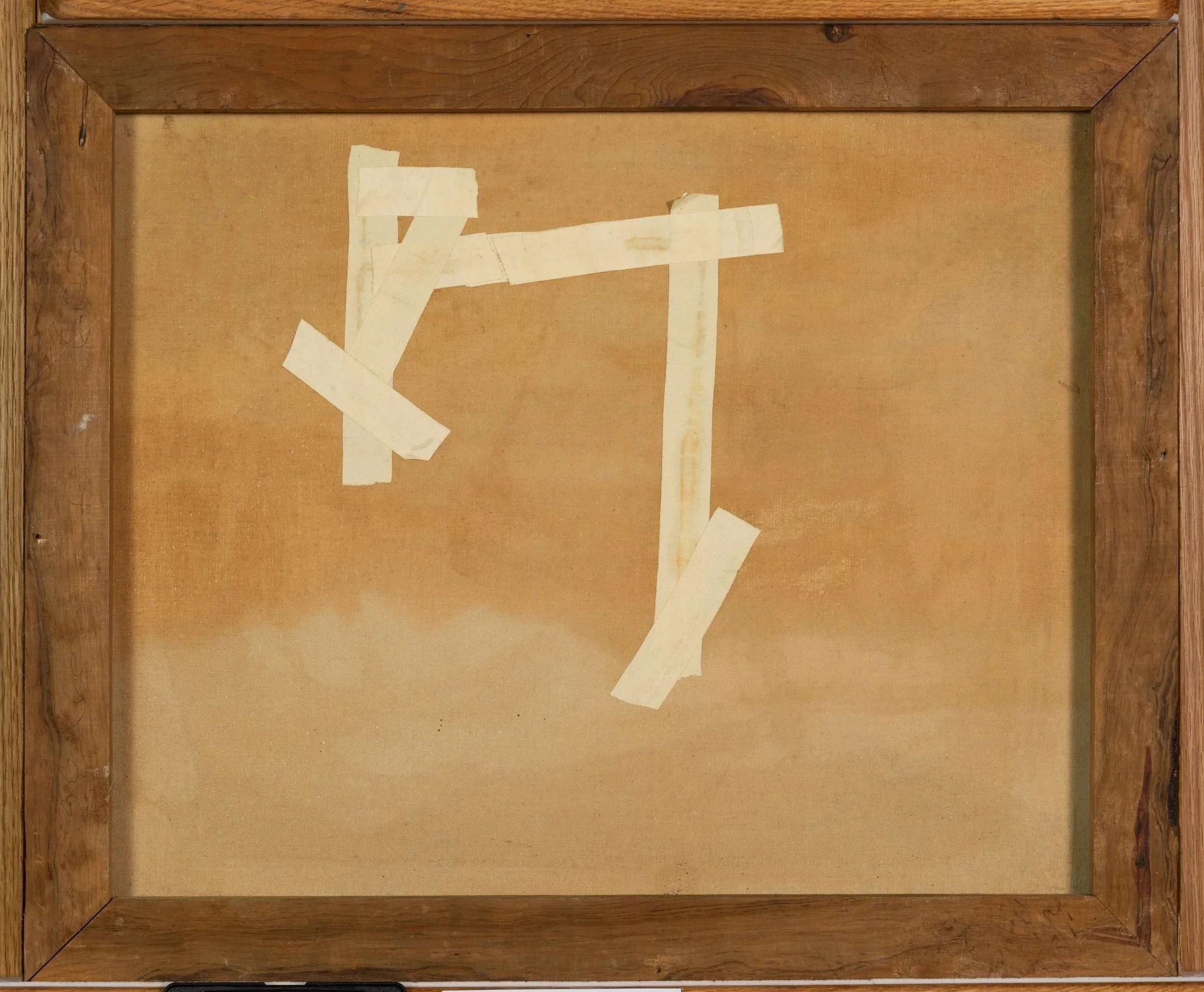
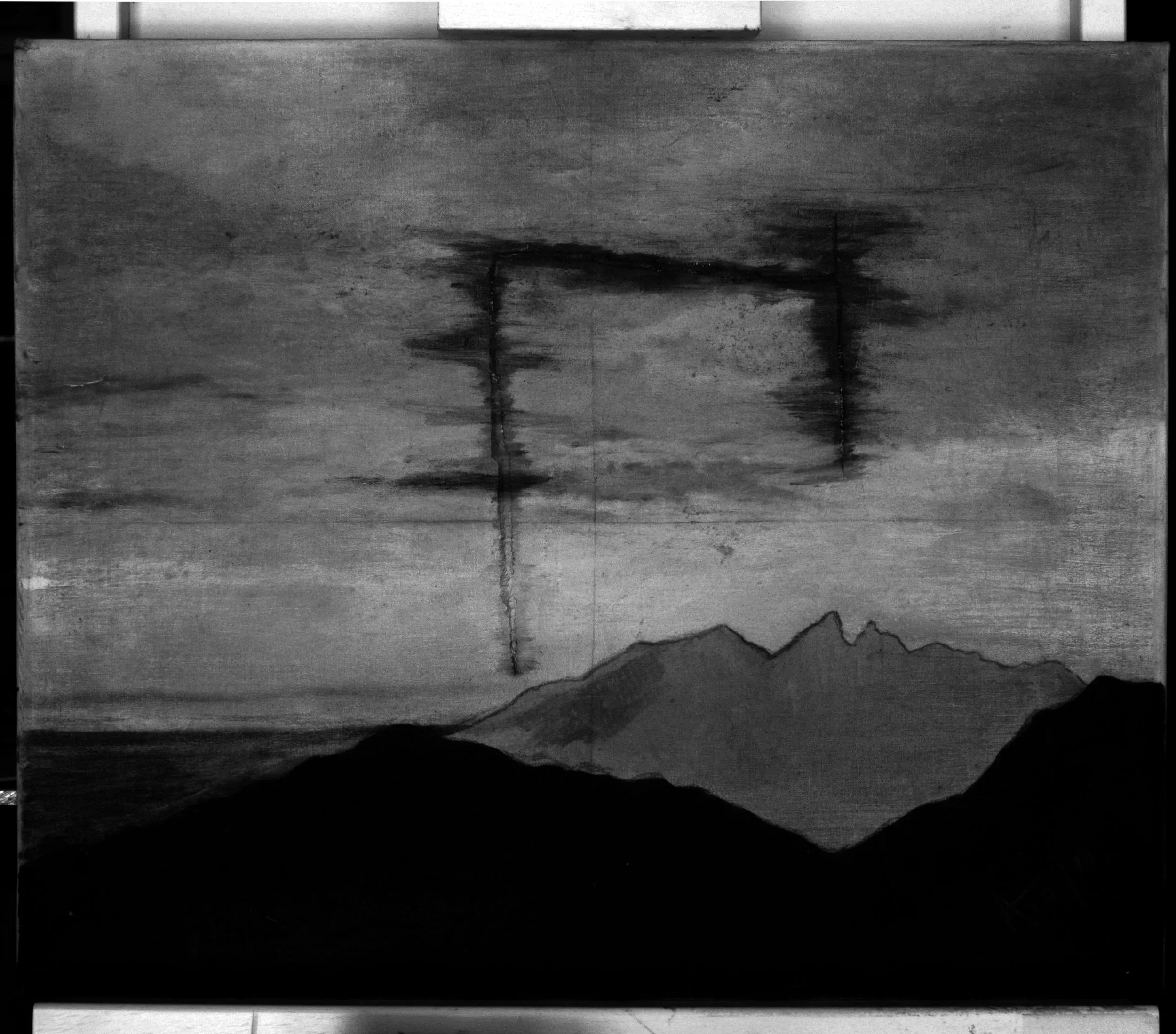
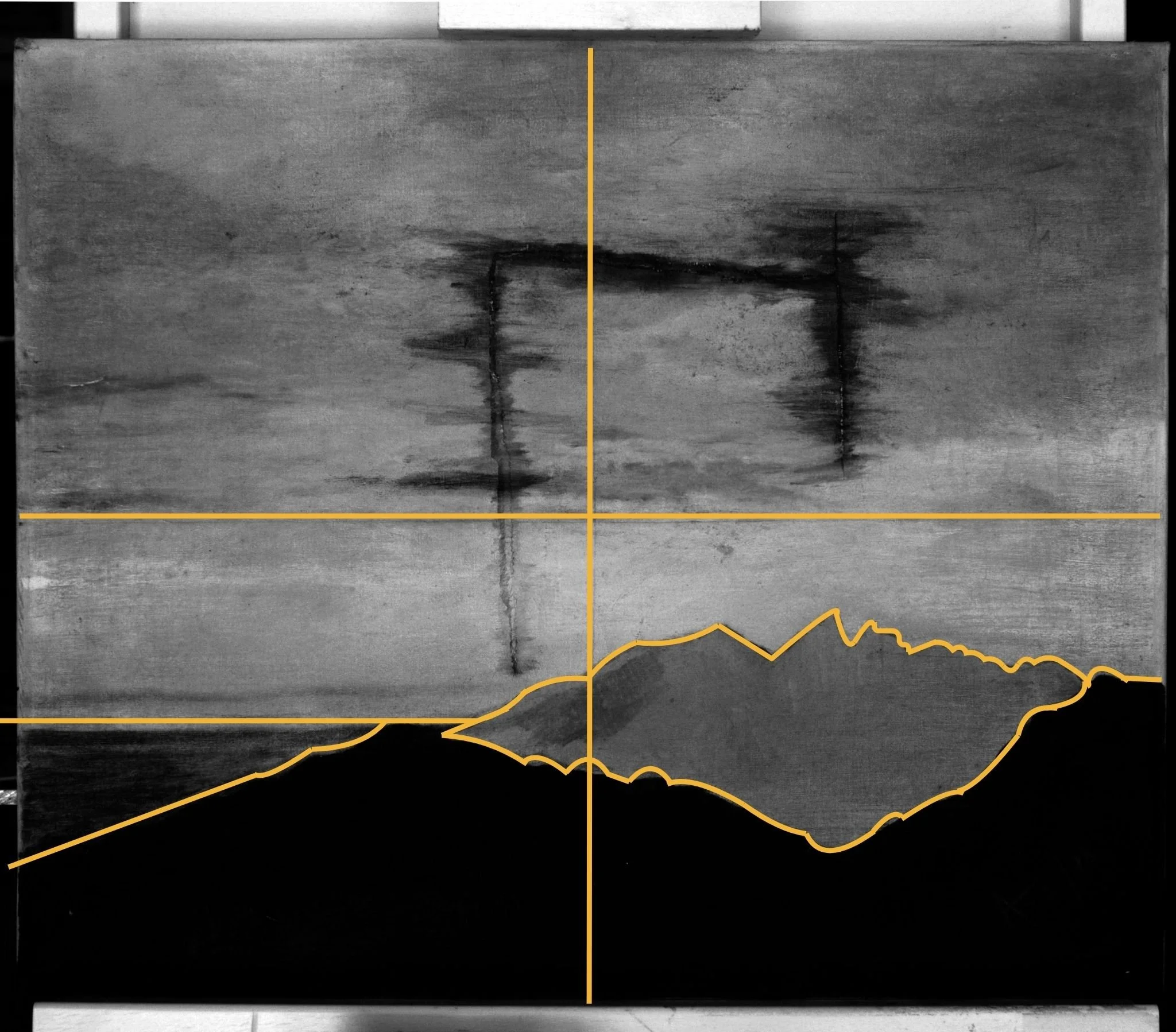
When the painting was photographed with ultraviolet (UV) light, we could see that the thinly applied varnish as likely a synthetic resin due to its faint blue auto-fluorescence. We also had the opportunity to test our new infrared (IR) modified camera which allows us to see underdrawings. In this case, we were able to see gridlines and the outline of the mountain in graphite sketched out by the artist prior to painting.
During treatment, cleaning test
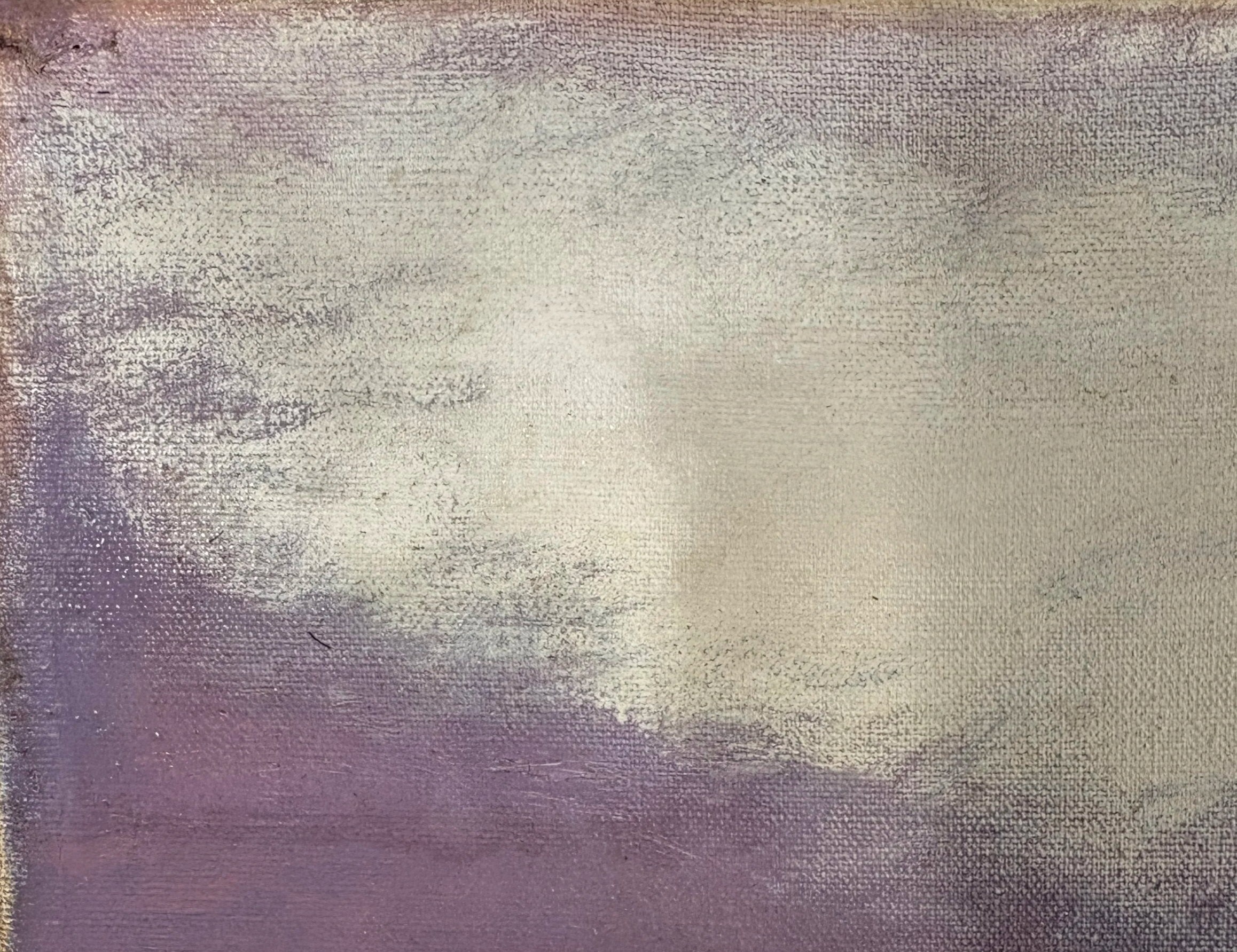
Before we could tackle the tears, we needed to clean the painting. We started with aqueous cleaning to remove the grime which went better than expected. The colors appeared brighter once the grime was cleaned, but there was still the issue of the gray synthetic varnish to tackle. This did not go as smoothly as expected. The solubility tests we conducted determined that the oil paint and varnish were sensitive to the same solvents, a big problem. This happens sometimes when a painting is varnished before the paint layer is fully cured and it fuses with the varnish. Although we could not fully remove the varnish without affecting the oil paint, after various tests, hours of research, and many discussions, we found a solution that could thin the varnish. We used an emulsion, which is a fancy word for a mixture of two liquids that don’t usually blend such as oil and water. Since the paint was safe and unaffected by water, we suspended small droplets of an aromatic solvent into water using a surfactant. Surfactant is basically another word for “soap” which allows a nonpolar solvent to mix with water. The small droplets of solvent could thin and preferentially reduce the coating without penetrating too deep or removing too much material.
Once the surface was cleaned, it was time to address the large tear. We started by facing the front of the tear with tissue to protect the paint later and keep the torn areas from moving while we worked on the back of the canvas. The tape was carefully removed with small spatulas and moisture to soften the adhesive.
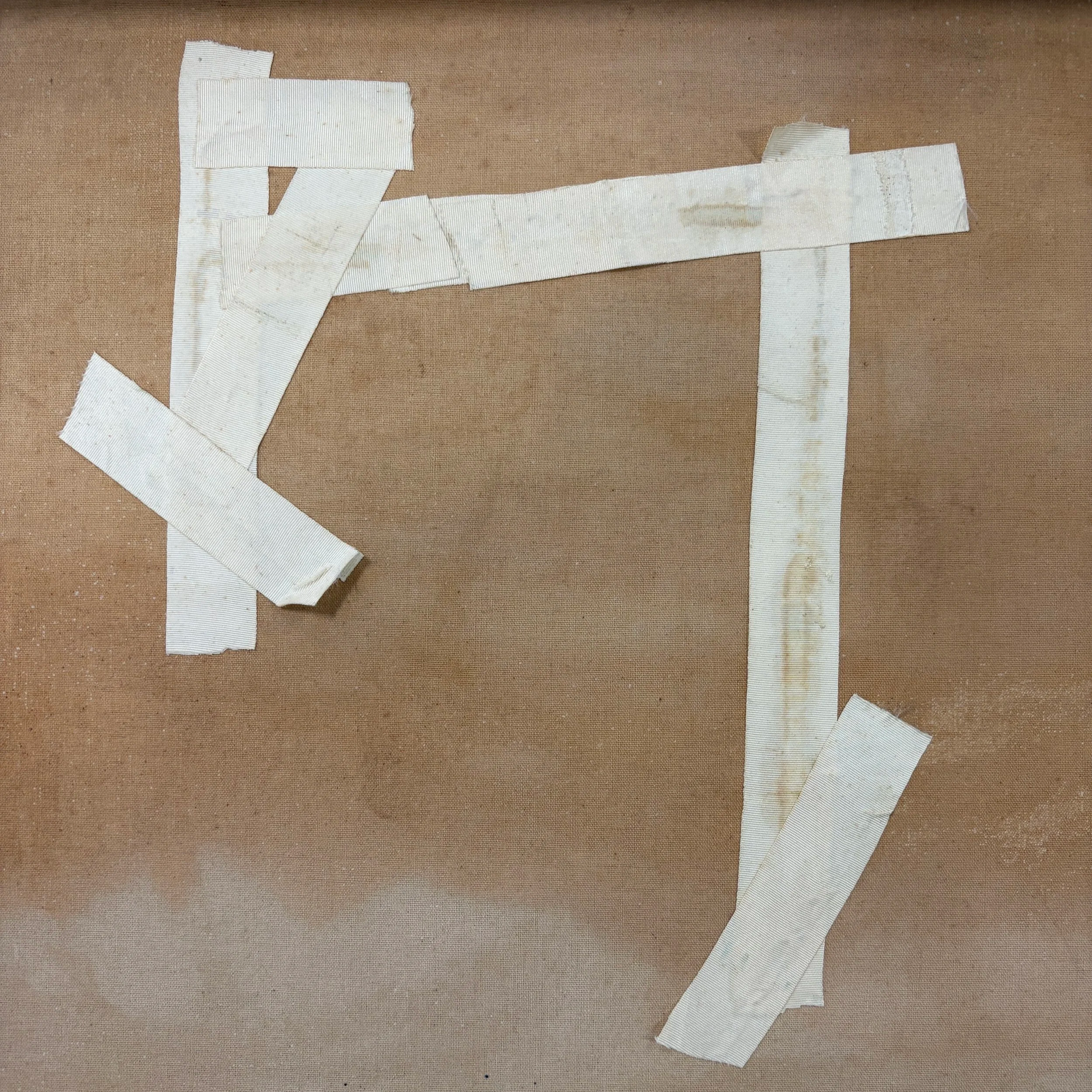
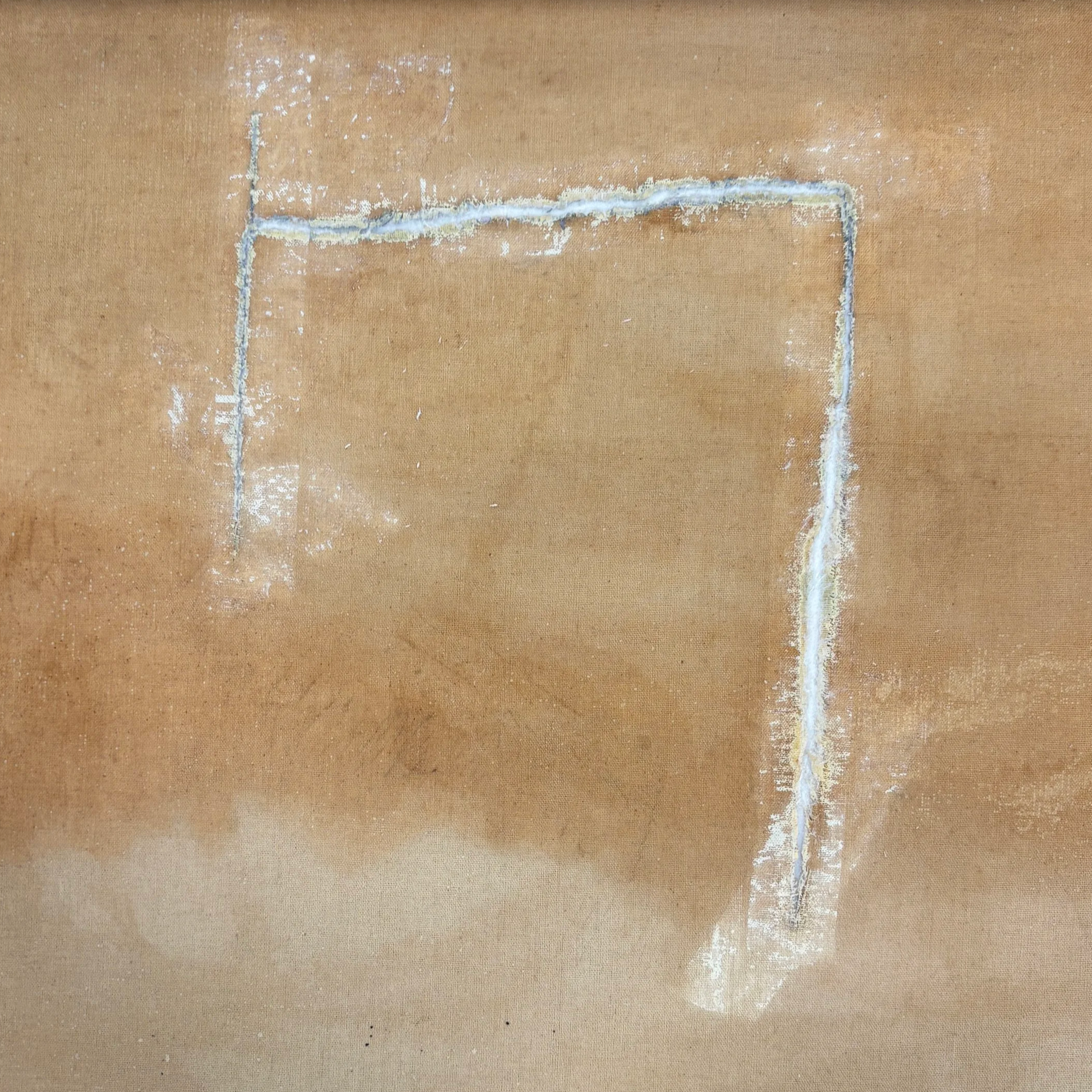
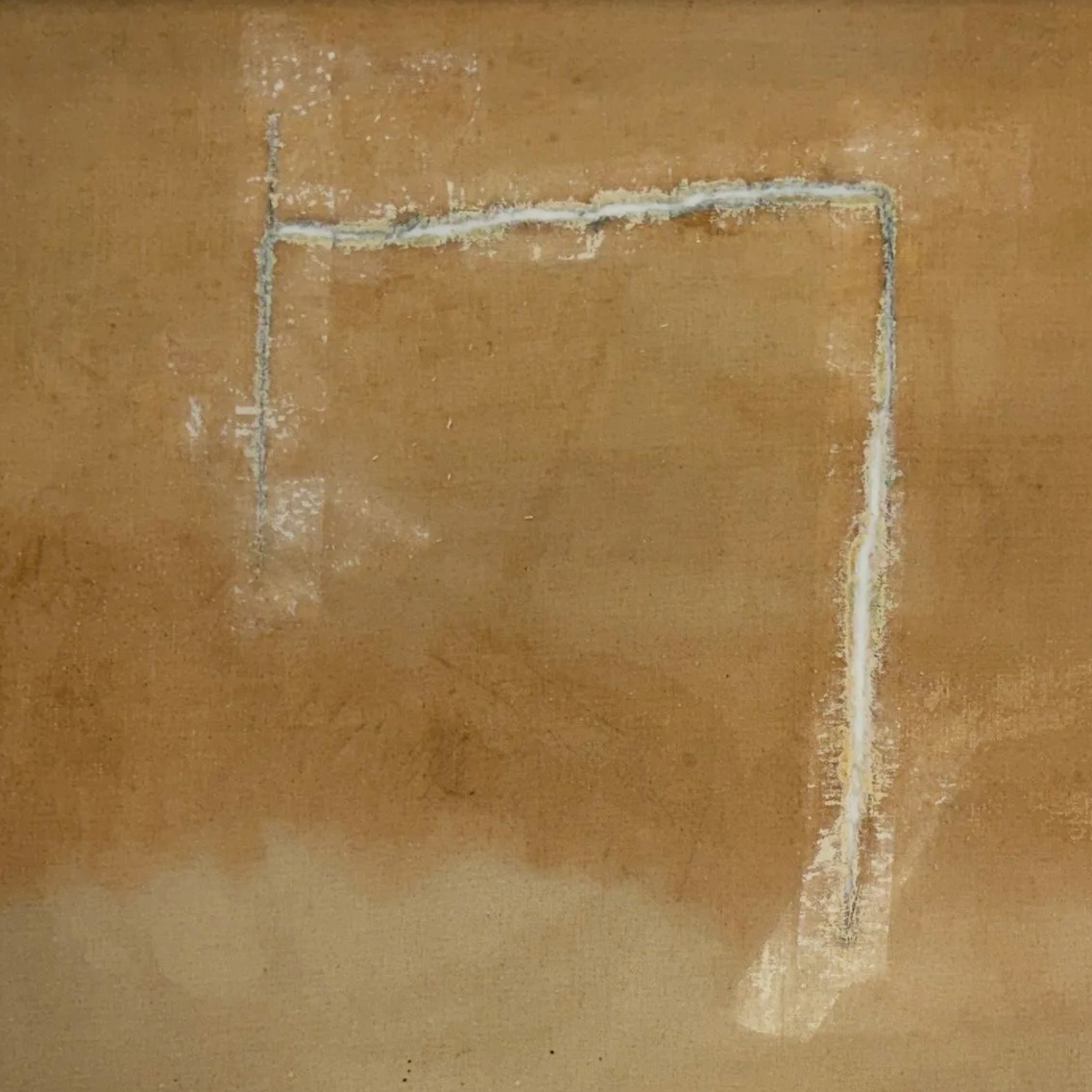
With the tape removed, we examined the damage and discussed different approaches to tear mending. The overpaint on the front was still holding the tear in an open position. Because the overpaint was likely done by the artist, we decided to leave it on and not attempt to remove it. This ruled out the possibility of thread-by-thread tear mending. We opted instead for a tissue mend where the Japanese tissue is adhered to the inside of the tear with a flexible adhesive. It acts as a bridge between the broken edges while maintaining strength and flexibility. Because the tear was so extensive, we decided the best course of action for long term preservation was to line the painting, which means to attach a secondary canvas to the original canvas to reinforce the mends and provide additional support. For more detailed information about this process see our blog on The Lining of Calle de la Moreria where we follow the entire process!
We carefully removed the painting from its strainer and lined it to fine Pe-Cap, a polyester monofilament screen cloth chosen for its thinness and flexibility. The original strainer was cleaned and repaired before the lined painting was carefully remounted.
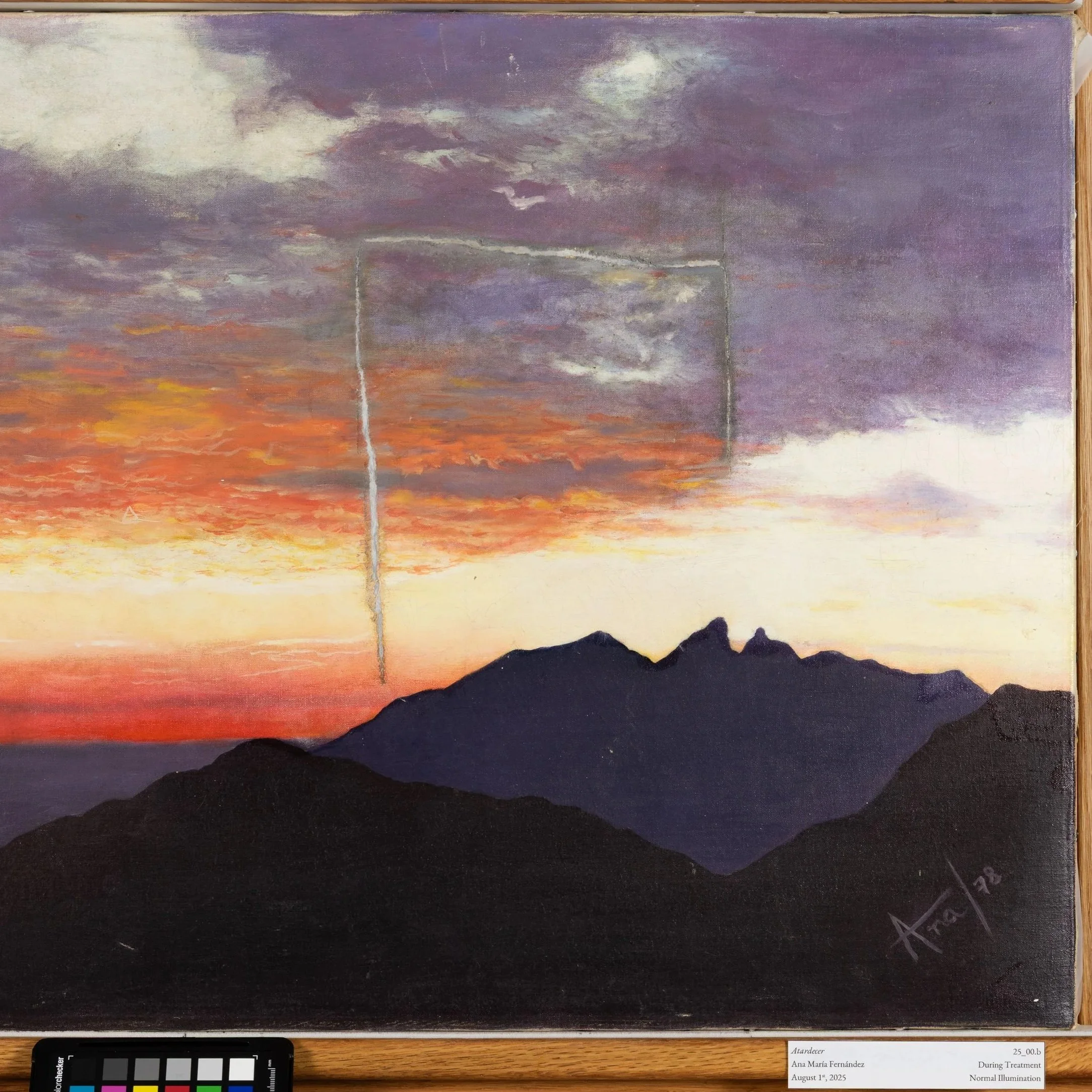
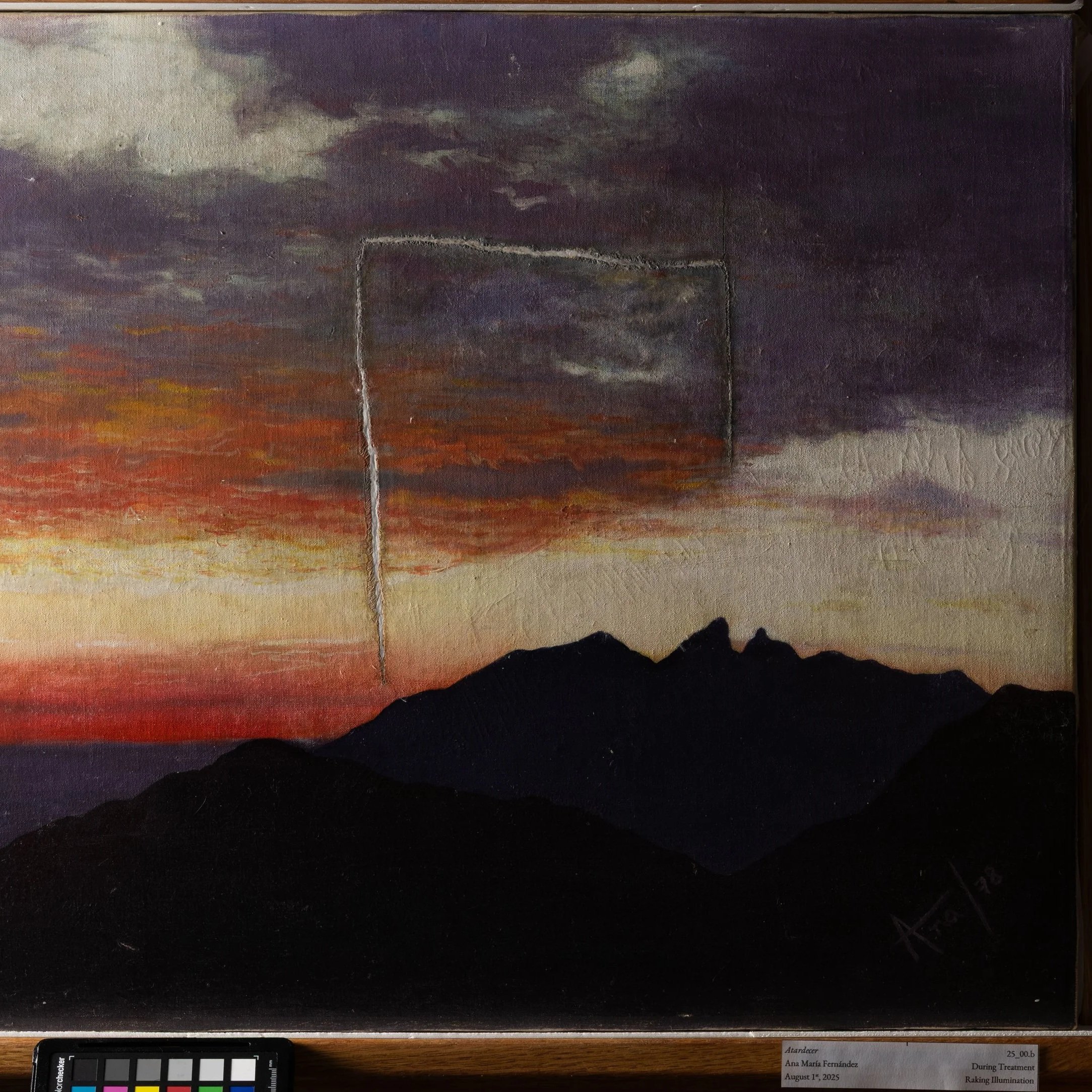
With the structural work complete, we turned our attention back to the surface. The residual varnish was most noticeable on the darker mountains, where it had a glossier appearance than the surrounding sky. We locally varnished the sky to even out the gloss before applying a final overall coating.
We filled the gap in tear and other small areas of loss with a paintable fill material and then inpainted the fills to visually integrate the repairs with the surrounding paint. Finally, protective backing board was added to the back of the strainer to help protect the painting from dust and physical damage and the painting was reframed.
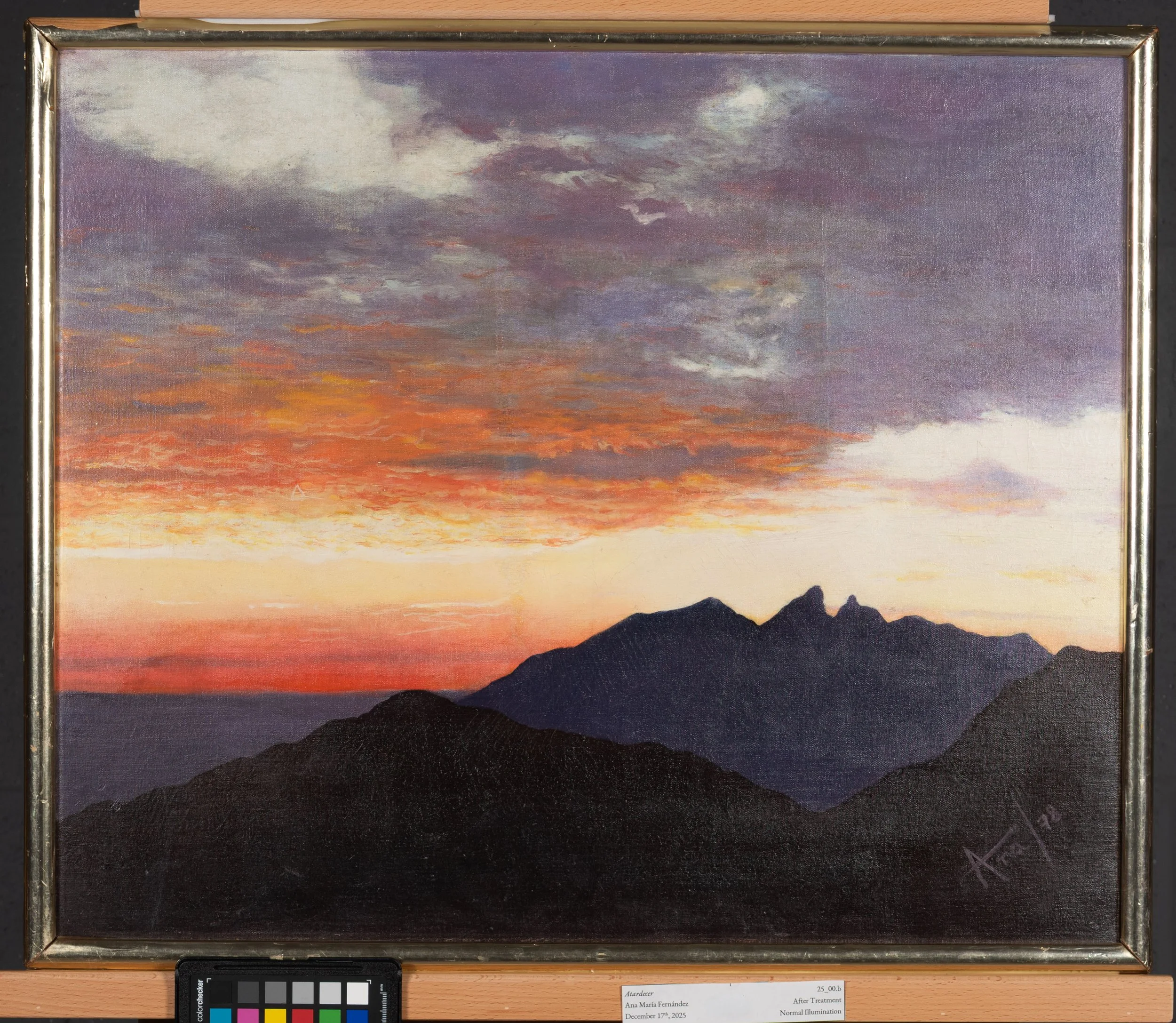
After all of the unexpected challenges, Atardecer is back together. The tear remains visible upon close inspection, but the vibrant colors of Fernández’s sunset can now be appreciated without the grime, gray varnish, and large tear competing for attention.
Stay tuned for our next blog post where we talk about Lucia’s second painting and use a completely different approach to mending the tear!