Conservation for Sentiment’s Sake
James Britton (1878-1936) was a Connecticut-born artist known for his oil portraits and landscapes. Not only did Britton regularly show his works in New York and New England, he was also active in the art community as a whole, publishing reviews in the Hartford Courant, American Art News, and his own periodical, Art Review International. He showed his dedication to the preservation and documentation of local art through his extensive writings about historic and contemporary artworks, as well as his own personal record keeping. Britton kept an illustrated index of every painting he created, including the subject and a sketched thumbnail of the work. As a result, when this portrait was brought into the studio by a member of the family, we were able to easily confirm that it depicts his own father, Captain James Carter Britton, c. 1915. From this index (pg. 30-31), we also learned that this specific portrait (out of three total that were painted of Captain JCB) was painted from a photograph to give to his mother.
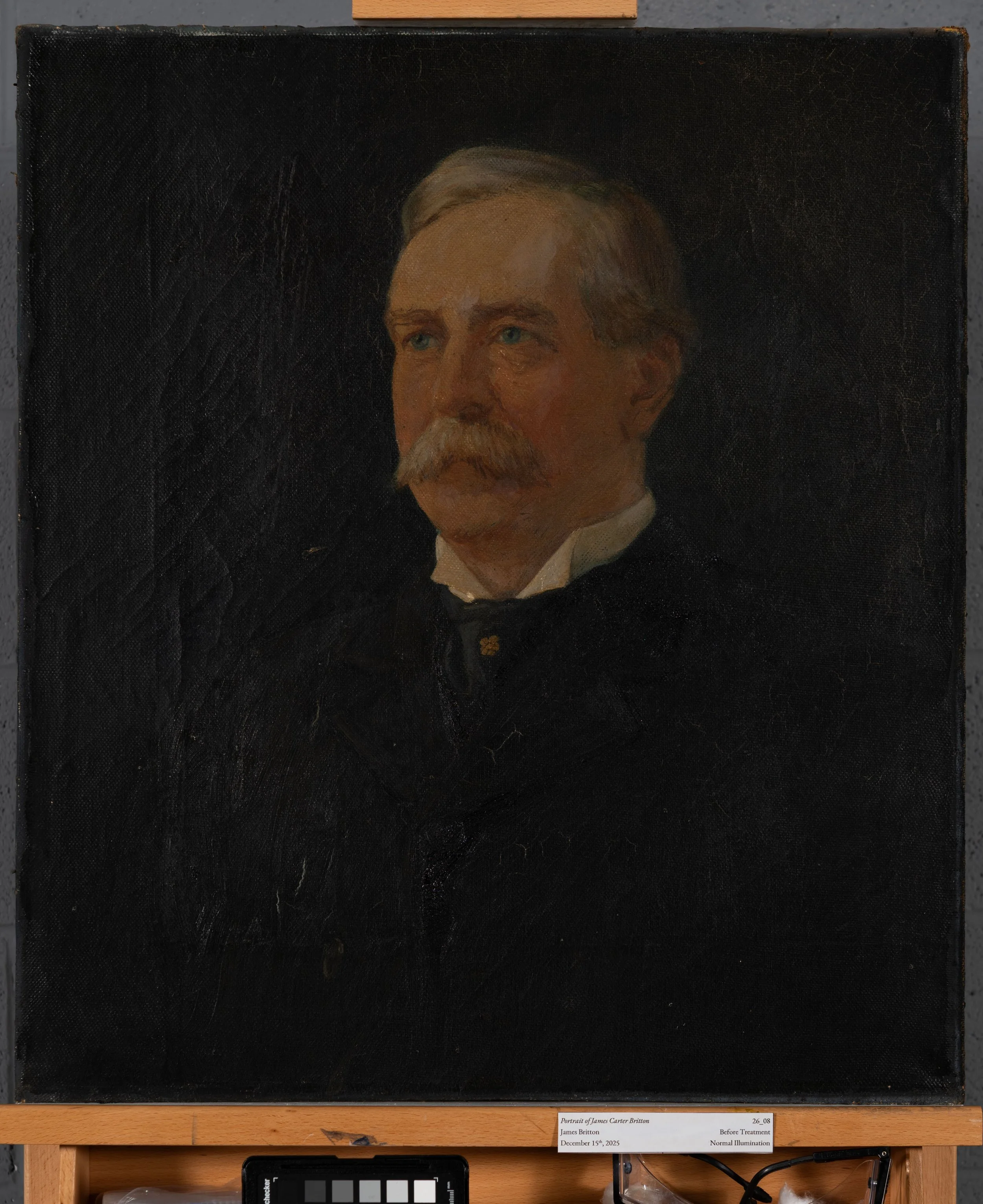
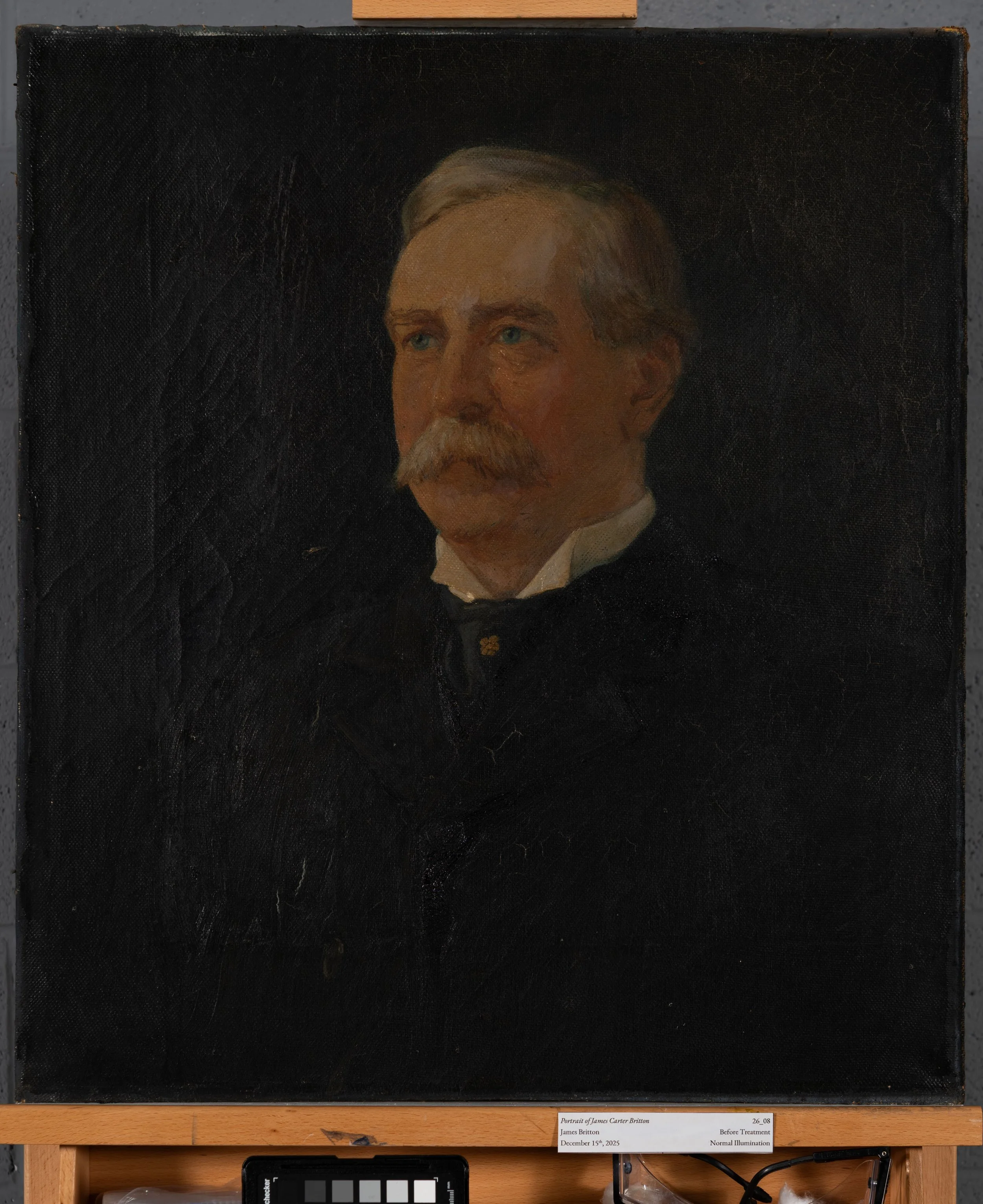
Portrait of James Carter Britton, Before Treatment
The sentimental nature of this painting may have even influenced how it was constructed. It was created not to be sold, but rather to stay in the family. Thus, it’s unsurprising then that this painting was likely made from repurposed materials. Two sides of the strainer were extended by nailing more wooden pieces to the existing outer sides, resulting in a unique cross-section of a corner shown in the photo to the right. These strainer bars may be cut unevenly, warped, and splintering, but they’ve kept the canvas well-tensioned for over a century. There’s also an interesting story to be told through the tacking margins. On the top edge, a gray priming layer and blue paint layer are visible. The paint extends to the blunt edge of the canvas, meaning it was painted, and then cut down. This is consistent with the bottom and the proper left side edges too. Due to three out of four of the edges of the canvas being cut down in this manner, it is entirely possible that this canvas was once a part of a much larger painting. Repurposing materials doesn’t take value away from the portrait, but instead highlights Britton’s resourcefulness. It took a lot of skill and creative thinking to support a family in New York City as a full time artist, and this portrait shows Britton’s efforts in doing just that.
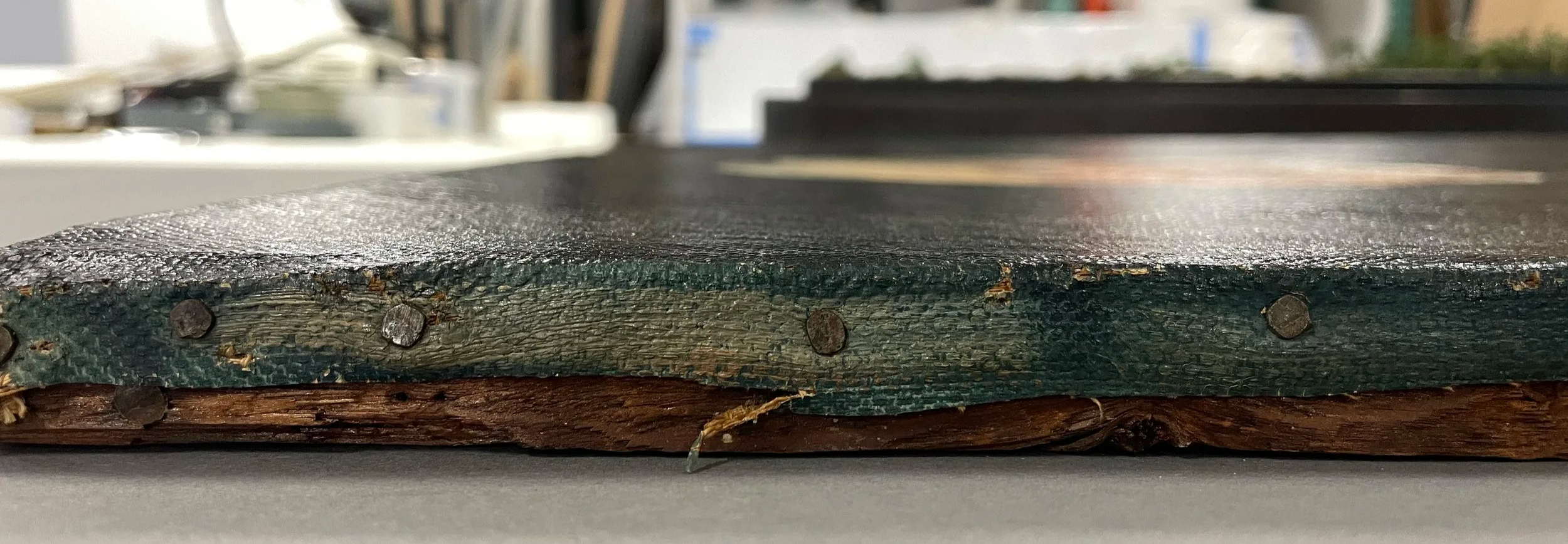
Proper right tacking margin, showing where the canvas was cut after the paint was applied.
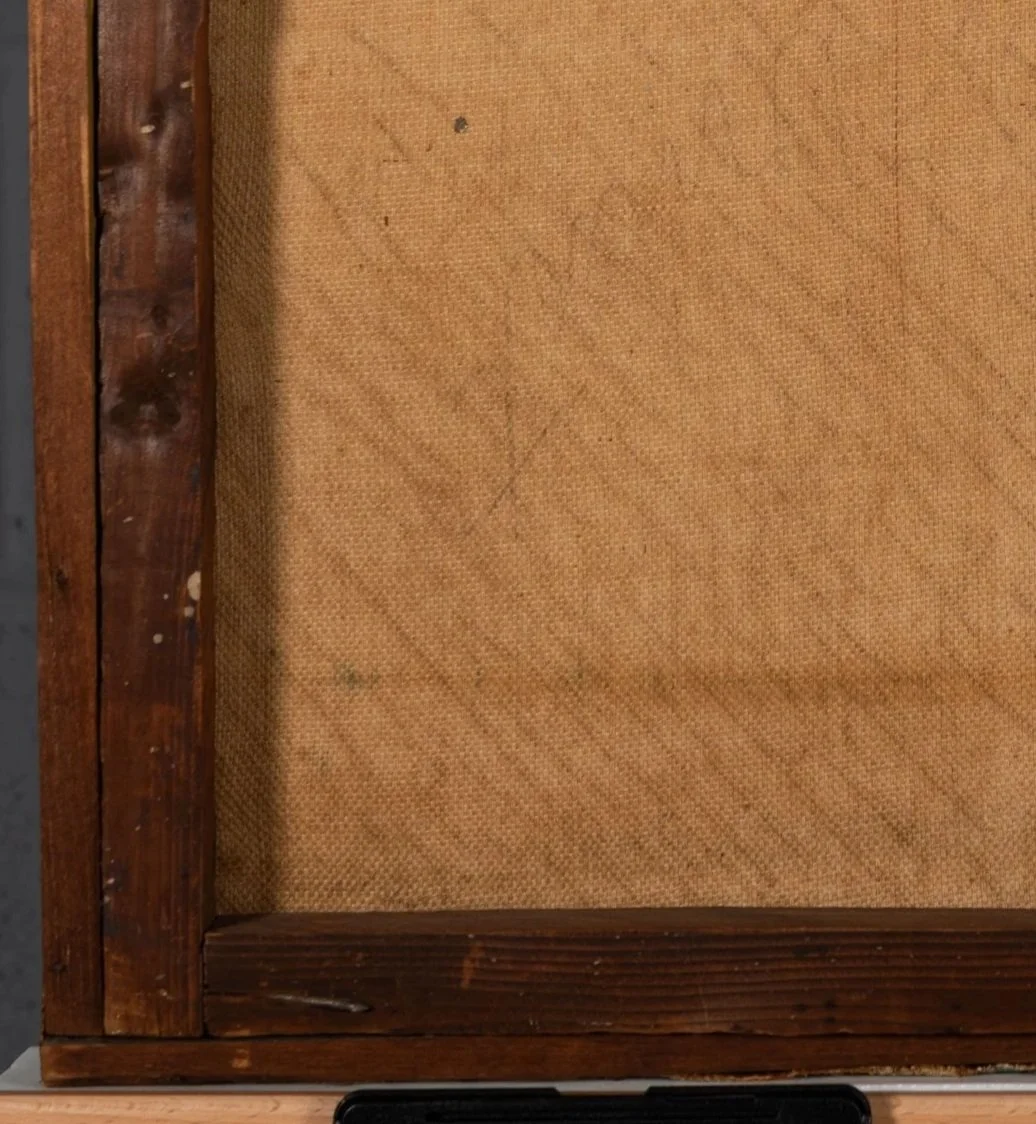
Lower, proper left corner of the original strainer.
Overall, the painting was in good structural condition, but had a small tear in the top left corner and some areas where the tacking margins were just barely long enough to be held by the tacks. While this shows risk for further degradation, if the painting was removed from the original strainer for an edge lining, it could not be put back on the original strainer and would require a new more stable support. Reattaching it to the original strainer is likely to cause the wood to splinter and crack more, creating a less stable support. To preserve the unique materials that Britton used in this portrait, it was decided to proceed with a minimally interventive treatment and repair the tear without replacing the strainer. After stabilizing the tear, any splintering wood on the strainer, and some flaking paint around the tacking margins, it was time to start cleaning the portrait.
Before treatment, the paint surface was dulled and hiding behind a thick layer of grime and unevenly applied varnish. Examination under ultraviolet lighting revealed a fluorescent green coating that covered most of the surface of the paint layer, just slightly avoiding the turnover edges, indicative of an aged natural resin varnish. Luckily, the grime layer was readily removable using the Modular Cleaning Program.
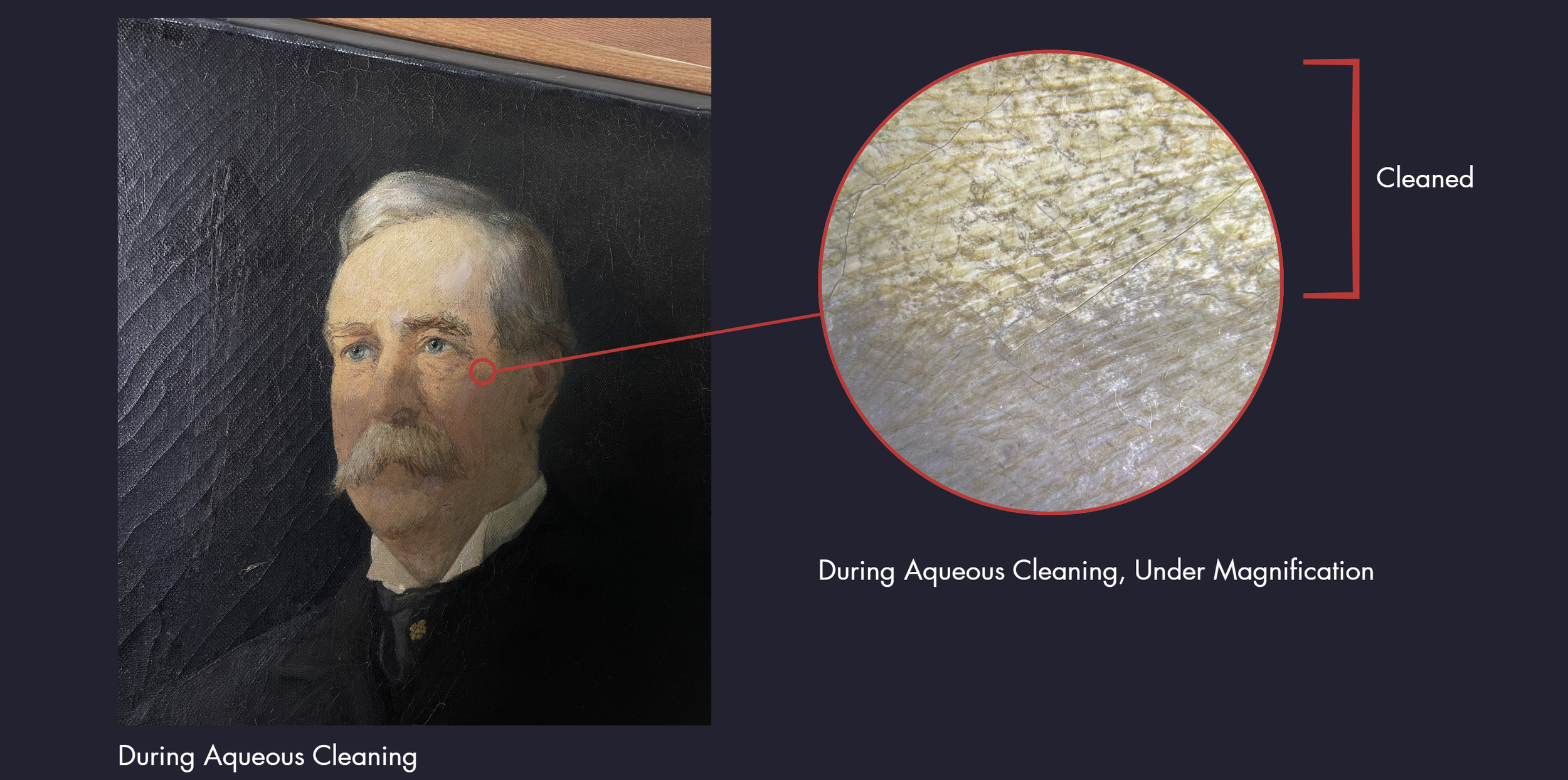
However, as the grime was being removed, we began to notice scattered areas of paint that were sitting on top of the varnish layer and had a more matte appearance than the surrounding areas. While there is no known history of professional restoration done to this painting, it is entirely possible that as the natural resin varnish aged and dulled the values of the original paint layer, Britton or another artist in the family retouched the painting where they felt it was necessary to restore the aesthetics of the portrait. As conservators, it is our responsibility to decide how far we can ethically progress with a treatment to preserve integrity of the work and the artist’s intent. We ultimately decided to remove this overpaint because even if it was applied by the artist, it matched the yellowed varnish layer that ultimately obscured the original paint layer. When these spots of overpaint were removed from the hair and forehead especially, a higher level of detail was revealed which have likely been lost for for decades.
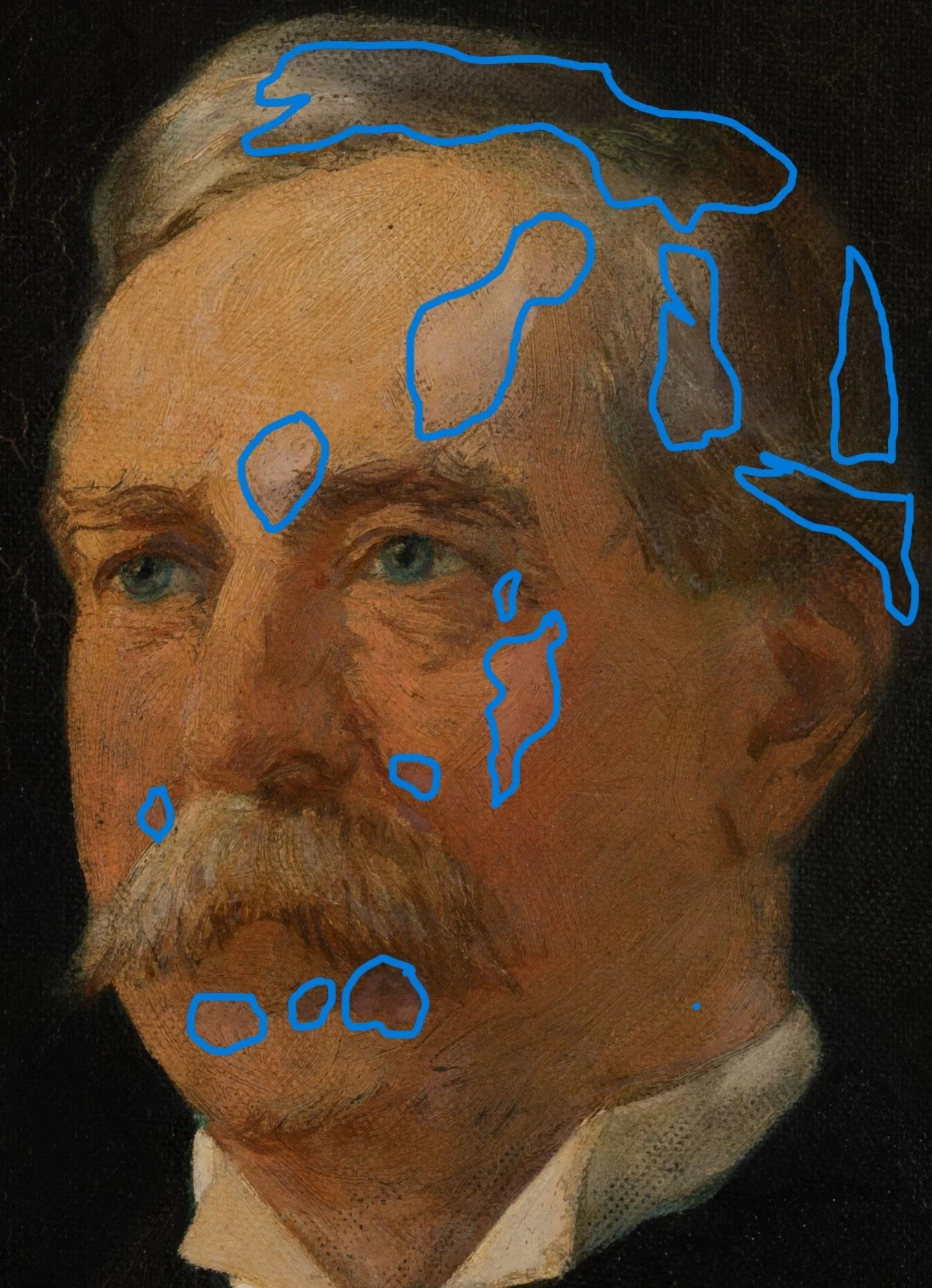
Outlined areas of overpaint after aqueous cleaning.
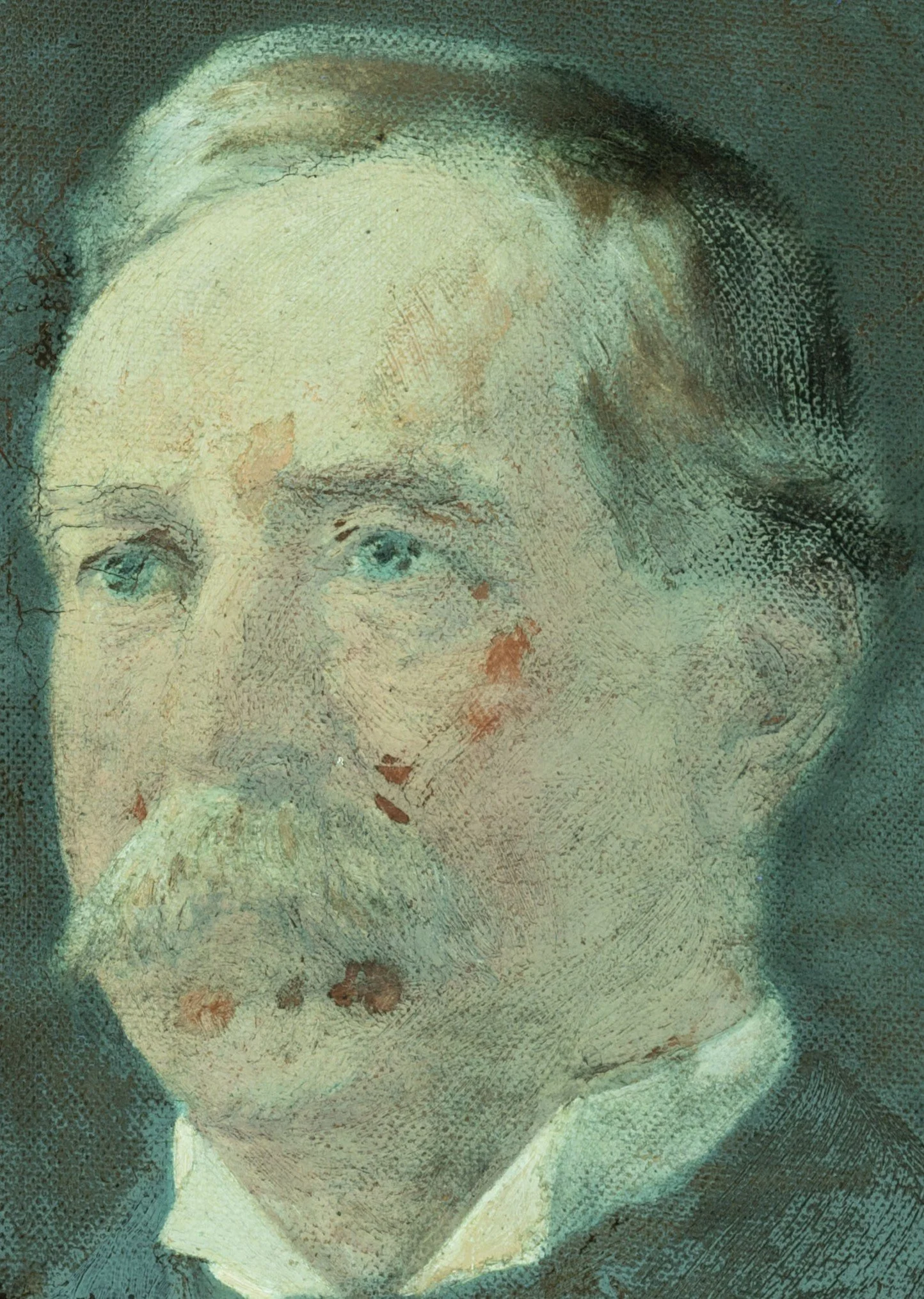
After aqueous cleaning, shown in ultraviolet light.
With the grime layer and most of the overpaint removed, the varnish layer was more visible than ever. Ultraviolet light revealed a much thicker coating of varnish on the sitter than in the background. It’s possible that as the varnish layer aged and yellowed, further layers were added to the sitter in an attempt to re-saturate the colors. The next questions we faced were if these layers of varnish could and should be removed. Ideally, we would be able to remove the aged varnish without disturbing the underlying paint layers and revarnish with an archival varnish, but testing revealed that this wasn’t necessarily an ideal situation. While a blend of isopropanol and isooctane effectively removed the varnish, not all areas of the painting could handle exposure to this solvent blend. After extensive testing, it was decided that the darker colors in the background and sitter’s coat were too sensitive to have the varnish removed. While mechanical action seemed to cause the most pigment loss, methods with no mechanical action also took up pigment no matter the solvent that was used. The following methods were tested:
Cotton swabs rolled over the surface- Only removed varnish from the peaks of the canvas weave and removed the most pigment out of any method.
Evolon CR tissue, pre-wet with solvent and placed on the surface- Only removed varnish from the peaks of the canvas weave and picked up trace amounts of pigment.
Japanese tissue with a cotton swab rolled on top of it- Did not remove varnish effectively.
Japanese tissue with soaked cellulose fibers packed on top of it- Did not remove varnish effectively.
Solvent-soaked cellulose fibers packed directly on the canvas as a poultice- Evenly removed varnish, but picked up trace amounts of pigment.
Solvent-soaked cotton directly on the canvas as a poultice- Evenly removed the varnish, but left significant blanching on the surface. This blanching was evened out with isopropanol applied with a brush to redistribute the preexisting varnish.
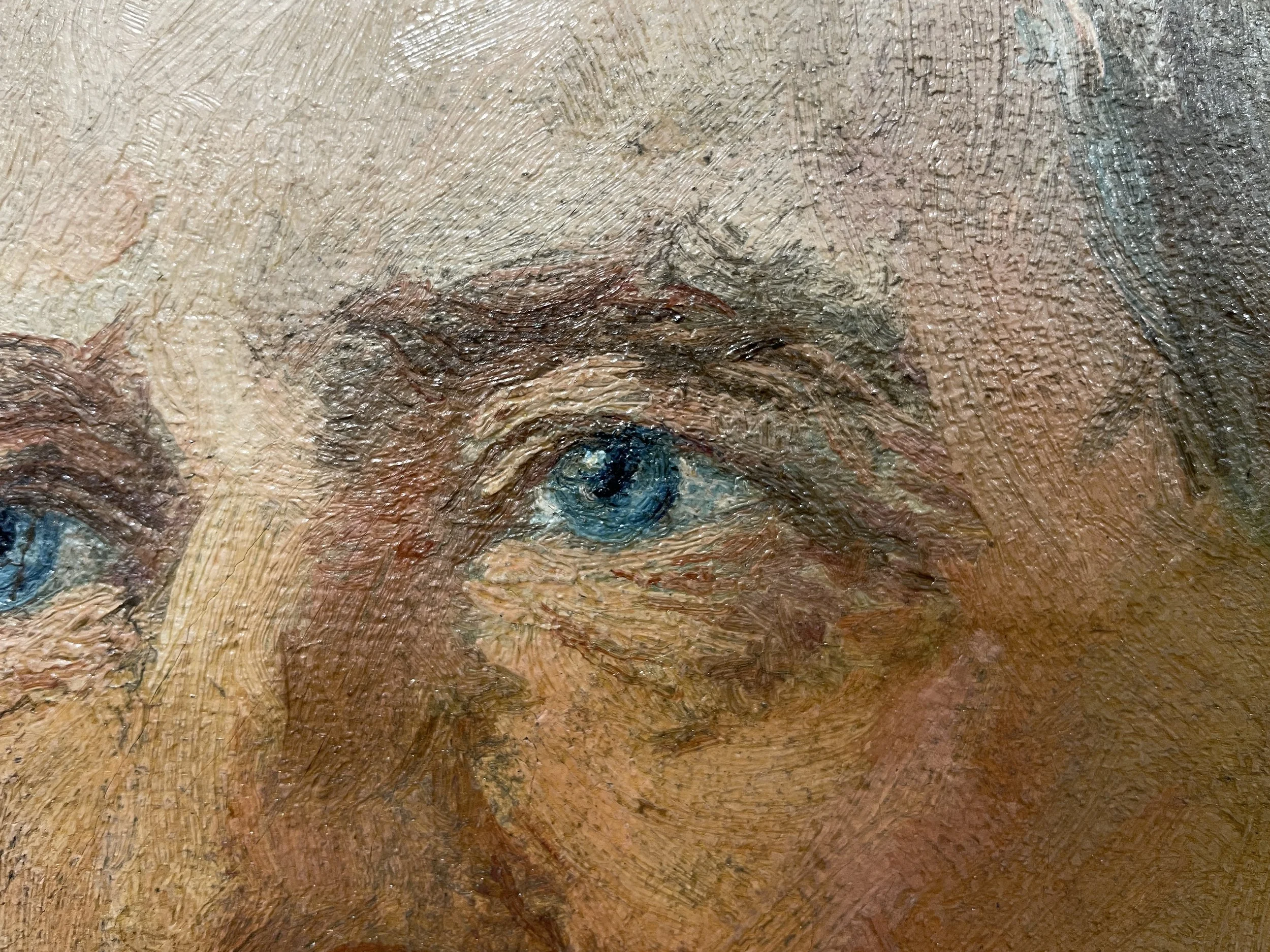
During Varnish Removal
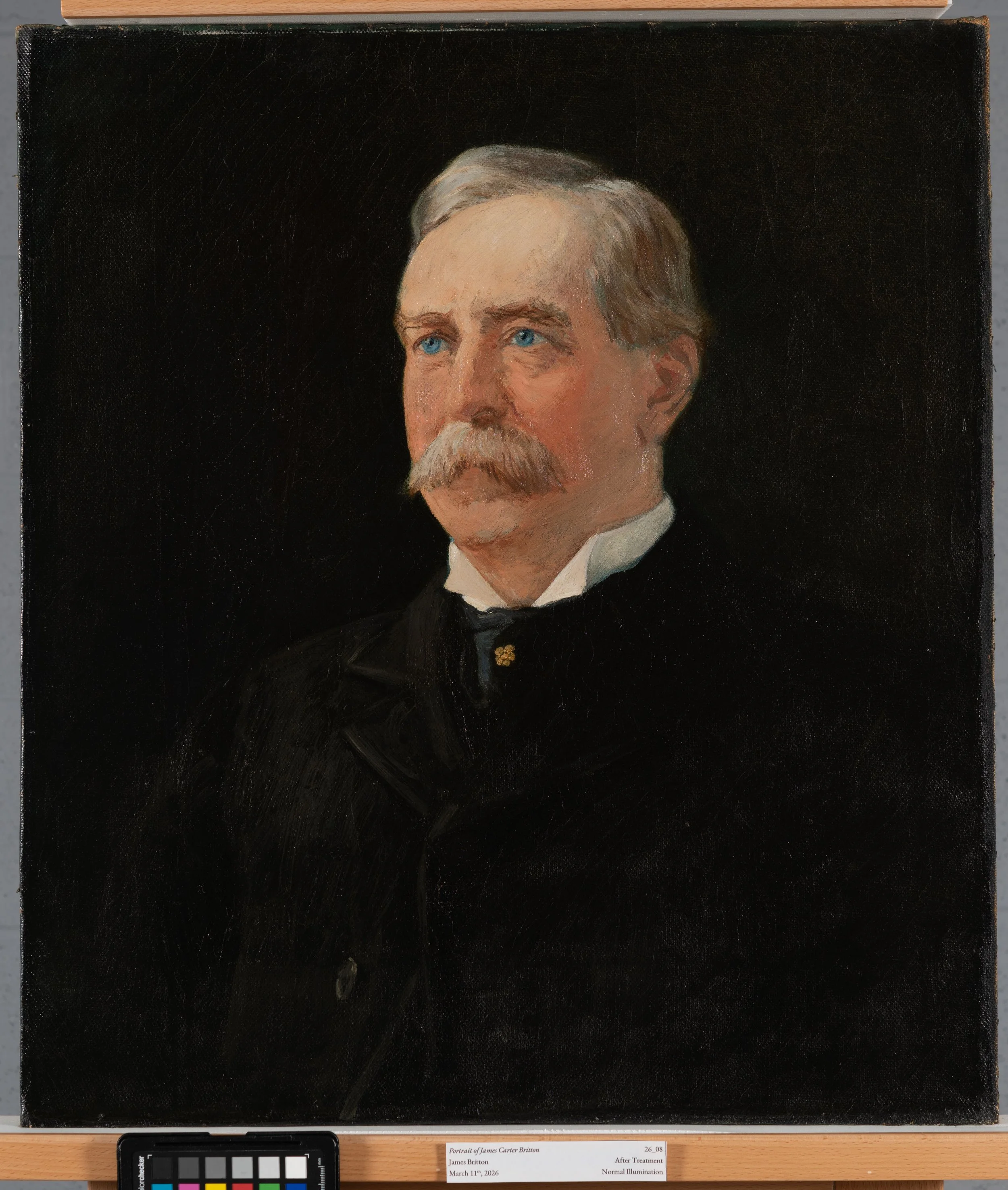
Finally, we decided that the varnish could only safely be removed from the face. While only partially removing an aged varnish is certainly not the ideal treatment plan, we decided it was acceptable to the overall viewing experience of this portrait. From our solvent tests, we could see that the areas where the varnish had been removed on the lighter colors of the sitter’s face and collar had a much greater visual impact than where the varnish had been removed on the darker colors of the jacket and background. Removing the varnish from the face and collar alone improved the appearance of the portrait without making the remaining aged varnish in the rest of the painting obvious.
Once the varnish was removed as fully as possible, the portrait was revarnished with two layers of archival varnish to saturate the surface and provide a protective coating. The first layer was 10% (w/v) Paraloid B-72 in ShellSol A100 with 10% (w/w) Kraton G1650 to add flexibility and help the varnish apply more evenly to the original varnish surface. The second layer was 20% (w/v) Laropal A-81in 1:1 ShellSol A100: ShellSol D38. Due to the varied saturation of the portrait after the partial varnish removal, both coatings were necessary to achieve an even, glossy surface. Finally, losses, overpaint that couldn’t be removed, and cracks were inpainted as needed using a conservation-grade reversible media to regain visual continuity overall. Today, the portrait remains in possession of the family and is back on display in its home.

Before Treatment
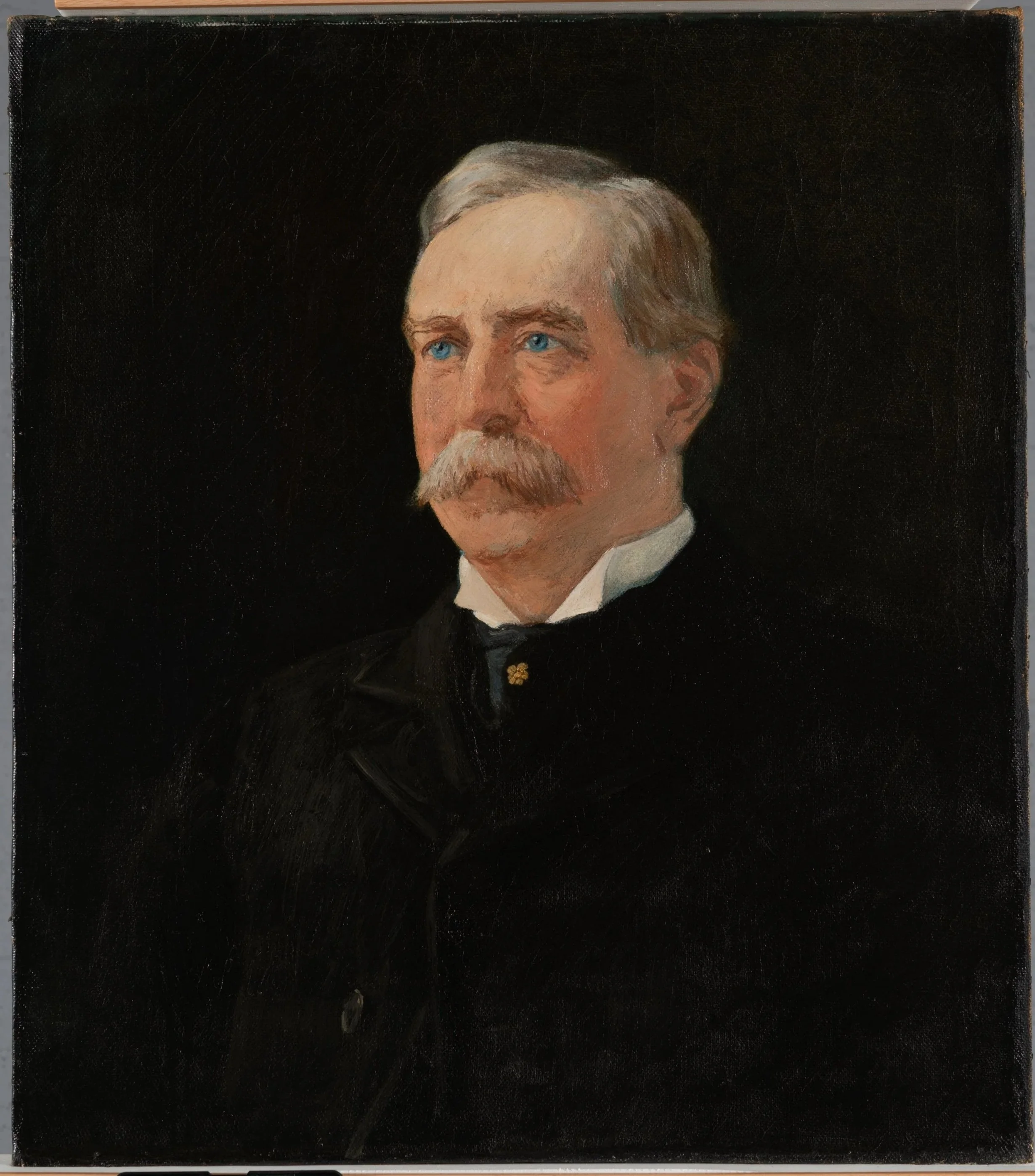
After Treatment



For more information check out these sources:
James Britton papers, Archives of American Art
James Britton: Connecticut Artist from Traditional Fine Arts Organization